leftovers

the archive: every recorded talk, and photos from nights at the Fridge.

Fridgeside

conversations with founders and operators, recorded live in downtown austin.

lunch Society: optimize your website for AI search

optimize your website for AI search. an AEO/GEO workshop.

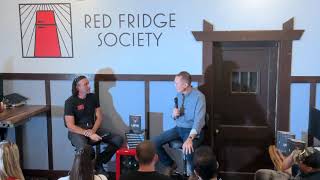
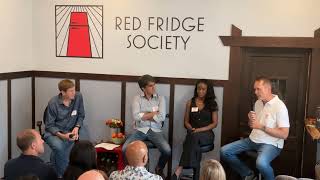
in this workshop at austin founder's club, the Red Fridge Society (fridgeatx.com) on answer engine optimization (AEO) and generative engine optimization (GEO), stan chang (head of product at gumshoe AI) and raja sampathi (founder of meandering sapien) explain how to measure, audit, and improve brand visibility across chatgpt, google AI overviews, perplexity, claude, and gemini.

AI search has shifted discovery away from static SEO keywords toward contextual, persona-driven answers. in part 1, stan chang demonstrates how AI models personalize recommendations by buyer persona and how to audit citations and content gaps. in part 2, raja sampathi outlines a 4-step technical checklist to make websites and google business profiles machine-readable for llms.

materials: run an audit on your site: https://app.gumshoe.ai/go raja's slides: https://gamma.app/docs/AI-search-swipes-right-r27u3qaihdb9tyv DIY guide for AEO/GEO: https://tinyurl.com/beaischoice

chapters
  1. 0:00 welcome to red Fridge & introductions (stan chang & raja sampathi)
  2. 2:07 why AI personalization changes brand mention rates (gumshoe AI)
  3. 4:24 live demo: buyer personas, topics & multi-model prompts
  4. 9:23 visibility audit scorecard: measuring brand mentions across models
  5. 11:07 citation audits: finding third-party PR opportunities
  6. 12:45 content gap analysis & automated content generation
  7. 14:58 AI recommendations, mcps, claude code & LLM resources
  8. 18:26 Q&A with stan chang: youtube transcripts & google AI overviews
  9. 22:17 part 2 (raja sampathi): moving from keyword SEO to AEO & GEO
  10. 29:27 the 3 pillars of AI findability: machine signal, authority & content
  11. 31:23 step 1: writing visible, specific faqs
  12. 37:34 step 2: optimizing h1, h2 & meta structure (clarity over cleverness)
  13. 41:32 step 3: checking robots.txt & unblocking AI crawlers
  14. 43:25 step 4: schema markup ("the nutrition label") & AI workflows
  15. 51:05 local AEO: google business profile Q&A, reviews & chatgpt listings
  16. 59:16 joint Q&A: linkedin distribution & content recency bias
  17. 1:01:09 live demo: gumshoe AI technical audit & sentiment tracking

summary, chapters and transcript

jason cohen on hidden multipliers

Fridgeside! jason cohen on how to find "hidden multipliers" and scale without burning out

jason cohen—austin native, founder of smart bear and WP engine, and author of hidden multipliers—sits down for an unfiltered Fridgeside! chat on building companies without losing your soul (or your sanity).

jason breaks down why he intentionally fired himself as CEO of WP engine after four years, the "joy, skill, need" trap that burns out founders, and how to make high-stakes decisions when AI makes the future impossible to predict. plus, he shares stories from the early days of austin's tech scene, why he open-sourced his new book's frameworks as free AI skills, and the exact "box game" math behind knowing when to sell.

chapters
  1. 0:00 growing up in austin & how austin’s "weird" culture compares to company culture (the ship of theseus)
  2. 7:08 how 18 years of blogging forced clarity of thought—and the painful lesson learned at smart bear
  3. 11:10 why jason stepped down as WP engine CEO and hired heather brunner
  4. 13:07 the joy, skill, need venn diagram (and why hitting 2 out of 3 is a dangerous trap)
  5. 18:04 the ego check from kip mcclanahan that finally made letting go of the CEO title easy
  6. 20:14 leaving WP engine after 15 years, college tours, and starting a zero-monetization founder podcast
  7. 29:32 what hidden multipliers are (99/1 leverage) and why jason released the book's frameworks as free AI skills
  8. 35:59 the future of austin tech, CPG, and why human creators are "AI-proof"
  9. 42:34 audience Q&A: the "box game" (rich vs. king), finding your ideal customer ("carol"), and finding your voice as a writer

summary, chapters and transcript

bootstrap vs VC with rob & chris taylor

Fridgeside! bootstrap vs VC: two brothers, two exits, one honest debate

two brothers. two startup paths. one very honest conversation about whether to raise venture capital.

chris taylor bootstrapped square root for 15 years, owned 100% of the company when he sold it, and never raised a dime. his brother rob spent 30 years building VC-backed companies (two of them in austin, backed by silverton partners) and then spent four years on the other side of the table as a venture capitalist. between them, they’ve seen both sides of the cap table.

they compare bootstrapping and venture across control, support, ownership, speed, scale, and optionality, then ask the question most founders skip: do you actually have a choice? along the way, they cover how AI is changing what’s fundable, why the “saas apocalypse” matters for early-stage founders, and how to stay lean longer before taking the check.

chapters
  1. 0:00 intro and special guests
  2. 1:31 growing up in rural west virginia (turtle ranches and nickels)
  3. 3:41 early careers, trilogy, and the dot-com bubble
  4. 9:00 rob’s VC path and chris’s bootstrap path
  5. 11:58 control
  6. 14:50 support and community
  7. 18:57 ownership
  8. 21:56 speed
  9. 24:32 optionality
  10. 29:15 scale, hard tech, and why austin is different
  11. 32:41 do you have a choice?
  12. 38:46 what’s fundable now (the “saas apocalypse”)
  13. 40:09 Q&A: alternatives to VC
  14. 48:02 Q&A: how you lose control with venture money
  15. 51:55 Q&A: landing first customers and building a moat
  16. 56:32 Q&A: go-to-market and cash flow

summary, chapters and transcript

brett hurt on love conquers fear

from bazaarvoice to "love conquers fear": brett hurt on AI, abundance & austin

austin native brett hurt (coremetrics, bazaarvoice, data.world) comes Fridgeside to talk about his new book, love conquers fear; why he's 95% certain AI leads to an "age of abundance for all"; and austin's role in the deep tech boom.

brett traces it all back: learning to program at 7, getting dropped off at user group meetings at 10, standing in new zealand after bazaarvoice feeling "completely empty inside," and the four-hour walk with his mentor bong that sent him back to build data.world (acquired by servicenow last year). then an uber ride with a driver from chad reframed what AI could mean for the rest of the world.

we also cover spirituality, backing 151 startups, a warren buffett story that'll get you, and josh baer's mantra: plant a lot of seeds, water everyone's, repeat.

chapters
  1. 0:00 welcome to the Red Fridge Society
  2. 1:57 growing up in austin in the '70s and '80s
  3. 5:41 why austin is different (the amy's ice cream story)
  4. 9:20 money, spirituality, and the comparison treadmill
  5. 12:00 why start data.world after bazaarvoice?
  6. 13:32 feeling empty in new zealand
  7. 15:27 the walk that sent him back to building
  8. 19:53 backing 151 startups and free CEO coaching
  9. 24:56 why he wrote love conquers fear
  10. 25:54 chatgpt and "the ground quake"
  11. 28:28 what would you ask the smartest person who ever lived?
  12. 30:59 an uber driver from chad and the age of abundance for all
  13. 34:03 spirituality, psychedelics, and 80 podcast episodes
  14. 43:09 slow down or full steam ahead? optimism vs. AI fear
  15. 44:04 what fire teaches us about AI
  16. 52:18 smallpox, the cold war, and why we'll cooperate
  17. 54:50 down to 3,000 humans: why our core nature is good
  18. 1:02:05 austin's role in the deep tech boom
  19. 1:05:44 the warren buffett story
  20. 1:08:35 josh baer: plant a lot of seeds
  21. 1:10:21 from fear to agency

summary, chapters and transcript

steve adler: stories from the former mayor

former austin mayor steve adler on his new book hot seat — hot city | live at the Red Fridge Society

"if you had to pick eight years not to be mayor of austin, it would probably be 2015 to 2023."

in this live Fridgeside chat at the Red Fridge Society in austin, TX, former mayor steve adler sits down with local founders to discuss his new book, hot seat — hot city.

watch as adler shares hilarious personal stories from his early days arriving in austin in 1978, breaks down why austin uniquely embraces risk and failure like a startup, and reflects on what it takes to steer one of the fastest-growing cities in america through unprecedented change.

chapters
  1. 0:00 welcome to red Fridge & founder community intro
  2. 1:38 introducing mayor steve adler (2015–2023)
  3. 3:18 "austin was best the day you got here" & the hole in the wall
  4. 5:33 50 years of constant growth & austin's culture of risk
  5. 7:20 steve adler's arrival in 1978 & the infamous pimento cheese story
  6. 9:15 public interest law, eminent domain, & the path to city hall

summary, chapters and transcript

graham reynolds on the business and craft of composing

the business & craft of composing: Fridgeside with graham reynolds (a scanner darkly, hit man)

composer, pianist, and bandleader graham reynolds (dubbed "the quintessential modern composer" by the london independent) sits down for an intimate fireside chat, live performance, and Q&A.

with over 100 film, television, theater, and ballet credits—including longtime collaborations with director richard linklater (a scanner darkly, before midnight, bernie, hit man)—graham demystifies the practical business of being a working freelance artist, the psychology of scoring films, and how he keeps his creative pipeline flowing every single day.

graham also shares live demos from his album the portcullis and discusses his alt-classical nonprofit, golden hornet, dedicated to mentoring the next generation of young and emerging composers.

chapters
  1. 0:00 welcome & introduction
  2. 1:15 origin story: hand-built instruments, elementary jazz chords & leaving conservatory music school
  3. 3:40 moving to austin in '93: punk rock clubs, $1 pbrs & saying "yes" to experimental puppet shows
  4. 4:45 the linklater breakthrough: playing jazz standards to scoring a scanner darkly
  5. 6:15 juggling 12 projects at once: why wide scope beats narrow specialization
  6. 8:10 the business of music: cleaning houses while scoring hollywood stars & crossfading into a full-time living
  7. 10:45 golden hornet: mentoring young composers, cinema recompose at fantastic fest & binational exchanges
  8. 13:50 upcoming october 17 fundraiser & final intro
  9. 14:30 live performance & creative process: british medieval history, drum machines & the portcullis
  10. 19:20 audience Q&A: working for the director, studio politics & the battle against "temp music"
  11. 24:35 how much does a score cost? budget ranges, negotiations & project overhead
  12. 26:40 the ideal collaboration: reading scripts early & sketch-remixing the score for hit man
  13. 30:10 the role of music in storytelling: underscoring emotion vs. manipulation
  14. 32:30 scoring the avant-garde: "no melody, no rhythm, no climax" & a massive bass drum in sweden
  15. 36:15 creative discipline: why you can't wait for the muse & practical techniques to start a track

summary, chapters and transcript

whurley on quantum 101

austin icon whurley's founder story and quantum 101

in this exclusive Fridgeside chat at the austin founders club, the Red Fridge Society, serial entrepreneur and frontier tech pioneer whurley joins us for a wide-ranging conversation on the reality of building iconic companies, the future of quantum computing, and the evolution of the austin tech ecosystem.

from tinkering with synths to becoming an IBM master inventor, whurley shares the unvarnished stories behind co-founding chaotic moon studios (acquired by accenture) and honest dollar (acquired by goldman sachs).

we also pull back the curtain on his latest venture, strangeworks, to explore where quantum computing actually stands today: cutting through the commercial hype, examining the looming "q-day" cryptographic threat, looking at the collision course between quantum hardware and frontier AI, and uncovering what deep-tech founders need to know about raising capital.

chapters
  1. 0:00 introduction & welcome
  2. 2:15 apple, IBM, and becoming a "master inventor"
  3. 7:30 the chaotic moon era: turning crazy R&D into an acquisition
  4. 14:10 honest dollar: moving fast in fintech to a goldman sachs exit
  5. 19:45 strangeworks & demystifying quantum computing
  6. 26:30 the collision of quantum & frontier AI
  7. 31:15 "q-day", cryptography, and global geopolitics
  8. 36:00 fundraising in deep tech vs. traditional saas
  9. 39:45 rapid-fire lightning round

summary, chapters and transcript

austin in 2030: a community braintrust conversation

austin in 2030: a community braintrust conversation brought together members of the austin community to discuss the future of our city, the issues shaping our community, economic opportunity, innovation, ideas worth exploring, and what austin will need as it moves toward 2030.

the conversation was convened as part of tedxsouthcongress community engagement ahead of tedxsouthcongress 2026 event. the braintrust creates an opportunity to listen to the community, surface important perspectives, and better understand the ideas, challenges, and opportunities shaping austin's future.

tedxsouthcongress is an independently organized tedx event. this recording documents a community conversation and is not a tedxtalk

summary, chapters and transcript

more leftovers

photos from the nights we didn't record.

also seen Fridgeside

a few who pulled up a chair before we started recording.

tom meredith
former CFO, dell
mike rypka
founder, torchy's tacos
stephen mills
artistic director, ballet austin

the channel on youtube

pull up a chair

Fridgeside chats are free for founders. membership is curated to current and exited founders.