
brett hurt on love conquers fear
from bazaarvoice to "love conquers fear": brett hurt on AI, abundance & austin
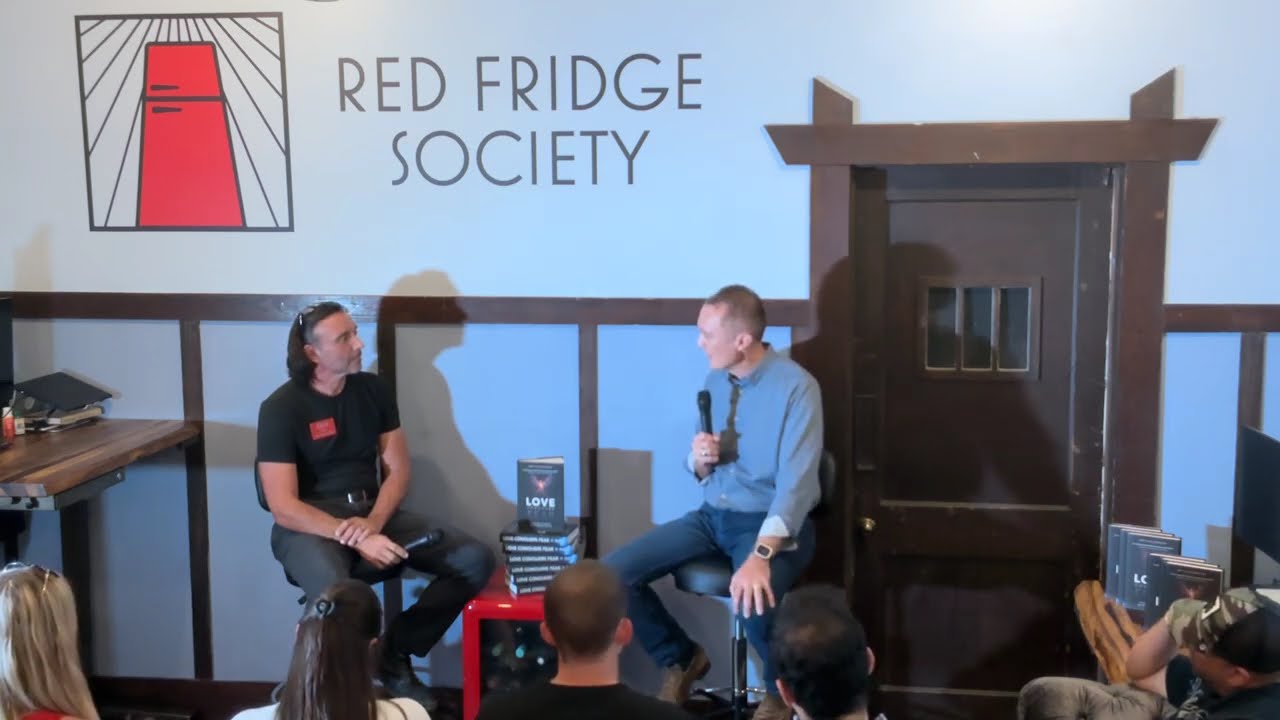
austin native brett hurt (coremetrics, bazaarvoice, data.world) comes Fridgeside to talk about his new book, love conquers fear; why he's 95% certain AI leads to an "age of abundance for all"; and austin's role in the deep tech boom.
brett traces it all back: learning to program at 7, getting dropped off at user group meetings at 10, standing in new zealand after bazaarvoice feeling "completely empty inside," and the four-hour walk with his mentor bong that sent him back to build data.world (acquired by servicenow last year). then an uber ride with a driver from chad reframed what AI could mean for the rest of the world.
we also cover spirituality, backing 151 startups, a warren buffett story that'll get you, and josh baer's mantra: plant a lot of seeds, water everyone's, repeat.
a Fridgeside conversation with brett hurt (founder, bazaarvoice and data.world), recorded live at the Red Fridge Society, a private founder community in downtown austin on september 26, 2026.
takeaways
- brett says he is 95% certain AI will bring an age of abundance for everyone, and more certain now than when he started writing.
- a conversation with an uber driver from chad convinced him AI, quantum computing and robotics are real hope for poorer nations.
- after feeling empty in new zealand, a long walk with a mentor convinced him to stop chasing comfort and start building again.
- cold war rivals jointly eradicated smallpox, which he points to as proof that humans can cooperate on existential risks.
chapters
- 0:00 welcome to the Red Fridge Society
- 1:57 growing up in austin in the '70s and '80s
- 5:41 why austin is different (the amy's ice cream story)
- 9:20 money, spirituality, and the comparison treadmill
- 12:00 why start data.world after bazaarvoice?
- 13:32 feeling empty in new zealand
- 15:27 the walk that sent him back to building
- 19:53 backing 151 startups and free CEO coaching
- 24:56 why he wrote love conquers fear
- 25:54 chatgpt and "the ground quake"
- 28:28 what would you ask the smartest person who ever lived?
- 30:59 an uber driver from chad and the age of abundance for all
- 34:03 spirituality, psychedelics, and 80 podcast episodes
- 43:09 slow down or full steam ahead? optimism vs. AI fear
- 44:04 what fire teaches us about AI
- 52:18 smallpox, the cold war, and why we'll cooperate
- 54:50 down to 3,000 humans: why our core nature is good
- 1:02:05 austin's role in the deep tech boom
- 1:05:44 the warren buffett story
- 1:08:35 josh baer: plant a lot of seeds
- 1:10:21 from fear to agency
transcript
from YouTube's automatic captions, so expect the odd misheard name. tap a time to play from that point.
0:00 welcome to the Red Fridge Society
so i'm chris. this is my concept. uh the quick story about this place is i had an enterprise software company called square root and i founded that in '06. i bought this house as our first office space in '09. but what everybody knew square root about like enterprise software automotive very boring nobody cares. but uh we were really known for our culture. so like brett uh uh was super into culture. so as we grew i started renting other houses in the neighborhood. so in 21 when i sold we had six of these 1921 houses all in a i had the three on sixth street and i had the two next door. so, we got written up in fortune magazine as a cool sauce base in america and second best place to work in america and really enjoyed that culture side of it. unlike brett, i didn't want to do another one. so, after i uh after i sold, i was done. so, but i had this great space. so, my next mission is all about helping entrepreneurs in austin. and so, this is a founders club. so, it's a membership model, free me uh free events for founders around austin. and then the memberships all kind of pay for that. it's kind of part co-working, part social club. anybody's interested in learning more, you can chat with me afterwards. um, and yeah, that is the spiel, but we're not here to talk about that tonight. we're here, we are very grateful to have brett. uh, which we're going to have a if you've i'm going to turn this hold on for a second. sorry. i'm going to turn this this fan off because it is going to drive me nuts.
1:15 there we go. yes, that's better for everybody. we'll just edit that out of the video. um, so uh very very grateful to have uh brett here tonight. we'll have a very wide ranging conversation. if you've read the book, it is incredibly wide ranging. that's uh and so we'll we'll cover a little bit of his background and him growing up in austin. we'll talk about love conquers fear in the book and then we'll talk a little bit about kind of where brett and also austin are going in the future. so, we'll kind of try to jam all that in about 45 minutes and then leave 15 minutes for questions. uh i'll tell you right now that rarely happens. we usually just kind of keep talking and then have one or two questions, but but we'll uh we'll see how it goes. so, uh yeah. so brett, my uh joke i came up with when i was coming up with this is
1:57 growing up in austin in the '70s and '80s
like you've had a couple unicorns or at least one unicorn. uh but you grew up in austin, which makes you a unicorn here in austin. that's a person that actually was born here. so tell us what austin was like growing up in the 80s and 70s. >> yeah. so believe it or not, um austin was one ninth about one ninth the size it is now in terms of number of people and it still had a the beginnings of a tech community and that was thanks to UT austin which is the second largest endowment of any university in the nation just behind harvard um and ahead of yale and because of that they had bought bought a lot of crazy supercomputers back when that was really unique. that attracted a lot of researchers. they ended up staying here because it's beautiful and you have the live music and everything else. and so i grew up really with an amazing amazing mom, a great dad, and my mom learned how to program with me when i was seven. and the uniqueness of austin is that she was able to drop me off at user group meetings starting at age 10. >> are we like commodore 64? what do we
3:14 >> program? i was i was all atari for a long time. you were too atari 800 XL baby. yeah. is that know? yeah. i went through the whole line. i had literally every single >> yeah. and about controllers laying around as well. yeah. exactly. >> all right. cool. man, this is going to go really well. >> exactly. exactly. [laughter] but half the audience is too young to even know what that means. >> okay. yeah. exactly. >> cuz we were we were smack talking back then about the commode doors. >> yes. yeah. >> and yeah, there was a whole there was a whole like hacker culture around it. >> and so, you know, i was dropped off at uh at user group meetings and i met people like the bitmap brothers there. they became video game legends later on. um i was the youngest guy there. they used to call me mickey mouse um because i hadn't hit puberty yet. so, i had a really high pitched voice. um, but i just i had the bug and i was in the right city to have the bug at that time. um, of course there were other cities that you could have been like seattle or um somewhere in silicon valley. um, but it was it was really fortunate to be born here. and it to me it's miraculous, although not unexpected that it's grown into what it's grown into because part
4:31 of what makes austin so special is willie nelson. and willie now is uh in his 90s and he was doing concerts back when i was even four years old. and so it was my first concert was willie nelson at the backyard barbecue. it was the first time i smelled marijuana and i thought it smelled absolutely >> in the last. right. that was the last time. >> definitely not the last time on i i i i don't do marijuana these days, but i did i did that for a while in in college. um no, i definitely inhaled. um i did. no, we had we had a lot of fun with that. it would like laugh our ass off. um but it'd make you paranoid, too. um i don't know if it does anymore now. now it's like so powerful it make you hallucinate. um i'd rather just do psychedelics than that. um, and so, so it it it basically, you know, he really put this heart into austin because he was even saying back then, it doesn't matter if you're republican or democrat. we have so much in common. like, we sit back, you know, talk about all the things we have in common. let's have let's have a beer. and that ethos of austin was really embedded in me early.
5:41 why austin is different (the amy's ice cream story)
and that's one of the things that i still love about it today. like you can come here. you can you can come from new york city. i've met lots of people moving from new york city. lots of people moving from california. they're very attracted to the community. you know amy of amy's ice cream. she moved from boston and her story is great story. i'm good friends with her. her name is amy simmons and she looked at all the demographics of boston and she was working in ice cream stores and looked at other cities with those demographics. this is preai, believe it or not. so, it was hard to get those numbers. and so, she was like trying to figure out like what's most like boston. and she went to four cities. and the reason she picked austin is it was the only city where people literally took her aside, small business owners, and they said, "here's my books. here's my margins. here's what i pay people. um, you know, i'll help you out any way you want, etc." she's like, it just blew her away. there's no other city she went to like that. and she's like, "that's where i'm going." because everybody there is friendly. >> yeah. and i mean, i think >> that's willie nelson. >> yeah. i moved here in 95, so not nearly as long as you, but you know, pretty long. pretty much feels like i've been here. um, >> you're very OG. yeah. no, that i feel like that. yeah, it's like the old, you know, got here as soon as i could type of thing. um, but uh but no, i always
6:57 say like austin's kept its soul very well through all the growth, right? and what i hear from people on the coast is always like it's that it's uh it's every every person i meet introduces me to two other people. and whereas the everybody's so giving with the relationships and their time here. whereas i think on the coast relationships are a little bit like currency and and [clears throat] people hold them a little closer to their vast whereas here it's like if i meet somebody i think is going to have a mutually great conversation with you. it's like i'm happy to do that. that's like literally my job now to connect people. >> yeah. from you know people like willie nelson that really were very intentional and i don't know if you have you ever met him? >> not met him. i've seen him in concert. >> he is such a nice human being. it was funny because we we uh one time we're at turk and christy pipkin's thing where they're raising money for the nobility project. we actually were among the first donors where we helped build a um high school in kenya in this area of kenya where the kids had to hike about six miles just to go to middle school and then it ended. there was no high school and you know these are poor families. their parents don't have cars, stuff like that. and we met willie nelson that night and one thing that was so funny is, you know,
8:12 both of us put our arms around him [laughter] and deborah looks at me and she, you know, she pulls me aside. she's like, "did you feel how soft his hair was?" and i was like, "yeah, it's the softest hair i've ever felt." and and uh >> i'm growing my hair out these days later. >> yeah. um, and and and you know, he just was just so kind and he he really has that ethos. but one of the most fun things deborah and ira did was go see the high school after it was done in kenya. and it's wild, man. i mean, when you were in a remote region like that, all the children were like pinching our skin >> because they hadn't even seen hardly ever our color skin, >> you know, and they were so incredibly grateful and um you know, our daughter became pin pals with one of them and she was like, "they write better than me, you know, they [laughter] they they like print better than me and like and it's you want to see like god, you know, go to place like that. you know, pe people
9:20 money, spirituality, and the comparison treadmill
always like say to me, "oh, brett, you've become so spiritual." and you know, it's a very spiritual book. um, it's because you have money. a lot of the most spiritual people i've ever met in my life have almost no money. actually, it's the opposite thing where if you have a lot of money and you get on that treadmill and you constantly are comparing yourself to others, you will get caught up in that game to the point where it is very hard to extract yourself from that game because your whole social construct gets built around that. i mean, i remember i went to one event, you know, probably 20 years ago, and the guy one one of the guys was just like really really just like hunting [snorts] for like what kind of car i was driving. i'm just like, man, like really like as i grew up, you know, in this ethos of we're all nerds and, you know, it's it's, you know, it was a real ethos of humility and i was picked on a lot as a kid. so, um, so i got a lot of the material things later on because i thought that's what you're supposed to do. um, but the only lasting happiness you find is on the inside. and i think that's one of the things that makes someone like willie nelson so special is he's truly happy inside. um,
10:35 it's not about like the money he has. he i think he'd care less. >> yeah, it's amazing. the uh uh the book strength to strength. you ever read strength to strength? you know, it talks about kind of how you know when you're younger, you know, there's no 50-year-old physicists making discoveries. at the same time, there's no 19-year-old historians, right? so, it's the you are fundamentally different. you are fundamentally better at different things at different point in your life. but the the most impactful thing in that book to me was he kind of talked about and it comes from, you know, kind of more eastern cultures. there's kind of these four these four periods your life. there's, you know, there's, you know, becoming, uh, you know, getting through adulthood. then there's taking care of your family. it's kind of like the second 25 years, and then there's, uh, starting to give back, and then there's kind of spiritual growth as as the four. and here in the US, everybody gets stuck in the second one because money, you know, money is basically a very demanding god. and and there there's no way that you can ever complete it, right? and there's and so but that made me really take a pause after i because i was reading all the stuff right after i sold my company of because the temptation is >> yeah to do it again. >> yeah. you get caught up in you have to love to do it and and i have not loved every day i've done it. um i'd be lying if i told you that but i have
11:50 loved most days that i'm doing it. and doing it is like you know building [music] companies you know starting building companies for 30 years. i mean i'm 54. i've been doing this since i was 24.
12:00 why start data.world after bazaarvoice?
>> yeah. so, so let's talk about so, we could we could spend two hours just on all the lessons learned from your companies and everything you've done at at, you know, bizarre voice and at data.world, but let's skip all that. but i do have one question that kind of goes to to that is, you know, i'm assuming you were, you know, posteconomic after bizarre voice. why did you do data.orld? like what was what was the draw back to that kind of, you know, where were you in your life then? and then why after dataworld did you make a different choice to do what you're doing now? >> okay, great great question. so the reason that i started data.world one thing that i tried on is i had made enough money where i never had to even think about working again. and i tried to satiate that by doing the things that i thought my parents would want me to do if they had more money than they knew what to do with. and and so i did a lot of things with my wife and kids. we went to spend a month in france. we went to spend a month in spain. we we did we did we we you know we had tons and tons of peak
13:15 experiences like lots and lots of things checking off the bucket list you know i bought a virgin galactic ticket i was like one of the first hundred people to do that i still haven't gotten on my flight because they still are working out the kinks but may maybe it'll happen next year you know and um and so i did i did all these things to have like peak
13:32 feeling empty in new zealand
13:33 experiences and i remember standing in new zealand after the la well well the last hobbit movie was about to come out. deborah and i are big lord of the rings nerds and we watch those movies like every five years, the whole thing, you know, all of them. not in one sitting. our our butt would literally turn into a couch. but but we we um you know, we're standing in this most be i mean the whole country is so beautiful. like lord of the rings is like a advertisement for what it looks like. um, it's north and south island and we're standing in this beautiful like scene and you're just looking out and [music] it's just magical and i just felt completely empty inside and i realized i [music] was like, "oh, you know, it was all about the journey. it wasn't about any of the things. it was about the journey." and so that opened me up to um some real struggle. um, and i was doing this project for free for the for shalom austin, the JCC, and deborah and i went to go visit all these different JCC's around the nation to find out what really made them work because it was for this $25 million
14:48 campaign that the JCC was doing to build like the next generation of it. and so we we went to many many different ones and we kept coming back to tennis and so we built the hurt family tennis center at the JCC. it's become very popular. um there are now 300% more members than they had pre- pandemic. um and it's, you know, it they're flush with cash now, which is great as a nonprofit, so they can do more. and the project, you know, thanks to the generosity of the dells, um, it looks like a four seasons or something at the JCC. now, it's like
15:27 the walk that sent him back to building
15:28 really world class. but on that trip of like touring around all these JCC's, i called my friend bong saw who is a second generation chinese immigrant. his dad, you know, came here and mom with no money. um, his dad became an entrepreneur with the paint that goes on ships. and uh and ended up doing decently well with that. and i'm calling bong. i'm just like, "man, i'm really struggling. like, i don't know what to do." um, and so he's like, "well, i'll fly in. i'll see you." and so he flew into san diego. and we spent four hours just walking. and on that walk, he realized he was like, "brett, you're trying to be your parents." both my parents had passed. and he's like, "you're trying to be them. they were lifestyle entrepreneurs." and and and he's like, "you were the kid like programming since you were 7 years old, like obsessively." and you know, he was my original mentor at coremetrics back when i started that at age 26 and on our board of directors. and he's like, "you have always struck me as someone that will always start things. that is like your core nature."
16:45 and so he's like, you really have to ask yourself like if your core nature is not to be your parents, do you think your parents would want you to struggle with trying to be them? and that compounded with rachel saying, "dad, when are you going to start something? when are you going to start something?" and one day rachel looking at me and saying, "dad, when are you going to start something?" and the story of bong, which uh he's amazing human being. he's one of my best friends. um, i' i've had the opportunity now to stay with him multiple times on different trips to san francisco for the book. and you know, he uh he told me that his son he he made money. he he started buy.com and and sold it and made made some money um during the boom days. and his son one day he decided to just be a good dad. he kind of made your choice um where he's like, i'm going to start i'm not going to start any more companies. i'm just going to be the best damn parent i can be. and his son after 10 years of that one day had this intervention with him. they were sitting in the car and his son said, "dad, what do you do?" and he's like, "what do you mean?" he's like, "what do you do?" and he's like, "well, i'm like at your, you know, soccer meets and i coach and i do all of this stuff." and he's like, "dad,
18:01 but what do you do?" like, like what what is what what do you do in life? like um did you make a lot of money in the past or like why why do you you know everybody else like their dads do something they and he said no i want to be like the best parent and so that story that he told me kind of was haunting because i was like okay the kids are still young and do they just want to see me like go all over the world and have peak experiences and feel empty inside because i'm trying to fill this hole or do they want to see me like try to do another epic journey and that's >> the example. they're watching you for example. >> exactly. and abraham lincoln has this quote that he says if you want your children to walk in a certain direction, you yourself must walk in that direction. people in congress and the senate should read that quote because because that's i mean that's it, right? it's like you know you want to you want Society to behave a certain way, set the example for Society. and um and so that that kind of led to me reaching out to um john and matt and saying i think i want to get back in the arena. i want to brainstorm and brian jacob came into the equation and i realized that knowledge graphs would be
19:17 for for data.orld world would be a key solve for the AI moment and that led to us getting acquired last year by by service now and you know we're rated um like bizarre voice in the top places to work and and um it was uh it was really cool to to do that with guys that i love that you know brian was new to me but i fell in love with brian very quickly but you know guys that i had worked with before and go on another journey. um, the other thing that i've done the whole time since making a lot of money is is
19:53 backing 151 startups and free CEO coaching
uh, you know, deborah and i back startups and so we're backers of 151 startups. um, 13 of them become unicorns now, which is awesome. and >> talked to at least three in the room. they're raising right now. >> nice. and uh, and then and then we we're in 52 VC funds. and so that that has been um, fun. and and the fun part of that to me honestly is not the making money part. it's the it's the meeting with entrepreneurs at our house part. it's like being there for their biggest either moments of opportunity or their biggest moments of pain and being able to help them in those moments to see their way through, you know, a either an amazing situation or a very difficult situation. and so i do a lot of that for free. i'm like a free CEO coach. um, and i'm trying to be the mentor for them that exemplifies the best of the mentors i've had and um, is not the not exemplifying the worst of the mentors i've had. and it's not actually that that hard. it's just um, you know, pattern recognition, having experience, and leading with heart versus um versus ego. um, and if if you know the worst
21:10 mentors i've had, they they've led with ego and it's like you need to do it exactly like i did it, etc. it's like that doesn't work. >> yeah. if you think that your advises are going to listen to everything you say, you should probably not do that line of work. >> yeah. and and you know, there's many right answers. i mean, there's not there's not really many right answers when it comes to values, but there are many right answers when it comes to technical challenges like decisions that you should make. um there's there's always like different answers possible. if you've got an executive that's not working out, you think you should let them go, maybe actually there's another role where they would thrive. i mean, so there's like a lot of, you know, things aren't so binary. as i've gotten older, one of the things that i really have come to appreciate is this quote from uh fcott fitzgerald um that, you know, two things can be true at the same time. that that's a sign of intelligence if you can hold that two things can be true at the same time even if they're in opposition in your mind. um i've probably said some butchered version of that quote at least 70 times on the left conquer sphere podcast u but it's very true and um and so yeah >> so so you sell data.world world and i mean you are clearly all in. i think this is the second interview done today. james who interviewed him the first time
22:25 is somewhere in the third. okay. third today. yeah. so you're >> now this is unusual day. i don't usually do three in a day but it just worked out that way. so this is this is one i've been really looking forward to. i was talking to our daughter about this. i was telling me about this. where's meg? she's somewhere in here. but yeah. hey meg. um and uh and i was like man i'm so excited about the one tonight. you know, they built >> way more than the one this afternoon. james, right? yeah. like clearly like way >> hey, i love james. james is amazing. but yes, i'm more excited about this one because because no, because i was like i was telling i was telling our daughter i was like, you know, it's such a great culture. like it's so simple. they have a red Fridge, but but it's all about the intentionality of the founder trying to create like a real community. and um meg and i were were uh were wrapping on that. and you would you would blush to hear what she said. like really. so i'm not trying to kiss your ass. i'm just saying that it's true. like intentionality matters. like you're you're still building, you know, you said you used to do it. you're actually still building a great culture. >> oh, no. absolutely. like that's the part i enjoyed and frankly the part i was best at. uh for sure. and and you know, people keep, you know, thanking me for the community we've built around this place. i'm like, it is no 100% selfish, right? because for the same reasons of i
23:40 get to hang out with founders all day. absolutely. like you know, sometimes listen, sometimes pontificate. it's fantastic. it's like it's like exactly how i want to spend my time because i no, cuz i get to go like and for me personally again now uh you i have teenage daughters now. they were 12 and 13 when i sold in 21. um you know now they're junior senior. so it really was i want to i want to i want to do exciting things and work hard but with complete control over my time that that was the that was the thesis for this place. uh my daughter actually named this place. so the red Fridge name actually came from her by the way. a long it's a longer story that nobody that needs to hear about today but uh yeah but it's like a great joy to like help entrepreneurs without actually having to do it myself. so i get to go on the ride without actually you know having to to to [clears throat] take all the stress that that does it. so it's great >> kind of like theoretically like a quas vcs tend to be on like 15 board of directors and then all the optionality of their time kind of goes out the window. >> so i do it for you know 50 founders a week and and don't have to actually take it all home stress right which is great. so, so you sell data.orld, but you made a different choice this time. is it >> a very different choice, >> right? so, and is it what what changed where now you're filling that hole that you had in new zealand >> that uh that you're doing this? and then we'll then we'll dig into what you're
24:55 trying to book.
24:56 why he wrote love conquers fear
24:57 >> well, so so a lot a lot of things have changed. i mean, you know, first of all, like why why did i write this book? so, one of the things that that happened, i've been, you know, because i've been uh a technologist so long and really kind of like constantly thinking like a futurist, you know, falling in love with science fiction when i was very young, thinking about where things are going to go, reading a lot of both positive sci-fi like azimov, but dystopian sci-fi, um, you know, like william gibson or neil stephen and and saying like, i think i'm crazy enough to try to create like the better outcome. and you know, i'm jewish and in judaism, the core mantra, if you will, is to kunolam, which means to create heaven on earth. repair the world is literally what it means. and i was like, i think i'm going to work in this medium to try to create a better world. and so that's been the overall, you know, that's been my
25:54 chatgpt and "the ground quake"
>> the book medium or the sci-fi medium. >> no, i'm talking about my whole career has been this medium. and uh and when when uh when chatept came out on november 30th of 2022, because of that obsessive background, like being one of the first readers of wired magazine, you know, being on the well back in the day, you know, etc., etc., i felt the ground quake, i knew that this was a big moment. and i emailed brian, uh, jacob and the smartest engineers in our company, and i said, "guys, i know it's about to be the holidays, but we got a lot of work to do. this is a all-in moment for data.world." um, and it was really the moment we were built for. brian was hoping the AI moment would hit while we're running the company and and it hit. and and and i also knew intuitively that it would lead to people catastrophizing about AI. um just intuitively like with uh the movies we were raised on like the matrix and the terminator etc. um, and you know, it it used uh pronouns like i, you know, and it still does like i as chhat GPT. it doesn't say chachpt says um, you
27:09 know, claude doesn't say claude says um, you know, it uses a pronoun like like it's an embodied consciousness and it's not. um, so it it uses these pronouns and people start to project on it. it's it's it's like that eliza moment. did you grow up ever using eliza? do you know what i'm talking about? >> i know it. >> so, so eliza was a program when i was a kid that acted like a therapist and it would say, "well, why do you feel that way, chris?" >> and then you're like answer and it's like, "well, what would happen if you felt a little bit different?" and and just on and on. like if anybody's been to type of therapy, it's like exactly the way it goes. and so so they and so people start to project on it. well, maybe eliza's conscious, you know, even when i was a kid, like, you know, and even me to certain extent, i was like, wow, this this is kind of mysterious, you know, but it's just a program. and and so i was thinking, oh my gosh, this moment is going to be incredible. we are going to have a small business boom. people are going to have superpowers they've never had before. by the way, all that has actually happened. there's a small business boom going on right now. um, and this is going to give
28:24 people so much agency. um, there's so many questions that i've always had.
28:28 what would you ask the smartest person who ever lived?
28:29 like, you know, one way to think about this moment is if you heard someone knock at that door and they came in and they walked in this room and they said, now this is the arrogant way to say it, but you know, just work with me for a second. and they said, i'm the smartest person that's ever lived. i have memorized at in with my photographic memory every spiritual text ever written, every scientific paper ever written, every um philosophical text ever written. i've looked at every piece of artwork in the world and i've done it in every language and you can ask me any question in your language and i will give you the answer. what would you ask them? that's where we're at right now. um, i've been obsessively asking every day since GPT6 came out, which took a billion dollars to train really deep questions because it's a moment where, you know, you can ask something. it took a billion dollars to train anything you've ever wanted to know and you can ask every day. so, this is like a beautiful time for the eternally curious. and if you remember, it was just uh four months later in march of 2023 where there was the paul's
29:44 all AAI development letter that elon musk and others signed on to. over 33,000 people signed it and i went on a podcast with worly. i saw you had worley in here recently. um the austin next podcast, which jason shariff has a great podcast, and we discussed this moment. we didn't know what each one was going to say. and turns out that we really agreed that like that's totally stupid and here we are with tools that are going to allow people to start all types of businesses etc etc like this kind of catastrophizing. and so we like largely agreed with each other but we didn't know that we would which made it really exciting and kind of tense um in in many ways. and and that was a great great episode. it was one of my favorite episodes of any podcast i've ever been on and and turned out to be their number one episode that year. and so, um, i, you know, progressed with with data.world and i saw these things get more and more exponential. you know, we're in an exponential curve. it's never going to get any less exponential unless something truly truly catastrophic happens. and so i started to think, oh my gosh, this is the moment where we could quite literally create heaven on earth, what i call the age of
30:59 an uber driver from chad and the age of abundance for all
abundance for all. and part of it was this beautiful moment with an uber driver from the country of chad named calibu. and so he picked me up at 4:30 in the morning and i was on my way to MIT to give a talk in front of all these uh ceos and you know when you meet someone and it's just magical like i'm sure everybody has had this experience and and you don't exactly know why it's magical but you're just like meant to meet this person maybe you knew them in a prior lifetime or something. um, but it was just this magical moment. and he and i are just like jamming and just like having this beautiful exchange. and he's like, i'm so happy that i'm here in america. like, you know, i send so much money back to my parents. i make so much money here. i send them back to my kids. you know, i've got four children, my wife. you know, i can't wait till they come here to this beautiful land of abundance that you have. and i'm just so grateful to be here. and i'm like quickly like looking on chat GPT as we're talking to like find out what is chad >> and i knew that it's a country in africa but that's all i knew. um and i find out very quickly their GDP per person is
32:14 less than 1% of ours per person. they only one in eight people there have electricity. things that we take for granted like the lights are on. they have rolling brownouts for the ones that have um you know one in eight um of them that have the electricity and they have you know problems with clean water, problems with food, problems with health care, almost no roads. i mean and and go to google images like do yourself a favor. literally go to images like google tonight and type in chad africa. you'll be astonished. it looks beautiful, but you won't want to go there because where are you going to stay? and are are you even going to be able to get around with the roads? especially as an american, like we're really soft to go to a place like chad. and so, so here, you know, here i'm looking at this beautiful human being and i just had this wave rush over me. i'm just like, what hope does this guy have in this AI era? like, holy moly. like, what hope does he have? and then it hits me. i was like, the hope he has is AI, quantum computing, robotics. that's the hope he has. and i later on in the book added brain computer interfaces. actually, as a result of that MIT gathering uh because someone
33:30 said, you're missing this part of what i now call the super effective, the exponential exponentially accelerating forces of all four at the same time. and so i i it hit me really hard and i'm like, "oh my gosh." like in chad, it could be this guy like he could be the change agent that embraces AI and we could get to a place with these technologies where if we choose well where they could build all the abundance they need there. um and so that took me
34:03 spirituality, psychedelics, and 80 podcast episodes
down this rabbit hole that and a very profound psychedelic journey. um which uh which i talk about in chapter 13 of the book. um and that that journey was literally the whole the the outline of the book you know fell out right after that. but the journey i quote from in chapter 13 was a really transcendent experience. um it was this experience where i was having a communication with my soul as well as with god whatever god is. and um it led to i had to do this. and and it comes from this place of deep love for all of humanity. we are 99.9% genetically identical across this planet. like we are we are brothers and sisters across this planet, including with the people in chad. like we should care about them. we shouldn't look the other way, right? we should look at all of humanity as pope leo is saying now. he's he's on this tour with the first encyclical out which is about AI and meeting this moment with great intentionality. and chapter five of that is building the civilization of love in the age of AI. and he's out there saying we need to be able to look in each other's eyes and see the god in each other's eyes regardless of race,
35:18 regardless of religion. and some people when i say, you know, god, they're triggered by that. i understand. um, but what i would say to you is in your mind, you could look, you could say the universe, you could say consciousness. to me, they're the same. um, universe means one song. um, consciousness is super mysterious. we're finding it's much more mysterious than we thought it was because it was dogmatically canceled to even study it for decades and decades. um, but whatever god is or that force is that created the big bang and everything else, it loves us. and there's a great book, you know, by a science guy, um, called why buddhism is true. and robert wright is the author. and the whole time in the book, he's just like clinging on to natural selection, this why our brains, you know, evolved this way and all that stuff. and remember, two things can be true at the same time, right? and so the things he's writing, i'm sure, are true. but at the same time, at the end of the book, he confesses. he says, 'look, i don't know what consciousness is. nobody knows what it is. and we could get into that. there's the quote unquote hard problem of consciousness, you know, david schlmer's came out with in this famous paper. um, and he's like, so i
36:33 don't know what it is, and nobody knows what it is. anybody who tells you they know what it is is lying to you. but whatever it is, the buddhists were right because if you meditate regularly, you will glimpse the unity and oneness and that everything's rooted in love. and he's like, what if the buddhist were wrong and the more you meditated, the more you' glimpse that everything's like demonic and dark and scary and like, you know, oh my gosh, you know, um, and it's not like that. so he's like, if everybody like practiced that, that's why they were right. so that's why he wrote the book. um, and you know, he's being very kind of careful as a lot of people are in terms of like not jumping out of his swim lane. and part of what i decided to do when i wrote this book is like i'm just going to cross all the streams. like i'm not going to worry about >> yeah. you did not stay in any of that lane. for sure. yeah. and trust me, i had to do a lot of internal work to do that because like when i first came out with episode one of my podcast and i'm talking about psychedelics on episode one and and and a lot of other things. um, you know, there were friends that pulled me aside and they're like, "oh man, like you worried you're going to lose friends?" and i can tell you 80 episodes later that i have gained a ton of new friends, hundreds of new friends.
37:49 i've lost no friends at all. and my existing friendships have gone way way deeper. like i was meeting with one of our portfolio company ceos and he's like, "hey, you know, the real reason i wanted to get together right now is i just want to talk with you about buddhism. i've been a buddhist ever since i was born. i've had many mystical experiences. we spent 45 minutes talking about that and 15 minutes about the business." and i'm just like, "oh my gosh, like think about what we're doing right now and like before and i've known him for 10 years. like you would never shared something like this with me." and i've had 14 friends now tell me about their near-death experiences. um including like shockingly on the podcast manoj saxina. do you know manoj? >> i don't know man. manoj uh his company was acquired by IBM he became the head of watson um you know the original kind of AI deal and uh you know he he's he's had a you know tough immigrant story like it's not easy to come from india to hear um he came from very poor circumstances and you know he's had the capitalist dream happen you know he's he's really worked hard to to manifest that and had the luck where things worked out and uh manoj at the end of the podcast i always ask people at the end of the podcast
39:04 every podcast episode if you watch it you'll you'll see this the third arc is always what do you think this reality is like what has shaped your view of whatever is going on here and he like you know i want to tell you a story and he told me his near-death experience story and i didn't even know it on the podcast itself and afterwards he and i just spent so much time i was like you just blew my mind like telling that story but it completely reframed for him something going on. and i've had so many of these mystical experiences both in medicine and without medicine. like my meditations are very psychedelics. it's a very calm, gentle way of downloads from source and and communication with my soul. um sometimes they are very mystical, but that's a very gentle mechanism. and i want to make it clear that i am not attached to psychedelics. i'm i i but i'm i've allowed love to conquer my own fear where i'm going to be honest with you guys. um i'm not going to hide behind anything. um and you know i i am really trying to be very intentional with telling people here's how to do it safely and like episode 66 of my podcast is on that. um, but i've
40:19 got lots of friends that have had like completely transformational awakenings through meditation. um, of course, if they've had a near-death experience, that seems like the biggest awakening of all. um, when they glimpse whatever heaven is. um, and you know, that changes the whole course of their life. that's why brian mescu, by the way, wrote the immortality key. he very famously has never done psychedelics and and he told on my podcast for the first time. is the [music] first time he ever publicly spoke about it on any podcast, including joe rogan. he told why he does what he does. it's because of the near-death experience he had as a kid that completely reframed like, "oh my gosh, you know, whatever that is is real." and it led him to become completely fluent in greek, completely fluent in latin, and literally be in the vatican, in the catacombs of the vatican, like decoding whatever the cuckaron was, this formula that women maintained in this temple where people like aristotle went. and we found out that they were drinking a magical brew which was psychedelic. and so they were actually having a direct communion with god. and then when the catholic church arose, they demonized those women. there before the salem witch draws there were tens of thousands of women like that were burned at the stake uh because the
41:36 catholic church wanted to say this is what god is and it fits in this box and thou shalt not you know do anything else and and uh including like the whole construct of like the construct of hell and you know you're going to burn in eternal flames if you don't do what we say and that was all a control mechanism and so i'm a big fan of the synchronous route of religion that's in chapter 10 of my book, a whole chapter on religion. um, but there's a lot of dogma that like the bhagavad gita is an amazing read, but it has a cast system in it. well, that doesn't mean the whole bavad gita is wrong. just let the cast system go. the rest of it's amazing. like, and that's like 98% of the bhagavad gita that you'll love. um, so it's it's we're kind of in this weird time where the biggest group of uh spiritual people in america now are the nuns, the nes, which they're spiritual but not religious. um, and it's because they reject the dogma, but they're very curious. and in the world of 8.2 billion humans, only about 15% are atheist. um, so most people believe there's some higher power. um, and you [music] know, we're we're in the midst of, i think, a both spiritual revolution as well as a
42:51 needed revolution to break out the constructs we have um to manifest the world that we want. um, and i think ultimately we will. i'm 95% certain we're going to create the age of abundance for all. and i'm actually more certain now than i was when i started writing the book. we could talk about, you know, recent news.
43:09 slow down or full steam ahead? optimism vs. AI fear
43:10 >> yeah, that was that was exactly where i was going to go is is uh yeah. i've got so many other things on topics we've been moving along a little bit. um yeah, so you know in the last what two weeks we we've had you know sam and daria well dario i guess first and sam and yan coming out say slow everything down and then you have you know jensen and trump saying >> full steam ahead none of that matters. um but i mean even like the the tech people like very high up tech people in my network i mean a lot of them like truly are fearful like like it is it is completely freaked them out and if you go down that rabbit hole and start listening to the the fear side of that is actually quite scary. >> um >> how do you keep the optim or what are your thoughts on this new trend and and how we should meet the moment both as a you know a Society and a race but also us individually. um uh how should we be thinking about this moment and and how optimistic should we be or scared?
44:04 what fire teaches us about AI
44:05 >> well, so i think we should be overall very optimistic. um you know, if we let's let's start with the discovery of fire. when when when we first discovered fire, i guarantee you there were people that were like, "oh my gosh, it's a demon. oh my gosh, it burns." you know, etc. um and then there were some people who were like, "oh, wait. we can sterilize things with this. we can commune around it. we can warm our caves. oh, wow. we can cook food. oh, food tastes more tasty when when uh when we're cooking, you know, eating cooked food. and that led to us consuming more calories and, you know, having bigger brains and higher iqs and being able to do more. um, and so we learned how to work with it. we learned how to work with the fire. and AI is built on top of everything that's come before it. you know, steve jobs in this uh interview at santa clara university talks about the fact that if you're in tech, you better be okay with you're just building on top of layers of the sand. you're not building the next taj mahal. it's not going to stand the test of time. you're building what became what came before you. and so AI is built on an open internet. it's well
45:21 mostly open internet. it's built on um it's built on all the computation, all the bandwidth. um it's built on all of this data, all the you know the the massive efforts by universities to put all types of data and scientific papers and all of that stuff online, you know, many nonprofits. and so it's built on top of all of that. and it's built on all top of all of that to serve us. um, but it also is extremely powerful because we live in a very digitized world and we live in a very digitized world because we've always used technology in a way and this is an overarching claim i'll i'll distinguish to make our lives easier um and to be able to do more things travel around the world you know go see you know all types of places have all types of experiences is um you know global commerce, you know, the invention of g grocery stores, being able to have blueberries any time of the year, all of those things. um but we have traded the you know, science and spirituality used to be together, right? and now they've been dogmatically separated. and i think what's going to
46:38 happen through we're going to science our way to prove and they're going to come back together. and that's what's like happening through quantum physics. and i cover this every week in my free newsletter. it's called the superfecta signal because i have trouble keeping up with this. it's so >> singularity, right? it is impossible. >> like a week of tech progress right now is like a year 10 years ago. and a week, you know, 10 years from now, i don't even know. i like it's going to feel it's we it's not going to get any less exponential. and so so i um you know i look at uh this this incredible trend that we're in and i'm like okay what do i want to happen when i write this book love conquers fear. and if you'd really pressed me and some people did like byron reese pressed me on episode 11 of the podcast that was a episode 12 that was a real intense exchange back and forth with us. um, and you know, i said, you know, i really want humanity to have the heart shift we need to create heaven on earth. um, and i hope that this book can be part of that, that it can be part of like looking at things very cleareyed, what the real risk are. um, but if people read it, they go from victimization to hope. they go from they
47:56 go from fear to hope. um, they go from, you know, a place where i can't do anything to agency. and so that's what i was hoping for. and if you had asked me like, okay, pretend like you are, you know, whatever. i don't even know what a good analogy would be, but like not president of the united states, but pretend like you could like tell the world what you want them to do. um, i would want us to globally collaborate. and i'd want us to globally collaborate to safely, like we did with fire, use this technology to create human flourishing. and that's happening right now. it's happening right now. um, which i'm really excited about. now, is it muddy? yes, it's muddy. are there fear narratives? yes. i've gotten many texts since uh since yesterday's um new york times piece with ezra klein. many texts like people like, "oh my gosh, you know, ezra klein saying if we develop, you know, RSI, recursive self-improvement, we're all going to die." you know, i've gotten many texts, you know, from the from the anthropic researcher who says there's a 10% probability we're all going to die, etc. um, so
49:14 i understand like why there's a sphere. now, part of it is both real and you've got to far it out between the signal and the noise. part of it is real. part of it is the terminator and the matrix movies and frankenstein grafted onto us. and one of the things that's very peculiar during this time, but i cover in the book is that um across asia, the places that have really suffered much more than us. you know, we've been, you know, everybody in this room and you know, look, i'm not saying you came from rich circumstances, etc. i'm just saying you're in the richest country in the world per GDP um per person. um, everybody in this room has enjoyed a level of abundance that most of the world has not. you know, you go across asia that most of them have not. you know, china is a very recent thing that they've come into any level of abundance. i mean, peter wang was on the podcast. he just opened the austin STEM center. he self-funded that whole thing. millions of dollars. it's amazing. it's like a icon now of austin. it's so cool that he did that. he's got a unicorn company. he was on the podcast and um he's like, "brett, i was talking about abundance and uh scarcity and he's like, "brett, let me tell you about real scarcity." he's like, "i moved here from
50:30 china in 1982. i didn't even know what a freaking grocery store was. they're rationing coal in wuhan. um i came here and i just can't even believe it. it blew my mind." that's real scarcity, right? that's like what it feels like when it truly blows your mind to even realize you can get blueberries any time of year. i'm really craving blueberries. i guess i had blueberry ginger. >> i've got some in the Fridge if you'd like afterwards. >> no, no, no. and so, so basically um you know, we we are in this moment where we have to far it out the signal through the noise. and look, if we just did nothing and said, let's just maximize the crap out of this stuff and just, you know, in a very digitized world and not worry about any of the bad actors and how they're going to use this stuff, etc. no, i'm not advocating for that. like i'm not advocating for that. um that doesn't make any sense. you know, these are very powerful tools. they're trained on everything. like yes, a terrorist could use it to create a boweapon that's much worse than smallox, etc. um so you have to globally coordinate because it's not good for china. um if china has, you know, some group of terrorists over there that uses an openweight type of model to create a bioweapon, well, they're not going to contain that. i
51:45 mean, you know, i don't know what your theory is of COVID, but but uh but if there was a lab leak, that clearly wasn't containable. it went all over the freaking world. >> either way, it wasn't containable. >> either way, it was not containable. we know where it started, but that doesn't necessarily mean it's a lab week, but but whatever. like, like the point is like you cannot contain a bioweapon. it will spread. like if it's highly contagious, it will spread. and so, it's not in their best interest to allow that to happen. it's not in our best interest to allow that to happen. so, there's going to be lots of bluster. um, but the
52:18 smallpox, the cold war, and why we'll cooperate
52:19 beginnings of love conquering fear actually are upon us right now. that's what's happening. you're seeing the messiness of lots of posturing of people figuring out how are we going to work together on this one. and the reason you should believe that we can is that smallox was a near extinction event. and so one of the things that that we wrote in the book is that during the height of the cold war, okay, where my parents growing up here in austin quite literally had to go into bunkers to simulate a nuclear weapons attack. okay, imagine being raised that way. um, and you know, they were programmed to really fear the russians and hate the russians. and the russians were programmed to really hate us, right? and yet our best scientists and their best scientists found a way to work together at the height of the cold war to contain and eradicate smallox. and that could have been an extinction event for all of humanity. and so it is true that AI could be an extinction event. that actually is factually true. that is true. but do you think that we're going to muddle our way through to the path of extinction? i think it's very low probability that that happens because people are waking
53:34 up to how powerful this stuff is and you know all the things like the hugging face instant different different things that are happening there's both human error there and there's you know all types of weirdness of the programs that are trained on us um but the point is is it's happening and it's being noticed and that been i guarantee there are hundreds of cyber security companies working on these types of things and it is big big big business for them to do so. so you're seeing the beginnings of what i'll call the awakening to this moment. um and look i'm very spiritual. i believe that we are the hands of god and that god is working through us in this moment. and that includes if you're sleepwalking i mean i wrote in the book i described myself as a successful sleepwalker up until the time i was age 50. um, and so even if you're sleepwalking, you still are being used as a vessel in moments. might happen to you in meditation, might just, oh my gosh, i just thought of this idea or whatever it is. um, so we that's what the cosmic phoenix means. [music] it's there there is an act of faith that we're going to make it, but there's lots and lots of history that believe that
54:49 should make you believe we're going to
54:50 down to 3,000 humans: why our core nature is good
make it. you know, byron ree, we included this in the book, you know, educated me and i thought like that couldn't be true, but it is true. um, that 50 to 70,000 years ago in the ice age, we were down to around 3,000 humans. it was a near extinction event. and we all descend from those 3,000 people. and if our core nature was evil, do you think we'd be here today? if our core nature is evil, do you think that fire could have been an extinction event? um, so our core nature at our core is good, but there's so much programming we need to overcome. i mean, the whole profits over people, the opioid crisis, what happened with social media, um, you know, the making teenage girls, you know, depressed and suicidal, like i can't even run a company like that. i'd be freaking embarrassed to even face my daughter if i was running a company where i knew algorithmically i was trying to hijack someone's mind and the scarcity part of our mind and you know i talk a lot about the in the book on why we have fear and frankly we have fear because we dealt with scarcity for 99.9% of our evolutionary time where we didn't have electricity to the point where we were in so many life or death situations
56:05 but most people aren't in that situation now. and i think that's why there's this spiritual renaissance going on, especially among the young people. they're not turning towards religion, but they are turning to different practices like meditation. we're in the midst of the psychedelic renaissance and that is good in some ways. it's really concerning in other ways because we don't have the modern-day wisdom school that was around that temple. you know, brian mescu talks about that a lot on episode 48 of my podcast. so, so there there's like things we got to figure out there in terms of like how to use these things because psychedelics are all about the integration. the the the tool is a powerful tool in the moment when you're having a journey, but it's all about like what do you do after like >> and before, right? >> yeah. and before and i've met, you know, people have done 200 iawasa journeys and they haven't really transformed anything in their self. and that's not chemically addictive or like not like a substance like alcohol or opioids, but they're not changing the way they live. and i've spent a ton of time on integration, a
57:23 ton of time on reading and writing to transform the way i live because of what i've learned through those sacred spaces. >> one one warning about the book, it is basically you'll come out of this wanting to read 60 other books. it is kind of reads like yeah, it is a yeah, the the uh the bibliographies >> there's probably a hundred books uh mentioned. yeah, the amount of reading and and contemplation. >> but you know, one thing like i so my daughter, she was in this very bad situation recently in new york city and she was like um these three girls in a u movie theater. she our daughters can be she's pretty bold, okay? and she's like she's like amazing. she's a triple major at two lane. she's going to graduate three degrees near the top of her class. and she's very smart, but she's also very extroverted and very bold. and these these three girls were really interrupting the movie for everybody. it's the new spider-man movie. and she turned around and she went, "shh." and they were like, "we're going to beat you up after the movie." and so she was really shaken up by that whole experience. and um and i don't know how i handled it, but whatever way i handled
58:38 it, she's like, "dad, like you've changed so much. you're like a buddha now. she's like, how are you like this? and it was that opportunity to say, look, i've read over a hundred books now, and i'm going to distill it down for you in one paragraph. and i sent her the one paragraph. i said, they all have this in common. and i said, and if you want to go further, read the celestine prophecy [music] to start. it's a spiritual classic. it's amazing book. if you haven't read it, it's on audible. um, it's also of course in print, but on audible it's like voice acted by multiple actors. it's got great sound effects. it's like a raiders of the lost ark meets spirituality. it's amazing. um, it really stands the test of time. it's unbelievable. and she was listening to that on the way back from austin to go to new orleans for a senior year at at twolane university. um and so you know you you have part of the reason i do so much reading is not just i'm spiritually and intellectually and heart curious etc. it's also like i've read three books on iawaska. i've never done iawaska. part of it is like to be of service to people and to know how to drop in with someone that that's been their mode of awakening. and i'll tell
59:55 you, part of the reason i don't disclose the medicines i've used is that i think it's much more about your soul than the medicine. i really do. like because i've i've read enough books about iowa school that have just as transcendent of an experience as i've had. and you'll know if you're ever to do medicine because you'll honestly you you will get called by the medicine to do it. and um you know i've never done a big ibeane journey but i'm huge supporter of americans for ibigane. i hosted governor perry and brian huard in our home last september 11th for a fundraiser and it's unbelievable. would you you know would you have ever guessed that trump would be the person that would say let's fast track >> and rick perry right >> and rick perry and rick perry. yeah. and um you know but i think it's great. you know, i don't don't like a lot of things trump does. i, you know, i'm very independent politically. um, but that doesn't mean that that's part of what what really bothers me about a lot of things like this whole kind of dualism like, you know, my tribe versus your tribe, my religion versus your religion, men versus women, you know, my country versus your country, etc. we're just one humanity on this small little globe in
1:01:12 this vast ocean. there's a billion planets in the milky way alone. we know now through the james webb telescope there's at least two trillion galaxies. that means there are tens of septillions of planets. and how freaking sad would it be that right on the dawn of our awakening that we could create a star trek-l like future that we wipe ourselves out. um, and you know, we're like, "wow, we didn't even figure out what 96% of the universe is even made of." like we call that dark energy and dark matter. and we were very landlocked on a single planet. took us more than 50 years just to get back to the moon. that's not a critique of NASA. it's just like that's just reality, right? and so there's so much at stake for us to transcend this moment and really usher in the age of abundance for all. >> yeah. my last question and then maybe we can squeeze in one from the audience. um so what's i always like to start and end
1:02:05 austin's role in the deep tech boom
with austin. uh so back to austin. so, what's austin's role in this moment? >> um, uh, the AI moment, the budgets moment. i mean, because it feels like we are, if there's a city that can pull off the heart technology movement, i think it's austin. >> i completely agree. um, that intentionality in our city, again, i credit willie nelson for that, but there's many, many people that have built on top of that foundation that he built. um, you know, the joy gowami once told me like san francisco and the and silicon valley is where you go to get rich. new york is where you go to to hustle and go fast. austin is where you go to be yourself. and i've always loved that. and the people that move here largely are like of that ilk. they're like, i want to just be myself. i don't want to be so caught up in in the rat race. and so and that doesn't mean you can't be very successful, you know, capitalistically. um, so we are in the midst of a capitalistic boom that i think is going to blow our minds over the next 10 years and it's because of deep tech. and one way to think about it is that if you took all the software as a service companies, and this is shout out to
1:03:21 pablo hullman who was on my podcast recently, that episode hasn't come out yet, but he really framed this out so well. um and he wrote this amazing book called deep future that if you took all the SAS companies ever created and added them up, it's around a trillion of revenue. okay? well, the global economy, you you know how big the global economy is? it's about a hundred trillion dollars. okay? and we are in the midst of a deep tech boom with appronic here, with seronic here, with um icon 3d homes here, with paradronics here, with obviously all the elon musk companies. i mean tesla, you know, love, love or hate elon musk, like the people that drive around with the whole bumper sticker. like i bought this tesla before he went crazy. like look, they employ 23,000 people in austin. okay. do you do that much research on everybody whose product you buy? do you know what, let's say you're into, you know, louis vuitton or whatever? um, do you know what the CEO of louis vuitton is like? do you do that amount of research to know whether or not he's a jerk or not? and i'm not saying that that that that we should that we should look the other way. like there's real things that elon musk does. like we know
1:04:36 for a fact that he pays women to have his babies and sign ndas and then he tweets about ginghan. we also know for a fact that he's creating companies that are really leading in deep tech and he just pulled off the largest IPO in history with spacex. and you know charlie mer had this this really great quote um where he said look when you're young the best thing you can do is pick a mentor but emulate everything about them including their values but be careful who you pick. and so i can celebrate elon musk as an innovator, but that doesn't mean i would celebrate him from a values perspective. i celebrate warren buffett because of that. like he's amazing. you know, he lives in the same house. he's been there for 50 years. he um he's got a very simple, you know, kind of diet, like much more simple than me. i don't eat at mcdonald's, etc. and but but you know he uh he is i have seen him many times at the berkshire hathaway shareholders meeting. he is like a dolphin in water. he is literally swimming in the water with the companies like richard branson.
1:05:44 the warren buffett story
richard branson's like this too. he is so happy. he the the best the best uh warren buffett story i can tell you is i had um this moment where this dearly beloved brother of mine sam taylor who was quite literally on undercover boss um and ran oriental trading his company was owned by PE and he sold it to warren buffett. and i was at this breakout session at the bergkshire hathaway shareholders meeting where was all ceos and and uh i asked sam i said sam i've known you a long time. we've served on the board of directors of shop.org for many years together. um what was it like going from PE ownership to warren buffett buying your company? started crying and i [laughter] thought to myself, what have i done? like i love this guy and like i didn't make i didn't i'm tearing up even telling you this. i didn't want to make him cry. and he said he choked back the tears and he said, "i want you to know we're just numbers on a spreadsheet. they didn't care about us at all." um, but when warren buffett bought the company, he came in, he looked everybody in the eyes, he shook everybody's hand, he told them he loved them, he told them how much he loved me as the CEO and why
1:07:00 he bought the company. and he said, "the superpower that gave me to," i'm paraphrasing here, but to manifest love in the company was unprecedented compared to how much i was suffering under PE ownership. that's all you need to know about that man. like you don't need to know anything more than the sam taylor story to love that man. and the best form of comparison, like comparison, you you've heard the saying, comparison is the thief of joy. well, that's true. like you know para swami partha sarati who i studied um vdant in india like he is talking about you know there's the hyper wealthy in india and the hyper poor and he's standing on a yacht that's like you know hundreds of millions of dollars and he's with this this capitalist there that's you know super wealthy and he's like you know i hope you enjoy this and he says you see that across the bay that one's next so the guy can't even enjoy the freaking multiund million dollar yacht that he's on. it's just all about like what's next? and and that's the worst form of comparison. [music] the comparison of like, i want to be as good-looking as that person. i want to be as rich as that person. i want to have the car that person has. i want their house. i want their wife or, you know, husband or
1:08:16 whatever. that's the worst form of comparison. the best form of comparison is, can i be as loving as warren buffett? can i find a way to love myself so much that i can love others like he loves others? that's a good form of comparison. and so, you know, we're we're in the midst of a deep tech boom.
1:08:35 josh baer: plant a lot of seeds
and thank god for josh bear, like because josh planted those seeds and he um i really really miss him a lot. he was truly a brother to me. and i'm coming out with a new book actually on october 6 where all the proceeds are going to whatever amy bear wants them to go to. um, and you know, he planted those seeds like his mantra was plant a lot of seeds, water everyone's, repeat. and when he tragically died in the netjets crash, first first one they've ever had um where someone has died, he uh you know, the paramount put a put a sign up with that saying. and he we really all owe him a big debt of gratitude for for planting those seeds for believing in jeff cardinus at appronic before anybody else for believing in jason ballard at icon 3d long before elon musk moved here. i think elon musk moved here in part because he saw those companies and he saw the beginning of a deep tech boom and he was like, "oh, that's where i could go. i could go to austin." >> yeah, i agree. josh did so much for the entrepreneurial movement and the and and
1:09:50 again and he is so austin as well in in a way that was so austin so giving and and so forward. >> all right. well, we are at 7 o'clock. uh so i warned you there'd probably be no questions. there are no questions. um but we are a 247 social club. so we're going to drag some of the chairs out. turn back on the music. the bar is open for another hour. uh uh these books are for any members that are here. i bought some books for you guys and we've got a few more that um i'll buy. well, if anybody else wants a book, i'll buy those uh as well. so, uh, uh, so there's not many. >> yeah, jump in line and, uh, and i'm not, >> and i'm happy to sign.
1:10:21 from fear to agency
>> yeah, we'll, uh, we'll set up a little table for to whoever you want >> to sign up here. and i'm not sure how long you can hang out, but >> one thing one thing i do have a request for you guys, like i didn't write this book for money. i want humanity to have that heart shift. it it is doing its work. um, i'm getting messages every single day from from from multiple people um about how it's moved them from a place of fear to hope. well, let's move them from place of victimization to agency. and so, i would really appreciate your help getting the word out because it it will have an effect on you and on people that read it. and it's not polyianish. i mean, it's got many scary things in it if you're looking for catastrophizing, but but it's it's written with great intentionality because we have to look at the real problems we have in terms of capitalism, in terms of nuclear weapons, etc. we can't like look away from or the objectification of women. that's chapter eight of the book. and the millennia of suffering we've had from that. i mean, the lunacy of having, you know, joanna reese on the podcast that comes out next tuesday. she's like a legend in silicon valley. and i'm talking to her about, can you believe that women didn't have the right to have a checking account in
1:11:37 america until the 1970s and they had to go beg their dad to open a checking account if they were in a bad marriage, etc. and she's like, i've got one better. and i did not know this one. and i don't even know if david knows this one at this point, but uh david, you might know it. but she told me on that podcast, this will be episode 81 when it comes out. she said, "brett, women in the senate ha could not wear pants until the 1980s." how screwed up is that? can you imagine? you are you are talented enough to get elected as a US senator and as a woman, you were told what you can and cannot wear in the US senate. that is really messed up. yeah. >> what's that? >> okay. okay. well, that's also screwed up. like that's really screwed up, right? so, so no, but that's that's the point is like that root of punching down on literally half of humanity um is where all the punching down comes from. that's where the anti-trans stuff, the anti-, you know, jew or muslim or black or any of that stuff. it all comes from that poisonous root. and so, you know,
1:12:52 we have to transcend a lot of things. but i believe in us. and look, there was a lot of time in america where it was illegal to have a gay marriage. and now all of a sudden, you know, that i mean, obviously that happened a while back, but nobody thought it would happen. you know, there was a time where we had slaves in this country. you know, i'm sure during that time, nobody could see the future where we wouldn't three-fifth someone and treat them as a full human being. that changed. so, there's lots of things that change, you know, and the book best served will activate enough human beings and there's lots of other people on this parallel path. so i'm certainly not the only one that will get us to tip over to a place of love conquering fear. and i don't actually think it has to be that many people. it took one person in india, gandhi, to make a decision because we outnumber the leaders. we're 8.2 billion people. if we demand a better future, a better future will occur. if we assume we're victims in this moment and there's nothing we can do about it, guess what? there's nothing you can do about it because you've adopted that mindset. so, everybody in this room has agency in the way they walk, the work they do on themselves, and the type of future that they demand that we want. and it'll lead to real
1:14:09 things like maybe showing up at the primaries. you know, the primaries are 93% determinative on who wins. maybe you start showing up at those. almost nobody shows up at those. so there's like real things that you'll start to be curious about and there's never been a better time to learn with AI to ask like hey i want to act with more agency like how can i transform myself and what types of things should i do to get more involved in voting or women's rights or whatever your cause is anything that all we need to do all the things um and there's people in here that could do many many things um and it starts that way that's how revolutions start and we need a revolution right now >> amazing amazing. well, brett, thank you so much for everything you've done for austin in the past, everything you're doing for humanity now, and thank you for your time today. >> thank you so much. yeah, appreciate it. >> [applause]
pull up a chair
Fridgeside chats are free for founders. membership is curated to current and exited founders.