
steve adler: stories from the former mayor
former austin mayor steve adler on his new book hot seat — hot city | live at the Red Fridge Society
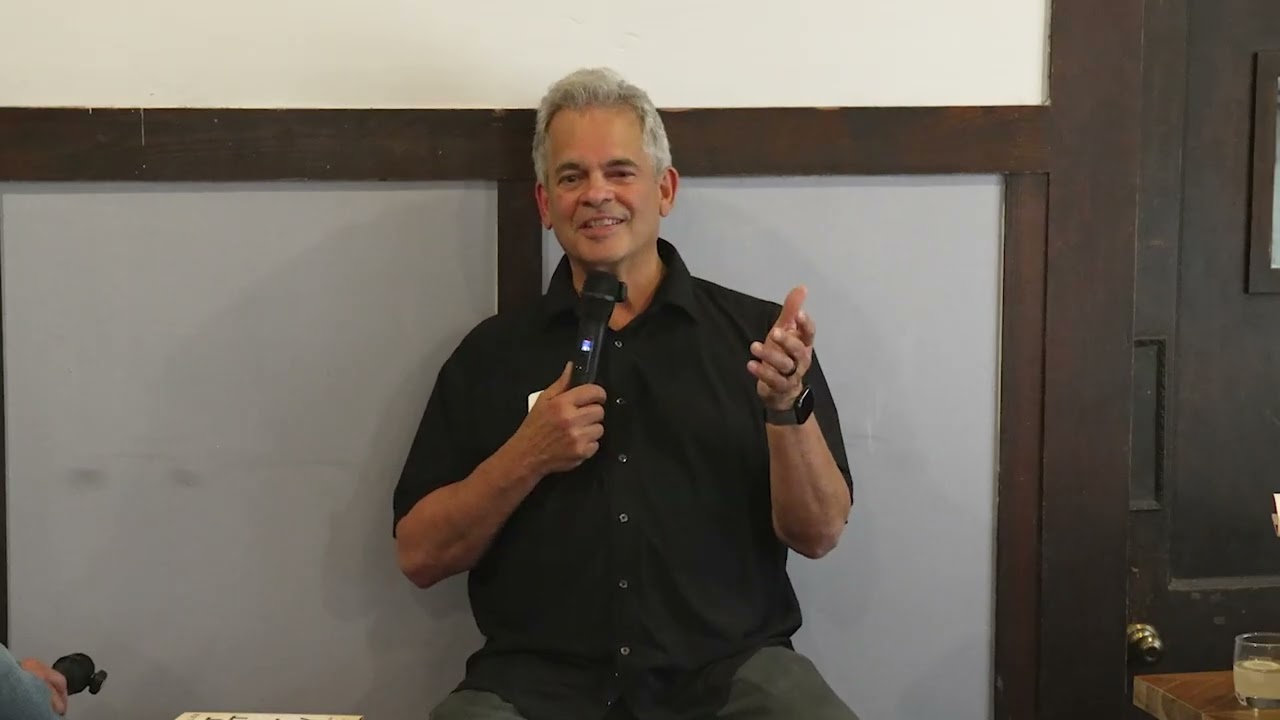
"if you had to pick eight years not to be mayor of austin, it would probably be 2015 to 2023."
in this live Fridgeside chat at the Red Fridge Society in austin, TX, former mayor steve adler sits down with local founders to discuss his new book, hot seat — hot city.
watch as adler shares hilarious personal stories from his early days arriving in austin in 1978, breaks down why austin uniquely embraces risk and failure like a startup, and reflects on what it takes to steer one of the fastest-growing cities in america through unprecedented change.
a Fridgeside conversation with steve adler (former mayor of austin), recorded live at the Red Fridge Society, a private founder community in downtown austin on september 20, 2026.
takeaways
- austin's growth rate has been roughly constant since 1850, doubling every 20 to 25 years, unlike most american cities.
- austin's high tolerance for risk lets founders who fail keep their access to capital, iterate, and get invited back into the room.
- as mayor, making district-based city government work was his top priority, while congestion topped residents' concerns.
- uber and lyft left austin after losing a referendum over driver background checks that they funded with about $10 million.
chapters
- 0:00 welcome to red Fridge & founder community intro
- 1:38 introducing mayor steve adler (2015–2023)
- 3:18 "austin was best the day you got here" & the hole in the wall
- 5:33 50 years of constant growth & austin's culture of risk
- 7:20 steve adler's arrival in 1978 & the infamous pimento cheese story
- 9:15 public interest law, eminent domain, & the path to city hall
transcript
from YouTube's automatic captions, so expect the odd misheard name. tap a time to play from that point.
0:00 welcome to red Fridge & founder community intro
all right, so let's get started. so, so we've got mayor adler. so, i don't know if mayor adler needs an introduction just a reminder just cuz for he was 2015 to 2023, right? that was that was which i mean, i don't know. i've i actually finished the book. i may or may not have finished that an hour and a half ago, but i did actually finish it. and holy [ __ ] if you had to pick 8 years not to be mayor of austin, it'd probably be 2015 to 2023. a lot happened in 2015 to 2023 in austin. and so, we're going to dig into that a little bit of kind of a three-act story. so, i always like i i consider origin stories kind of like superheroes for founders that really go back. where did you come from? how did you get here? what was austin like when you were here? how have you seen it change? we'll talk a little bit about some of the stories from the book. and then we'll talk about where austin and mayor adler are going from here. so, with that, yeah, give us a little bit of your origin story. what brought you to austin way back in 1978, which is crazy. i came here in '95 and i thought i saw a lot of change. >> well, first let me begin by thanking everybody for for coming. uh chris for setting this up. uh i've actually been to i don't know a half dozen of these programs in your in your space always sitting in those chairs and you bring in fascinating people. and i like that in
1:15 addition to the membership of your building, you open this up to the to the to the community more generally. uh there aren't a lot of places in the city that follow that same kind of of model. uh which i've always enjoyed as somebody who was not a member, but always tried to take fullest advantage of of all the perks that the members got. uh so, i appreciate everybody being here
1:38 introducing mayor steve adler (2015–2023)
1:39 for what and for what you do. uh [snorts] you know, i got here in in austin in the late '70s. and of course, that was the best time in austin when i got here. because the one thing that's true for everybody, i think, or most people that live in austin is everybody thinks that austin was best on the day that they got here, right? >> [clears throat] >> so, i got here in '78 and we're absolutely sure that it was the people who got here in '79 that started screwing up the place, right? but, the people who got here 4 years ago are sure that the people who got here 2 years ago are the ones that are that are messing it up. uh i think the one thing that that that's true about this uh uh city, i think, is that it does change really well. and over the course of almost 50 years, i've i've seen that. um i can remember when i got here, there was a a new club that had just opened up on the drag. and people were kind of upset with this new club that had opened up on the drag cuz they they were new. best as i could tell, and and they didn't they didn't they didn't
2:55 understand the culture and they didn't really understand the the drag that they were on, and it was and it was different, and uh they were bringing in different kind of music at that point, and uh it was not the music that people were used to hearing on the drag, and it was going to be disruptive, and austin was changing, and how could we survive that kind of change in our city?
3:18 "austin was best the day you got here" & the hole in the wall
today, the hole in the wall has actually done well for the last 50 years, uh and people can't imagine the drag in the city of austin if the hole in the wall went away. except that at some point, it probably will, and it'll be replaced by something else that 20 years from now, people are not going to be able to imagine the the city without that. so, i have seen a lot of articles of people that write how austin has changed and it's not what it used to be. best as i can tell from living here, those articles come out in the new yorker about once every 5 years, uh almost routinely. uh in the period of time that i've been here, the population has doubled in austin at a rate of doubling every 20 to 25 years, which is the kind of growth you don't see in american cities. that's kind of growth you see in in asian uh cities. pretty extreme. the interesting thing about austin is that that rate of growth in austin, if you graph it, uh has been constant since 1850. uh in an uninterrupted way, which means that there's probably something in the water or the air in this place that has that has has driven that because i can't think of another
4:33 city that that can say that or or point to that. i got here, as i said, in the late '70s. i was born in DC. uh that's where i grew up, inner city. uh i went to college outside of new york uh in uh new jersey. uh when you grow up in that 200-mi stretch, you're sure that the whole world revolves around that 200-mi stretch. your local news is the international news. uh i came down to texas for law school because it was the cheapest law school in the country. uh parenthetically, i'd point out i they gave me a $100 scholarship to come to the university of texas law school. uh i think they were trying to to get out-of-state students to to come to try to nationalize their law school at the time. i don't >> but the dues were only 120, right? wasn't that i mean seriously, that's that's that's that's how much it used to >> be back then to go to law school, which is state residency status was was $8 an
5:33 50 years of constant growth & austin's culture of risk
5:35 hour. so, 15 hours a semester was 120 bucks, and i had a scholarship for $100, so it cost me $20 plus room and board. >> i have teenage daughters. >> [laughter] >> it's a little more expensive to go to college now for those of you >> not that way anymore. austin at that time was the cheapest city in the state to live in. uh rent uh was $100 a room. so, if you had a one-bedroom apartment, it was 100 bucks. if you had a four-bedroom apartment, it was 400 bucks. everybody knew what rent was almost regardless of where you were in town cuz there really wasn't a qualitative difference anywhere in this city. and we were a southern town. i with with all of the the warts and and culture and attributes of a southern city. we were not the live music capital of the world. at [snorts] that point in time the phrase from the chamber we were the the friendly city. which did not differentiate us from the other 50 cities in the country that were also the friendly city. our big event was not ACL. it was not music. it was speed boat races on lake austin with aqua fest. and
6:52 everybody grew up in this city hoping someday they would be admiral of aqua fest. and be able to wear the the navy uniform and the and the little pin. and it was a very different place. but what was the same and what kept me here was even back then this was a city that had an incredibly high tolerance for taking risks. and this city continues to have a higher tolerance for taking risk than any city
7:20 steve adler's arrival in 1978 & the infamous pimento cheese story
that i've been in in the world. and with that, you know, most cities you try something you fail you don't have access to the same capital. you're not invited back into the same rooms. your your network changes. not in this city. in this city some of the the the folk civic heroes are people that tried something and it did not work and they iterated and and lived the old adage about failing quickly and failing forward. and that drives innovation. it's about being willing to accept and tolerate and respect different people trying different things. and i think that's really what drives and makes this city magical. and [snorts] it's the people who self-select to this city because there's something about that that draws them here. uh people who choose to live in austin will not go to dallas or houston or fort worth. those are all great cities, san antonio, but they're different. uh the cities we compete with are raleigh and denver and seattle. uh just a a different kind of makeup. uh i've often time argued to our state leadership that
8:35 uh from a state economic standpoint, uh we need a diversified group of cities the same way we have a diversified portfolio for our retirement plans and and and they shouldn't be trying to make austin look like the other cities because we're bringing in businesses that if they don't come here, aren't going to go to houston and dallas. they're going to go to those other cities uh that i mentioned and that's why they needed to let austin be austin. and of course, i was singularly unsuccessful in convincing our state leadership that that [snorts] was a a viable viable strategy. so, i got here um in the book, i tell the story uh that i
9:15 public interest law, eminent domain, & the path to city hall
think was kind of um uh gives you a taste for what the city was like. i got picked up at the airport um by some uh buddies of mine from high school that i hadn't seen in 5 years that had gone off to join the navy. uh i'm seeing him now for the first time in 5 years. they're picking me up at the airport. everybody gets off the plane. uh i'm waiting to find them. i don't see them. everybody leaves. it's just in the in the gate that they used to be able to go to the gate and meet people before uh 9/11. and i suddenly realized that the two guys that were left with hair down to their waists and beards that, you know, came also down to their to their waists were were my my old buddies. uh we on the way home taunted um uh the local the police, APD, with a a joint that was rolled up like a like a circus joint cuz they wanted me to know that everything was big in texas and they thought that was hilarious and i was sure i was about to get uh arrested. >> [laughter] >> um i was in barton springs within 30 45 minutes of arriving and and really i think that's when i thought i could i
10:32 might actually enjoy staying here. i went back to their house. they had tons of friends coming by constantly. uh i was impressed with how many people they knew and and their social network until i realized that they were just dealing. >> [laughter] >> uh i went to to sleep my first night in in austin. uh the the the smoke on the floor was probably a foot deep. they put a mattress out in the middle of the living room for me to sleep on and at one point i just had to go to bed. school was starting the next day and i can remember disappearing down into the smoke on the >> [laughter] >> on the mattress, waking up the next morning high as a kite, heading to to law school and reenacting the opening scene of paper chase where the student gets called on and he's not prepared and the professor gives him a quarter and says go call your mother because you're not going to make it here. fortunately, my professor didn't do that, but i couldn't answer the question. uh i went home uh to their home and >> [snorts] >> uh was really hungry. uh >> [laughter] >> went to their went to their my favorite part of the story. wait, what? went to
11:48 their went to their Fridge. they had an old jar of of ketchup and mustard, you know, one of these kinds of fridges. uh fortunately, they had a a tub of uh of um uh pimento cheese spread. uh and i was really hungry. not really a big fan of pimento cheese spread unless you're really hungry, in which case it doesn't taste that bad. i found some bread that they had, cut off the outside cuz it was kind of moldy. uh and made myself a couple sandwiches with uh the pimento cheese spread that they had. just as i was finishing sentence sandwich, they got home. uh and i remarked to them that i was still hungry. um and thanked them for the leaving the pimento cheese in the Fridge, but i had just polished off polished it off. and they stopped. >> [laughter] >> and looked at me and said, "you did what?" and i said, "i just polished off the it's the only thing you had in your Fridge to eat." what i didn't know is uh psilocybin mushrooms don't taste very good. so, they used to cut it with pimento cheese.
13:04 and then you would take a little bit. >> [laughter] >> and i had just bogeyed their uh and and they sat me down and put their arms around me and said, "okay, um you're going to be with us here now for the next couple days and >> [laughter] >> we want you to to relax and know that you're safe because you're going to be wondering about that here shortly and >> [laughter] >> but this is okay. it's all cool. we're friends here and >> [laughter] >> i i missed the next couple days of law school. went out and immediately found an apartment. that's how that's how i started in >> that is the most austin intro you'll ever hear. that would have been that's still probably a pretty good austin intro even today. i think you could have that same experience. that's fantastic. move on a little bit. so, um brief me on your career. i think i think the thing most remarkable about kind of your career from there is it seems like you were almost always even when you were a lawyer, almost always doing public service. you were helping people with eminent you're always on the side of the people. so, tell us a little bit about the law practice and what you how you kind of got what you did for 30 years and and um how that was rewarding and then you know, your quick intro into the politics, and then we'll get into the the some of the stories while you
14:19 were mayor. >> i grew up in inner-city DC to parents that i'm not sure either one of them graduated from uh high school. uh my father was a film editor for CBS, which was a neat place to grow up cuz i could watch the newsroom floor. uh he was never going to go past where he was as a film editor cuz CBS had rules that in order to actually go anywhere you had to actually have a college degree. uh and then and he never attended college. uh but i but i grew up with with living in inner-city DC, so the things that i saw in that period of time in the '60s were the the the civil rights movement. i was in DC uh when uh dr. king was killed, when and when RFK was killed, watched what was happening all around me. uh i grew up watching perry mason and romanticizing what a lawyer could do uh with those skills. uh so i had decided, you know, relatively early that that would be a fun thing to do, and i when i got to college, i realized that if you don't know what you want to do, getting a law degree is actually a nice thing to do cuz you can stall for another 3 years.
15:34 and it gives you a tool that that you can use in in lots of lots of different ways. so when i graduated from law school, i i i worked with the firm i was clerking for, which did eminent domain law representing property owners and renters against the state and the city when they were acquiring property for roads or university of texas expansion, that kind of thing, and i did civil rights law, so representing workers in federal court on discrimination issues, women in workplace harassment cases. uh but it it it scratched that that need, i think, that i grew up with to to be giving back to the community, to find situations where people didn't have access and opportunity and trying to give them some some modicum of that same access and opportunity that that i had been able to to get by virtue of of getting into princeton and being able to be there and to develop that social network that existed in that school. so yeah, that's what i that's what i did and uh um real involved in the community. diane and i did a lot. diane's my wife. she's
16:49 sitting in front. say hi, diane. thank you. >> hi, diane. >> [laughter] >> um doing a lot of work with nonprofits. we're on a lot of boards. that's kind of like what we did together, you know, to to have fun. but it was a neat way to see the city and to see what's working in the city and what's what's not uh working in the city. um but that that is how we spent our time. >> that all sounds like a wonderful life. what why the hell would you say, "maybe i should run for mayor?" yeah, no, i mean seriously. >> [laughter] >> nice i i i yeah, so so lovely. why would you why would you mess all that up by running for mayor? >> you know, running for mayor was not something that was on our radar screen. it was not something that we ever talked about. uh in 2013, the city of austin community by referendum uh passed a change in the form of government. so we used to have an at-large council where everybody on council was elected by everybody in the city. uh which meant that everybody who was on council lived downtown because downtown voted more than anybody else did anywhere else in the city. i
18:05 mean literally everybody lived south of of 35th street and north of the north of the of the river. so the city uh voted to create districts, 10 districts as we have now. uh [snorts] and 2015 was going to be the first council that was created that way. uh, so the former government had changed. what that, um, meant was austin was going to be trying something that other cities and counties had done. and uh, virtually every city and county that moved to a district government from an at-large government failed for the first four to eight years because it quickly devolves into a ward politic kind of situation. somebody gets elected from a district that's never had representation on the council before. and that representative was sent to council only to achieve this one thing that this district had never been able to do. and and and they realize suddenly as they're all there as a new council that if they vote for the special project that five other council members need. and and those five people vote for theirs, all six of them can go back to their district with exactly what it was that they've never been able to get.
19:21 even if this thing was not in the best interest of the city, even if it was a, you know, wrong thing for the city to do. they're an advocate for that one district and they can deliver that one thing by getting together. and what happens is you have people that are not really concerned about the city generally and only looking at the district that elected them. that's why the government fails. so it was real important, uh, to group of us, mostly from uh, the the the business community at the time, uh, which is, you know, where my practice came from. um, that we needed a really strong mayor because everybody on the council was going to be new. because all the incumbents had run citywide, now we were going to get activists from each of the districts. we needed a really strong mayor. >> [snorts] >> a group of us went out to recruit somebody to run for mayor. and there were some people in this city that would have made great mayors. all of them much too smart to agree to be uh, run for mayor. so eventually we kind of locked ourselves in a room and said, "all right, none of us get to leave here until one of us agrees to stop doing what they're doing and and go run for for mayor." and diane and i, we drew the the short
20:36 the short straw. and 2 weeks later i was running for mayor. uh, it was a kind of a low-risk proposition because my name identification at that point was probably 1 and 1/2 points. uh, and most of those people lied because 1 and 1/2% of the city did not know my name. so, there there wasn't a a real good chance we were given to actually win. we were running against two incumbent members of the city council that had been elected uh, several times as citywide candidates, but much to the city's surprise and our surprise, i was mayor. i had never >> [laughter] >> i had never seen a austin city council meeting until the first one that i gavored in. >> yeah, well, neither had the other 10 people, so that's okay. yeah. >> [laughter] >> that that's uh, that's is amazing. but, i you read the story about how you did that. you tried very hard and were very smart about it and and and here you are. but, um, so before we get into what actually happened, what did you want to happen? what what were your the big things that you actually wanted to accomplish when you were mayor before you went in? were there were there a couple things on there and then we'll we'll flip to what actually happened.
21:52 >> well, you know, the the the highest priority for me was just making government work. i mean, to try to get uh, 10 district champions to to put the welfare of the city before the welfare of their individual district. um, and collectively for us to make decisions that were in the best interest of the city generally. so, it was really that process question of trying to make government work, which all the campaign people told me i could never talk about because candidates who talk about process never win elections. i mean, it's just not something that excites people, but the honest answer to your question is that's that's where i thought i could actually help and it was my real differentiator. the issue that pulled the highest, that the community wanted me to work on, they wanted their local government to do, was a 70% poll winner, way ahead of everything else. nothing else scored over 40% was congestion. traffic congestion. if you the traffic we have now compared to the traffic we had in 2014, um and and
23:08 you know, in in austin, i think everybody had gotten used to being able to get anywhere in this city in 10 minutes. it didn't make any difference where you were going. you had a meeting at noon, you didn't have to leave until 10:00 till. uh it's anywhere in this city. >> [snorts] >> uh but by 2014, now it was getting hard. we had this huge congestion problem because it took you 15 minutes now >> [laughter] >> to get anywhere and people were upset at that. the other indication is that the city's actually doing okay, right? if this if the single biggest thing is people are upset at a 15-minute uh commute. uh but that's what it was. i mean, that was the issue. uh homelessness, not on the radar screen, never asked about homelessness other than by the chamber to get rid of the arch uh downtown because it was messing up the the sale of properties uh downtown. um um policing, should have been an issue, wasn't an issue. um uh housing and affordability really hadn't hit this city, you know, 4 years later we were the poster child for rapidly rising housing prices. rents uh went up by like 30% uh in austin 5 in the summer, 5 years, 6
24:25 years uh later. uh but none of those things on the radar screen. i when i ran in 2014, there was a proposition on the ballot to try to move toward mass public transit in the city. and i really think that's something that the city needs in whatever form. if you look at successful cities around the world that have grown that have more than a million people, they have a way for people to get around in addition to uh driving their cars. and there are a lot of people who can't really do that. uh and the alternative has to be something that enables someone to get to a job or to a clinic in less than an hour and a half and and we didn't have that. in 2014, there was a proposition to do that. public mass transit and it was apparent it was going to lose. when i ran for mayor that election in 2014, because every council seat in every district was electing somebody new, there were you know, five to eight candidates running in every race. so, there were 70 some odd candidates running for city council elections in 2014. uh and none of them supported the
25:42 proposition for mass public transit. it was a bad proposal. it was handled poorly. so, i ran in that election saying sometime while i was in office, i would bring back to the community something they could actually vote for. so, i talked about that. uh we had in the 20 years prior to my term as a city, we had approved about $720 million in transportation capital infrastructure cumulatively over that 20-year period of time. the reason we're so far behind the eight ball in terms of transportation in this city is in part because of those decisions, which was not to spend money or to invest. the city of austin, everybody loved being here. everybody, of course, loved austin the way it was when they got here. so, the policy of the city was, "let's not spend any money on infrastructure, and then people won't come." >> [laughter] >> doesn't work that way. >> keep austin congested. >> that doesn't work that way. people come anyhow, and you just don't have the infrastructure to support the people that are here. so, one of the things i ran on was to get the city to recognize we weren't
26:58 just a little college town anymore, but we actually had to approach economic development and and infrastructure and investment in the way that that big cities did. uh, and we were able to to do that in my uh, at the end of my first year, we did a transportation bond that was equal to what we had raised in the 20 years, uh, cumulatively, uh, prior to, and um, but i think that was kind of the agenda. >> yeah. so, that's what you thought was going to happen. we don't have time to go through all the stories in the book. crazy stuff. bomb, if you remember here back in what what was it, uh, 2018, the bomber? the there was a uh, serial bomber in town, like national news, international news. craziness you had to deal with. there was, you know, all kinds of things we could go into, but it will just focus on maybe two or three of the stories, and then we'll we'll kind of wrap up and and let some folks ask questions, but a lot of tech founders in the audience. tell us about the uber and lyft debacle, which anyway isn't they haven't been here for more than 10 years, so they don't know this even happened, but uh, more more national news. so, tell us about that that time in austin, and uh, and what
28:13 happened in the closed rooms around that. well, you know, a lot of my friends, uh, were heavy into bringing really the the the the tech uh, power and movement and energy to the to the city. uh, most of the guys, founders that created capital factory, uh, the the early investors in um, uh, austin ventures uh, were my friend. so, i so, i came into office really wanting to lean forward in that and and to help create that as the the brand for our for our city. so, being tech forward was something was really important to me. it was also something that was part of the culture of the city. we're a we're a city of early adopters and and then so many ways if you look at the things that have happened in the city and there's a reason why twitter was effectively launched in austin uh, and why the early transportation bike share programs and uh, happened uh, here. i mean, we were really a tech forward place. when i would travel to to asia and to china, that's what they wanted to hear about. that's what they wanted to uh, in invest in. they had never heard of austin when we first started going. by the time we
29:28 uh, were leaving office 6-8 years later, austin was the city in in texas that they wanted to to invest in and be in. so, that forward-leaning involvement with tech was real important. what was happening at that point in tech were the real birth of the disruptive tech companies. uh, the ones that took great pride in arriving into a city and and not only not working with the city, but but immediately going at war with cities over city regulations. so, we're talking about uber and lyft and and homeaway uh, which [snorts] started in this city leading into uh, airbnb and all those kind of disruptive markets and uh, you could see them going at the cities around the country and the battles the pitched battles that they were facing. and i was bound and determined that in austin we would prove up a different model uh, because i was really amenable to recognizing that for the new kind of disruptive economies we were creating you couldn't rely on on early 20th century regulatory patterns. i didn't know what the new regulations needed to be in that environment, but i was willing to work with the companies
30:44 to kind of figure that out. uber and lyft come to town. i reach out to say, let's do this right cuz it's going to be really disruptive. we we have a taxi industry here that's really strong and really powerful. they have a lot of political influence, but there are a lot of families and a lot of workers that are going to be impacted by this. uh and and uber and lyft didn't want to talk to me. like they couldn't talk to me. it was it was against their brand to actually engage with our local city on something like that. so, i was kind of trying on my own and then there was some coeds uh that were sexually assaulted by a rideshare driver leaving sixth street on their way back to campus. uh and immediately that part of austin, that was kind of the old austin and didn't want things to change, uh picked up this as their issue and they wanted to have a biometric background check for drivers. well, you can't do a biometric background check for drivers on the platform that uber and lyft have because their business model is dependent on having 10,000 drivers. so, the on-ramp for people to be drivers has to be
31:59 something with no friction so that you can have the number of drivers that are necessary driving around that when somebody calls one up, they get one in [snorts] in in 3 minutes. but, i had a council that was ready to kick out uber and lyft unless they would agree to fingerprinted background checks cuz that point in time that was really the only biometric tag that was available. and uber and lyft i think loved that because that felt like all kinds of cities i got together and and and pulled together everybody i knew in the tech area uh kind of led by josh bear uh and josh jones dilworth and eugene sepulveda and i said help me solve for this in a way that meets the the need for biometric check but doesn't impact the platform and the business model of these companies. and they came back with something that would work. they created an app called thumbs up that was kind of a third-party validator of drivers. and every time we tried to do something uber and lyft responded by saying no.
33:14 they wanted to put on their slider, you know, you you want a background fingerprinted driver, you could have it on your slider and ask for it. no, they couldn't. it was too complicated to put on their slider. so we we we we ran the software for them. we could created the programs and said here is the program for you to put it on your slider. they didn't want to do that. we [snorts] were incentivizing drivers. they said we could never get drivers to actually do it. we announced a raffle for a new tesla for those drivers in uber and lyft that were willing to get voluntarily get fingerprinted and everybody wanted to get fingerprinted to have a shot at a new tesla cuz there was a limited number of people in the drawing. they didn't like that. but we came to them repeatedly and i went through in detail in the chapter of the book one after another proposals that we made and finally at the end of it i said okay, we're not going to ask you for anything. we're just going to qualify these drivers on our own. we'll have a thumbs up decal that goes on the back of a car and consumers can check themselves and see whether they want to be with that driver or not cuz it would tell them whether that driver was fingerprinted
34:29 operating everything entirely out of their system and uber and lyft said if you do that we're going to leave austin. and i said wait a second. i'm not asking anything of the company. we're doing this themselves. he goes, "yeah, yeah, we understand that, but if you do this, countries around the world will think we participated. and we don't want that. that's just going to be confusing to people." and i said, "well, i can't not do this on our own for that for that reason." >> [snorts] >> but anyhow, true to their word, as we were moving forward to that uber and lyft uh um announced they were going to leave, asked for a referendum with the city to to put us as a council in our in our place. they spent $10 million on that election. i think the other side spent $170,000 on that election with an electorate that was some of the highest utilizers of ride share in the world. we were the number one utilizer of lyft ride share services of any market they were in the world. uh and and when they lost that election, they they left the they left the city.
35:45 i immediately got 20,000 texts, tweets, uh from from tech people all over the country, all over the world, lamenting the fact that i was such a luddite uh and i was running out of the city new technologies, you know, and and you once again, another mayor uh who refuses to accept uh new technologies, but it was an entirely different situation. we were innovating and creating much more quickly than uber and lyft could. they had become the old staid company pretty quickly uh and weren't able to react to what was what was happening. but i'll still run into to tech people who uh know me to be the the the tech luddite. [laughter] >> yeah. >> austin has been to >> right, austin happened in the city. just the the coda on the story, joe lamont. um no fan of of government. >> [laughter] >> joe lamont came to me and said said "what the [ __ ] are you doing?"
37:00 and and i said, "it's not what you think." and i said, "this is what i have proposed to uber and lyft and this is how they've reacted to it." and joe looked at it and and and you know, i mean, he did great. he's like one of my heroes for this period of time. he looked at it and said "they should agree to this." and i said, "i know." and he goes, "you're obviously not communicating this well." he said, "i know these guys. i mean, i've invested with these guys. let me go i'll go out to san francisco. i'll fix this for you and we'll be past it." and he went out to san francisco and met with his friends who were the investors in in in lyft that he had also invested in and other things. and he came back pissed. i mean, so angry at them. uh and he said, "let them leave. let them leave. we'll create [snorts] our own in the city." which is what he did. he took you know, he's he's he's former company now that's based on having coders all around the world that were building things and this became the priority and in 10 days we had our own entity. >> i'm sorry. i turned it off cuz you hold the bottom of the mic sometimes. i i
38:15 turned it off cuz the feedback but >> sorry about that. >> just maybe yeah, just hold it a little bit out to we'll try. >> sorry and and hello? yeah. in 10 days is it on now? >> yeah. >> hello hello. >> this is what happens when i do the AV. >> in 10 days >> [laughter] >> is it really not big? in in in 10 days uh he created a a new version of uber and lyft called ride austin. i and it was a non-profit organization and it paid drivers close to a living wage. uh it had uh functionalities that now uber and lyft have with the rounding up to the nearest dollar, making a contribution to a charity was an invention of of ride austin and the city. so, we had we had the only competitive ride-share market in the world at that point in time. uh we had we had 15,000 qualified drivers and no company. uh so so we had >> five or six i'd still want to your cameras, so >> okay. >> use even if it doesn't work just >> all right, still it still had five okay,
39:30 still had five or six uh ride-share companies that came in town to develop their platforms and to compete. uh and and i think we really would have advanced that technology in a competitive market situation. uh except uber and lyft went up to the state legislature and got austin preempted and effectively killed uh ride austin. and and when we were preempted and they killed ride austin, they came came back to town. >> crazy. and that's there's a theme there, too, where what everybody thinks happened and what happens feels like the hardest thing about this job, right? there's so many conversations and so many things that that just don't make the new cycle that uh it just must be incredibly frustrating as you're a mayor through these these crazy times. so, one more story and then we'll we'll we'll talk about the future of austin. um personally, like so one of my the craziest leadership challenge i ever had running my company, and i was fairly small. i had 60 people at the time, was COVID, right? those march to to june time when it was so uncertain and we were very we were very in persons back when everybody actually worked in person, uh very culture forward as you're all
40:45 experiencing right now, and i was was protective of the team. so, the way to you know, keep everybody employed and and and transition our culture online and all these things. that was uh single the hardest and also one of the the proudest times of my leadership. i cannot imagine the decisions you had to make at a city level, and reading your book, the thing i also didn't understand, which i'll tee up, is that when there's a disaster declaration that the mayor basically you suddenly have all these powers you didn't even know you had. and so all the decisions really are that's just your decision now. it wasn't the council's decision. it wasn't uh the state's decision. it was actually your decision. so, you know, there are a couple notable ones, canceling south by southwest. can you tell us a little bit about, you know, what that was like and then some of the hard decisions just continue shutting the city down during those times. >> so, austin's former government is uh uh not a strong mayor form of government. so, the mayor in austin is not like the CEO. the department heads, the police chief, the fire chief, they don't report to the mayor, they report to the city manager. the mayor and the city council are more like the board of directors of a company, and the mayor's more like the chairman of the board. i think the governmental problem in austin is that there is no CEO. the city manager is the chief operating officer.
42:02 but when there are tents all over city hall and people want them to go away, the mayor can't make them go away. mayor has no power to be able to do that. there's no one that reports to the mayor. the the manager is the one that can make them go away, but unlike a CEO, he's not known to be the chief executive of the city, so no one knows to hold him accountable. so, there's like nobody in the city that where the authority aligns with the accountability. uh so, a mayor in that situation, which was kind of frustrating, i didn't really appreciate that uh when i was when i was running. uh but that's kind of the reality of the job until you file a disaster declaration. and when you file a a declaration under law, the mayor then becomes the the executive at least as to concerns that issue. uh so diana and i were in china in december of 2019. uh probably about within about 200 mi of wuhan. uh coincidentally. uh it would have been horrible if i had come back to austin and had been case
43:17 zero >> [laughter] >> states. as mayor of the of the city. uh but i had, you know, mayors that i had met, friends i had in in mayors uh all over the world where i met at international conferences and things. so, i was watching this virus come across. uh and i was getting much better information from them than i was getting from our people in washington d.c. from the CBC and from the president and from in virtually no real good information coming. uh but you could see this thing happening and >> [snorts] >> it was hitting cities and people were dying and it was happening at a speed uh so far beyond anything that anybody even warned could appreciate or was willing to accept. and we had south by that was coming up. and i kept looking at our numbers because i desperately wanted us to be able to do south by before we actually had to take really hard action. south by generates $400 million for the community. there are businesses in the city that uh are dependent on south by week to survive for the year. that's where they make their profit margin for the for the
44:33 year. if we shut down south by, a lot of these companies would go out of business. a lot of people would lose their jobs. right? so, so the the the discussion became how quickly would it come? could we stall taking action long enough to be able to hold the event? and if we couldn't, what was the uh uh resolution of the equation of do you do something that has catastrophic consequences to the economy of the city and the loss to the city of unimaginable proportion in order to save lives? and how many lives is that? and how many lives does it need to be before a city pulls back? is it one life? is it two lives? is it is it 100 lives? i mean, what is that? and the very fact that i'm sitting there trying to do that equation is mind-boggling and scary. and then to learn that everybody else who usually makes decisions with the city was relishing the fact that they didn't have to make this decision. and i didn't understand why cuz i didn't realize that it was like my decision to
45:48 make until everybody around me made it really apparent that hey, they wanted me to know they were with me. >> [laughter] >> they would support me no matter what decision i made. and i said, "what the what are you talking about?" >> were going to get blamed anyway, so i mean, let's let's you're going to get blamed anyway, so >> i mean, you could you and even those issues weren't clear, right? so, you could shut down south by in order to save lives. right? cuz the modelers at UT were telling me that even though we didn't see a case in austin, it was already here. uh and when we looked at the people who were arriving on south by, we had 5,000 people coming from seattle. seattle had had a case of just transfer out in the community. we had shut down invitations for anybody from asia coming because of the conditions there, but we still had a lot of people from asia that were finding their way to to austin in that period of time. uh you're trying to find rationalizations to keep maybe maybe we have a duty and a responsibility to do south by in [clears throat] a in a COVID appreciative way. it's our duty to do COVID and we'll keep everybody 6 ft apart and we'll move more events to the outside. >> [snorts]
47:03 >> uh and we won't shake hands, we'll fist bump or elbow bump. and then you wonder, is that just like a rationalization to be able to do south by? do we really have a duty to show the model for that? no one knows what that model is. from a health standpoint, if you shut down south by to save lives and then people lose their job because their companies fold, which was going to happen. then you have a lot of people who are losing health insurance 3 weeks before COVID hits and they're going to need their health insurance. so even if you're only concerned about people's health, there's not a clear answer on whether [snorts] or not to shut down south by. a lot of the book, i think, is trying to present we we we have discussions right now, policy discussions and political conversations in this country and everything is so polarized and partisan that nobody hears the other side's arguments and they believe that their view is 100% right and the other side not only isn't right, but they're 100% wrong. and no one can recognize a valid argument that somebody on the other side has, even though they have valid arguments. even if at the end of the day you're 100% sure that when
48:20 you assess things, this is your view that at some point you actually have to look across and say, "well, that's actually good argument. i don't think it's convincing for me, but that's a good argument." no one has those kinds of discussions anymore and i tried to put a lot of those in the book on issues like race and policing and homelessness and and and housing. >> yeah, the yeah, the i'll say the housing and affordable housing and that i mean that i can't even have that conversation with my wife cuz we have opposite sides of that conversation. but i think that chapter did an especially good job of like talking about how these city council meetings have both sides of these issues and and you just got to you have at some point you got to make the best decision you can for the future, right? >> i opted to shut down south by. i was the first big event like that that was shut down in the country. uh again, you know, half the country seemed to like the decision, half the country thought it was a horrible decision to make. within 10 days, everybody every city in the country is making the same decision. new orleans, same time period, went ahead with mardi gras. uh and it served as a uh spreader event. and probably, you know, a couple thousand people died because new orleans
49:35 went ahead with uh with that. COVID in in austin, uh the mortality rate in austin for COVID was less than half the mortality rate for COVID for the state of texas generally. so, within texas, our rate was different than texas as a whole. if texas as a whole had had the same mortality rate that we had in austin, about 25,000 texans would not have died of of COVID. so, it's still a political issue and and still people are looking back on it and and everybody has different views and we didn't do everything right because the information was really bad. you're making the best decision you can at the time, but the information at the time really wasn't great. we probably kept schools closed too long, kept kids out too long. there are better decisions we could make, but i given what we knew and what we were working with as a community, i'm really proud of the of the reaction of the community cuz at the end of the day, i was, you know, signing orders to get people to to do things and protect one another, but those orders really are impossible to enforce. we don't have enough police officers or enough code agents to do that. so, either the community does it or the
50:52 community doesn't do it. and we had a community that really leaned into trying to protect one another in a way that that that exceeded most other cities in the in the country, which is why our mortality rate was as low as it was. >> well, thank you for your leadership during that time and the whole eight years. i mean, just again, can't imagine the the decisions and the pressure and the you know and then the blowback and feedback from that as well. so, thank you. let's let's move on a little bit before we open up for a couple questions on on kind of what's next both for you and austin. so, what are you doing these days? are you going to get back in the politics game or you just cheering from the side and and yeah, tell us a little bit about what you're working on these days. >> so, i'm teaching. i'm teaching at at houston-tillotson with uh chris and the um also at LBJ school uh grad students and at st. edward's university. i'm still practicing a little bit of law to to help fund diane's travel habits. >> [laughter] >> um i'm an an operating partner in a VC fund out of new york. we just closed our
52:07 second fund, a $50 million fund that is doing investing in really early stage, so seed, pre-seed uh investments in companies that are at the intersection of government and technology. so, continuing on a lot of the work that that i was doing before. uh and um um you know, we're involved politically. uh you know, i'm helping to advise gina, for example. obviously, i'm a democrat. uh so, helping with um with with with that race. uh don't anticipate i'll run again. there are enough like old white guys out there and and and i think it really is a generational moment to to empower uh next generation to to come forward. i'm a big proponent of of that. >> and what would you say? we have so, we have a lot of founders, a lot of, you know, from all experience levels from the beginning and all the way up to very experienced. what would you say to this group in particular about civic-mindedness and getting involved in in local politics or any politics or how what how you would recommend they get engaged where they are now in their careers and and also in the future as they as they age like myself. >> i think two real insights i had that i did not have until i was elected to be
53:22 mayor. i thought that i understood this city. i had lived in this city, you know, for you know, 38 years before i became mayor. and i thought i knew the organizations and the issues and the people and the places in this city. uh, but i realized when i got elected mayor, i had no clue. uh, there were so many things happening in so many parts of this city that i never saw, that i'm not sure you ever do see unless you're mayor because all these things seek you out. the people seek you out or you end up having to cross paths with them. uh, and that was uh mind-blowing for me. the second realization i had is i was involved in a lot of nonprofit organizations and i used to believe that nonprofit organizations filled the gaps that government wasn't able to fill in terms of keeping a community going and i realized i had that backwards. uh, that that at best government fills the gaps that the community is not doing themselves. the number of organizations we have in this city that are making this city run
54:38 and operate is vast. and people being involved and that changes your appreciation for what local government is. i think a lot of people think of local government as something that's there and does something to them. except for when they're able to not let it get in their way or impact their lives. uh, and and i think that the better perspective on local government is think about it as a collection of families. you know, [snorts] local government really is just a collection of families in our city teaming up with one another to deal with those things that are too big for any one family to be able to do on their own. and i think if you think about local government that way, different than state government, different than federal government, if you think about local government that way, it changes your perspective and i think it changes um why the reason it's important for everyone to get involved in local government at some level in some way. um because it really is just families getting together to do things. when we had winter storm uri,
55:55 uh we went through a period of time, you know, if you remember that, we had a storm for 6 days, we lost power, we lost water, you couldn't travel on our streets. i mean, everything that was a city service couldn't happen because nobody could communicate and everybody that was supposed to be doing those as city employees couldn't get to the job to be able to do what they were doing. so, what happens in a situation where nothing is running and nothing can happen, and what happens is is that neighborhoods start looking out for one another. neighborhoods start going door-to-door in their neighborhood to find out the the elderly people who are do they is there heat running? who has water and who doesn't have water? who has the four-wheeler that can make it to the station where the water's kept and bring the water back? uh and it's it's magical to see a city that gets stripped of anything other than the families that live here. and it's it's reaffirming because again, i think that's what local government is and supposed to be. and when people sit out that, when they don't get involved,
57:10 uh then it becomes something that's rogue. then it becomes something that's being driven by something other than the families in the community. that's when local government kind of goes off the off the rails. but in those places, with those incidents, in those areas where the families are willing to to say, you know, i need to put a night a week toward the community. magical things are are happening for those families, for their children, for those for those communities. >> wonderful. i have a bunch more questions, but enough about me. a couple questions from the audience. who has a question? i'll give you the mic. here, i'll start off with you. >> uh thank you for coming, mayor adler. my name's irie. i run dispute dojo, a restaurant advocacy business. so, two quick questions. uh earlier this year, the flagship p. terry's at capital plaza got uh shut down via eminent domain. you mentioned in your introduction that you were on the defensive side earlier in your career. do you think austin institutions like p. terry's should have special protections for things like eminent domain? and then my other quick question is i see your book here. can we buy these here, or what's the
58:26 >> yeah, i bought all the ones for my members. >> oh, okay. all right, cool. thank you. >> we went ahead and and we brought another 30 copies of the book. so, if anybody wants to buy one, there are books here. each of you can do that. >> well, you'll sign them as well, right? with special messages just for you. >> who has a book. uh i think that they do deserve special protection because i think there's a community value for that. i mean, dirty's and the desire of a significant [snorts] part of the community to save dirty's changed the routing of the of the project connect effort. i don't think it's a controlling factor because i think there's still kind of community goals and and the like. uh but i think it's something think a factor that should be taken into account because ultimately the decision about those routings are political decisions. i mean it's driven by the engineers. engineers are going to set that up and at the end of the day, there is a political elected body that can overrule the engineers on anything or tell the engineers they have to figure out a way to accommodate something. so, i don't think it's a controlling interest, but i think it's a factor that needs to be taken into account. pete terry, it's our music venues,
59:42 i mean the kinds of things that help make the city special. >> what else? raj? >> thank you so much. >> [clears throat] >> thank you for your service, mayor adler. i'm raj veer kindra. i currently work at FISA. you'd mentioned earlier that your name recognition was not at all where it should be for running for mayor. assuming you pull the short end of the stick like now, what would that look like in terms of scaling your name and running for office? what are like the major contrasting differences and what would you forecast being the biggest challenge? >> you know, i i i had two things that that were going for me as i started the election. so, i decided to run in december, january before the march democratic primary in all the races that have primaries. there is no primary in the mayor's race. it's a non-partisan election, so everybody runs without regard to party and everybody's on the ballot in november. i'm running. i have don't have a clue as how to run. and everybody who is a campaign consultant and knowledgeable was working on a race that was coming to a head in march because it was primary. so, no one
1:00:59 who lived in the city, who knew anything about races, was willing to talk to me. um uh much less talk to me because no one knew who i was. the only campaign people i knew, i knew because i had been an obama supporter. so, i um i had helped raise money for for obama and i had met his campaign team. uh so, i reached out to them. and i said, "it's been probably decades since you have worked on a local city race. and you've just now elected a president twice. but, i need help with the campaign, my campaign at least through the end of march because if i wait till then, it'll already be over." so, i had the equivalent of mickey mantle and whitey ford coaching my son's little league baseball team. >> [laughter] >> and [snorts] and and literally they they came into town and said, "we're going to keep you as a potentially viable candidate through the end of march. uh and and then you'll kind of take it from there." and they were great.
1:02:15 uh so, they they started me off. the second thing i had was this is a city which is very democratic. so, the mayor's going to be a democrat just because of the the demographics of the city. and the best way to beat anybody in an election is to convince the electorate that that person is a republican or a developer. uh so, anybody you don't like is a republican and a developer. the person who was favored to win the race at that time was a sitting city council member, mike martinez. good guy. a good democrat. uh he decided that's how he would beat me. so, he launched this campaign about me being a republican. hard to do given my history. so, it didn't really take hold. and but what it did do is it immediately elevated me in the republican boxes all over the city because they didn't have a candidate. and i was the republican candidate. >> [laughter] >> so, i ended up getting elected mayor. he and i split the democratic vote. but i had 84% of the republican vote in
1:03:31 the city. [laughter] and that's what took me to victory. when the race was over and i won, i went to a memorial service in the senate chamber where i had done some work as chief of staff for a state senator who was a friend. and then governor perry came over to me on the at this memorial thing and put his arm around me and said, "steve, congratulations on being mayor." again, i looked at it and said, "thanks." and he said, "84%." >> [laughter] >> he said, "you know, no republican running in travis county achieved that number." and he said, "you know, it's at this point that i'm supposed to be having a conversation with you about switching parties." >> [laughter] >> all right, just looking at the time, let's call it there. so, first of all, mayor adler, thank you so much for everything you've done for the city and for [applause and cheering] taking the time to be here. thanks for coming. uh i got to kind of encourage there's so many stories in the book. they're all like so austin and so so much the history of the city, you know, through the through those years. i highly, highly recommend it and pick up your copy uh today.
pull up a chair
Fridgeside chats are free for founders. membership is curated to current and exited founders.