
graham reynolds on the business and craft of composing
the business & craft of composing: Fridgeside with graham reynolds (a scanner darkly, hit man)
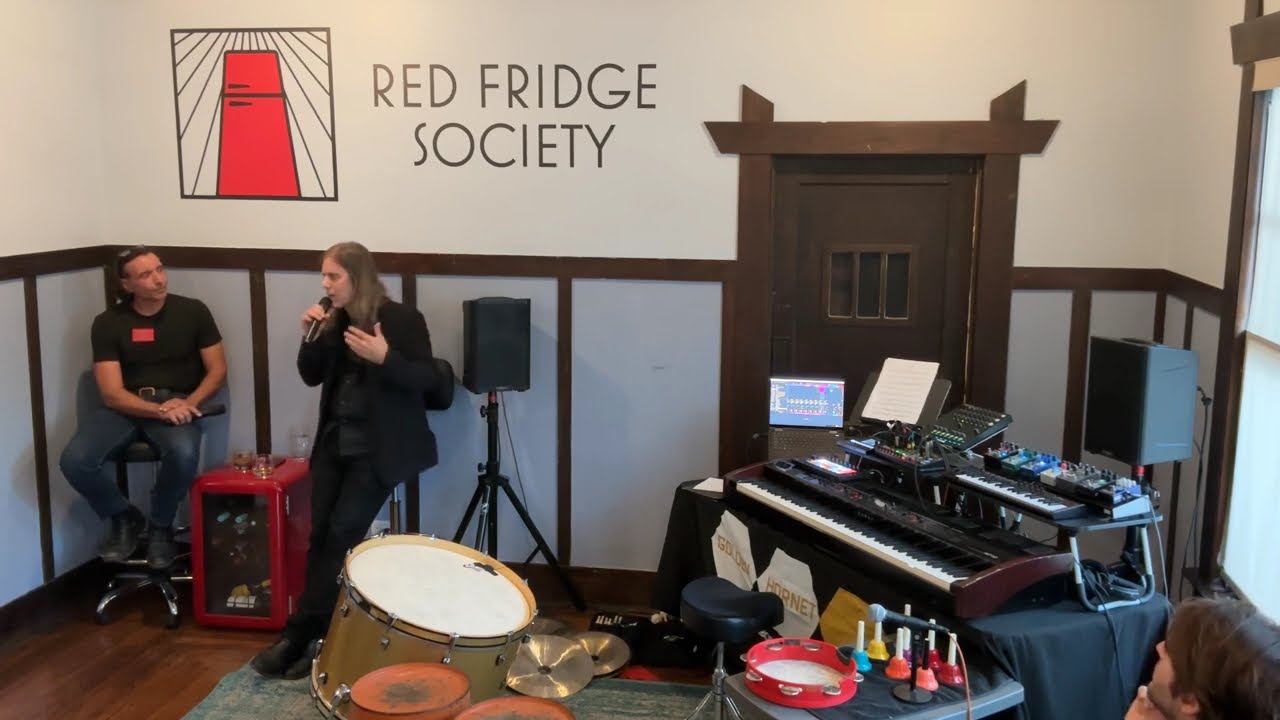
composer, pianist, and bandleader graham reynolds (dubbed "the quintessential modern composer" by the london independent) sits down for an intimate fireside chat, live performance, and Q&A.
with over 100 film, television, theater, and ballet credits—including longtime collaborations with director richard linklater (a scanner darkly, before midnight, bernie, hit man)—graham demystifies the practical business of being a working freelance artist, the psychology of scoring films, and how he keeps his creative pipeline flowing every single day.
graham also shares live demos from his album the portcullis and discusses his alt-classical nonprofit, golden hornet, dedicated to mentoring the next generation of young and emerging composers.
a Fridgeside conversation with graham reynolds (composer and bandleader), recorded live at the Red Fridge Society, a private founder community in downtown austin on september 9, 2026.
takeaways
- graham juggles about a dozen projects at once and sees knowing a little about many disciplines as a strength, not a weakness.
- he cleaned houses by day while scoring films, moving to full-time music as film work and managers raised his fees.
- early sketches matter: on hit man, sketches the film never used still helped him refocus after the story changed direction.
chapters
- 0:00 welcome & introduction
- 1:15 origin story: hand-built instruments, elementary jazz chords & leaving conservatory music school
- 3:40 moving to austin in '93: punk rock clubs, $1 pbrs & saying "yes" to experimental puppet shows
- 4:45 the linklater breakthrough: playing jazz standards to scoring a scanner darkly
- 6:15 juggling 12 projects at once: why wide scope beats narrow specialization
- 8:10 the business of music: cleaning houses while scoring hollywood stars & crossfading into a full-time living
- 10:45 golden hornet: mentoring young composers, cinema recompose at fantastic fest & binational exchanges
- 13:50 upcoming october 17 fundraiser & final intro
- 14:30 live performance & creative process: british medieval history, drum machines & the portcullis
- 19:20 audience Q&A: working for the director, studio politics & the battle against "temp music"
- 24:35 how much does a score cost? budget ranges, negotiations & project overhead
- 26:40 the ideal collaboration: reading scripts early & sketch-remixing the score for hit man
- 30:10 the role of music in storytelling: underscoring emotion vs. manipulation
- 32:30 scoring the avant-garde: "no melody, no rhythm, no climax" & a massive bass drum in sweden
- 36:15 creative discipline: why you can't wait for the muse & practical techniques to start a track
transcript
from YouTube's automatic captions, so expect the odd misheard name. tap a time to play from that point.
0:00 welcome & introduction
i had the joy, thanks to eugene, to uh go see graham play in a very small venue and talk about his uh creative process. i was completely blown away as someone that's actually not super into music. um and uh so graham has over what roughly a hundred film and TV credits that he's composed for. uh he was called the quintessential modern composer by was it london independent, i believe. uh and uh does all the ballet austin uh custom works. uh he did the composer for that and also has a wonderful nonprofit that we'll talk about a little bit today that's uh to helping the next generation of composers uh come up behind him. so it's just a wonderful story and so we're going to talk about i guess three things. a little bit about your origin story. how do you get into something like this going from i believe a punk uh rock artist into a classical musician. uh then a little bit of like since there's a lot of founders in the room i always like to dig into how does the business of music actually work, right? how do you actually pay your bills? what does your pie chart of stuff look like? uh, and then we'll talk briefly uh about the your golden hornet, your and then then we'll let you do your creative process and talk about that uh where you do it best in front of the piano. so, >> sounds good. >> all right, let's start with like tell us your origin story. i think our founders of superheroes always love the origin stories as part of the as as part of it. so, yeah. how did you get into this? so
1:15 origin story: hand-built instruments, elementary jazz chords & leaving conservatory music school
hard to pick where to start with something like that. but uh let's say elementary school we had a um [laughter] uh my mom was playing piano so and i thought my mom was cool and so i said mom i want to play piano too and and so she got me lessons and then my brother who's a year younger said oh i like my brother and my mom so i want to play piano too. so we both started playing piano, but she couldn't afford three lessons, so she stopped playing piano. so the two of us could. and then we had this amazing music teacher uh in elementary schools, public school. he handbuilt keyboards for the entire class, handbuilt conga drums for the entire class, handbuilt guitars for the entire class. and before like during home room before school started we had piano club and we would learn to read corn chord charts which is what you do for jazz where you instead of specific notes you had the chord symbol and we would accompany the choir. the piano club would accompany the choir. that at that point i learned to choose my own notes at a very young age and because it and once i was choosing my own notes i sort of went off from there and i
2:30 started making all my own music at all the school concerts and then playing gigs and such and uh i was used to such open-minded supportive teachers that when i got to the college part it was so so structured and so uh quantitative and so specific in what it wanted you to learn before you learn x. i just quit the music department. i didn't like any of the music schools i interviewed and most of them didn't like me. and uh so i i studied latin american history trying to learn how to think, how to write, how to articulate my thoughts and meantime learning how to bang on drums and stuff like that because i had grown up with piano. moved to austin in 93, started playing in punk rock clubs. buzz somewhere here got me my first gig and uh it was like a monday night playing at 11:00 to with dollar pbrs to you know the 25 people i could drag out on a monday night. but as soon as i uh got off stage, people started asking me, "can you score my experimental puppet show? can you score
3:40 moving to austin in '93: punk rock clubs, $1 pbrs & saying "yes" to experimental puppet shows
3:41 my little uh student film? and i started getting scoring jobs such as they were immediately and then just kept saying yes to everything. >> at some point you actually did like the link later films. was that like a seminal moment that kind of took you to a different gear or were you already kind of on that glide path before that happened? it was almost the exact same as getting off stage and saying, "do you want to do my experimental puppet show?" it was uh we were uh i was playing a a standards gig for a singer, which was not my usual thing. usually i playing my own music, but this is like moonlight in vermont, autumn leaves and and stuff like that. and so like standard standards and but turned out rick was college friends with this person and he we knew each other. we've been in the same rooms before. um i scored a lot of theater. he had seen me around town and vice versa. but uh
4:45 the linklater breakthrough: playing jazz standards to scoring a scanner darkly
after i playing like moonlight in vermont, which beautiful song, but it's not really what i do. he's like, "oh, i'm thinking about doing this uh film. it's a philip k. dick book and it's got, you know, i was thinking maybe you could do the music and i was like, "ah, that sounds cool." and uh then i had a job. >> i was a scandal. >> yeah. it's you just go out and do your thing and then you get jobs. >> amazing. yeah. and so [clears throat] how do you split your time now between like your own band and you have a new album out we have in the back if anyone wants to listen to it? we have it on vinyl. um you know all the different composing that you're doing for you know the actual kind of pay gigs and also i mean a nonprofit's full-time job as well. so how do you split time between those things? so, you know, part of my issue with the structure of college, even i enjoyed college, but the structure is to get narrower and narrower and narrower in your field of study, and by the time you're a doctorate, you're you're studying one tiny fraction of of of your subject matter. and i always found a problem with scope and perspective with with that. and uh i also was not good at focusing on one thing all the time. i have friends who are incredible piano players who have, you know, dedicated
6:00 themselves to piano much more deeply than me. me, i stopped playing in keys that i don't like years ago. and um and i always wanted to be broader. so i i i just i tried to turn a wide scope and
6:15 juggling 12 projects at once: why wide scope beats narrow specialization
6:17 knowing a little bit about a lot of things into my strength rather than a weakness. and so i do all sorts of work. uh, a lot of film and TV, but a lot of concert music. i do albums. i have a record label that i work with. i do contemporary dance and ballet. uh, it's uh, i try to do as many different kinds of projects because that's what inspires me. each feeds the other. and uh i have artist friends who are like one project at a time. uh sandra who uh edits all of rick linklitter's films. she did uh two films at a time once cuz i was always doing 12 projects. and she said, "i hate you. i can't believe i'm doing two projects at once. it's driving me crazy." uh but for me, that's that's stimulating and that's exciting. and so it's a matter of keeping a really organized calendar and to-do list and um being fasted email making sure that i'm commun communicating with all the projects while i'm also making sure that i have time to create compose and make the music that all these things need. >> amazing. and we'll get i'll let you get into the creative process when you're at
7:32 the uh at the piano. we won't cover that now. so of all that like how do you make money? like how does that are you have no concept of how the business of all those things work? is it mostly the [clears throat] the gigs where you're doing a a a project that you're actually you know brought in to to do a film or TV or valley austin. >> it was a gradual build. so like like when philip glass he had his first opera at the metropolitan opera he was still driving a taxi cab you know like we're making pretty niche music here. like there hasn't been an instrumental top hit since beverly hills cop or something like that. uh this is not, you know, you
8:10 the business of music: cleaning houses while scoring hollywood stars & crossfading into a full-time living
8:13 can do stuff that people have heard of, but no one's heard of you. and so it's a slow build and and i was cleaning houses forever. i wanted a job where my brain was free to think about music and think about uh my career and think about uh my networking and all the all aspects of what i was doing. and so i was just cleaning houses and uh so we were working on this film and it had robert downey jr. and winona ryder and kiana reeves and woody harelson and i was cleaning houses during the day and making music also during the day uh for this film. but by during that i started started crossfading. the more work i had, the fewer houses i cleaned and by the end i was doing i had these one uh these two families on one street that i cleaned their houses and they helped pay for the hall when we did our first symphonies and and they were supportive. so i i let go of that last. um, i just cross faded and it's diversification to agree because i'm i'm freelance so i don't know what i'm going to make next year or the year after. uh, but i work with visual art commissions and private
9:28 commissions. i would do the film and TV. i just do a little bit of everything and try to keep it in balance. and i've got a whole team and uh managers and agents and things like that that uh you know as soon as i got a manager uh the fees went up. as soon as i got a link letter gig the fees went up and and little by little it just builds and and i i'm very happy with my living now and uh but it's it's still a lot of work but it's fun and i've got a lot of help doing it. >> amazing. so, let's move on to the last thing before the performance, which is tell us about golden hornet and how you started it, why you started it, and kind of where it is today, and tell us a little bit about the upcoming fundraiser. it's coming up. >> yeah, the so, golden hornets, our little composer nonprofit, and and had a very selfish origin where another composer friend and i, you know, i was playing these bands and playing in clubs and i wanted to write concert music, a string quartet. and and we were both talking about these string quartets we were writing and uh neither of us had actually written any string quartet music but we believed we were going to enough to tell each other that we were already doing it and then we put together a concert and this is a peter who used to work for tim at the alamo. we were like it was all a circle and uh
10:45 golden hornet: mentoring young composers, cinema recompose at fantastic fest & binational exchanges
10:46 so we started doing those concerts and uh it became a series and then we invited other composers in to give him the same opportunity and then we started modeled after these amazing teachers i had growing up who kept giving me opportunities to create, develop, perform my own music. we have two youth programs. one for about 8 to 18 years old and we just had our first meeting on sunday. this little girl is like eight years old. she's on the we have about five on zoom, 15 in my studio. she's got her stuffed animal and she's asking questions like, "how do i notate that?" or like, "i'm only eight years old. maybe my parents can answer the email and she's super cute, but she's going to write be writing a piece for professional musicians up all the way up to seniors who are working on being music majors in college." and then we've got a second program that we actually developed with tim and it's um cinema recompose where we have professional hollywood or or film a TV composers work with emerging composers uh just pre-professional 8 to 18 to 24 and they rescore an old silent film and get uh
12:03 mentored through the process by these u professionals and then they premiered at fantasticfest. we have a mexico texas that's more on the pro level, but a mexico texas cultural exchange, a whole series, and then a science and music exchange where we uh create pieces together and commission composers to work with scientists to create art and foster dialogue both across the border and across uh disciplines. >> amazing. and then what's the event that's coming up next month? okay. so, every year eugene and tim and me and a bunch of folks uh throw a little party to try to raise money to help with these youth programs and these cultural programs. and so, october 17th, we're bringing our whoop-dedoo and we uh have good drinks and good food and put on a show and tell you a little bit about what we do and try to have a good time while we're doing it. >> amazing. i'll send out the information about that um in the kind of the follow-up email after this as well as the recording if it works today. we have a 50/50 on my recording. AV skills, we had a little help today, so i think i think we'll be okay. well, amazing. so, don't need to hear me talk anymore. so, okay, let's uh let's move on to the performance and let's give graham a big round of applause to kick them off.
13:23 all right. so, i brought a lot of toys and um i can get really loud. so, if it gets too loud, let me know. adam's right here. you can just, you know, >> yeah, you can turn it up if it's not. um i'm going to play mostly from this latest album. so, you know, like i said, i'm not i'm kind of restless and um [clears throat] don't like to settle on one thing. is it better to stay in? and
13:50 upcoming october 17 fundraiser & final intro
uh i've been going to do tours of the UK every year because the label i work with is in london. and they had the same label, the people have a a zen about uh henes like uh walks to like stonehenge and all these other stone circles sort of folk history, british history. and we were at this crazy event where i didn't know where we were going. we went to this tiny little english village and there were thousands of people in these outfits and doing this english folk dancing called morris dancing. has anyone heard of morris
14:30 live performance & creative process: british medieval history, drum machines & the portcullis
dancing? like everyone in england's like, "oh, you're going to a morris dance." like i don't know what that is. but um these parade of thousands of folk dancers came by and one had a port cullis as their uniform uh that medieval gate that comes down. and i said, "hey, that's the reynolds code of arms. that's the label guy." and then a minute later said, "portullis is a pretty good album name." and so we started making this partly based on my heritage study of british medieval history and partly made up. and each uh track is named after the first 14 norman castles that were built after william the conqueror. so, it's a hyper nerdy uh uh exploration of british medieval history um in the form of drum machines and synthesizers and a few harps scores here and there. okay. so, i'm going to play that and then i'll tell you a bit more about my gear and if anybody has questions along the way, we'll do that, too. okay. but, you know, they didn't really have a piano at that point. but since uh i plan playing piano
15:47 the longest, i'll probably play more piano than anything else. so, but we'll just pretend it's historical. >> [music] >> heat. heat.
17:24 >> [music] >> heat. heat. [music] >> [music] >> heat. heat. heat.
18:55 hey, heat. >> [music] >> heat.
19:20 audience Q&A: working for the director, studio politics & the battle against "temp music"
19:27 heat. >> [music] >> heat. heat. [music]
21:59 >> [music] >> hey, hey, hey. heat. heat.
23:17 heat. heat. >> [music] >> heat. hey, heat. heat. heat. >> [music]
24:35 how much does a score cost? budget ranges, negotiations & project overhead
25:11 >> hey, hey, hey. [music] heat. hey, heat. >> [music]
26:40 the ideal collaboration: reading scripts early & sketch-remixing the score for hit man
27:57 >> depending on the production team, on the director. ultimately, for for me, i usually think of myself as working for the director. we did have a film go sideways relatively recently where i decided, you know what, i think i'm working for the producer at this point. um, where things just got confused and uh i had a relationship with the producer. so, usually i stick with the director. um, and that's generally the hierarchy even even on larger films other than the very largest like x-men or something that they'll toss away the director without a thought if they're not in alignment or if it's not working or whatever. but for somebody like linkletter or other folks i work with, usually they have directors cut, which means according to the contract, they get to say it's done now. um, now if they want the studio to promote the film and, you know, put it up for awards and really support it, well, they have to make sure the the studio is happy with the film as well. so, they can't just put their foot down. i mean, they can, but then they won't get funding again for the next film, and they won't get the support they need to have a good
29:13 theatrical run or streaming run. so it's always a bit of balancing point kind of no matter how powerful and established you are. um and me in the when i'm making a score really i'm i'm not at the bottom bottom of the tone bowl but i'm the last person that gets to decide yes this is the music that's in the film. i can make the music i make can make i can work on it work on it and think it's perfect for a scene and then it could be the director could be that or it could be a producer like eh like like i spend weeks on it and they spend two seconds on it and it's that and once they don't like it that's you you know if you have enough of a relationship you can say you know what i can you give this one a little more time i think because what happens they they edit to pre-existing music almost always
30:10 the role of music in storytelling: underscoring emotion vs. manipulation
u and when the first time you hear anything work whether it's like the first time i hear a shopan piece interpreted that becomes the defining version of that shopan piece and every subsequent hearing gets compared to that interpretation um and so when they cut to temp music which makes sense it's very hard to edit a film to no music because then if if it's meant to have music there, it'll feel lifeless a bit. and also the rhythm, the music helps the editor quite a bit. but the thing is, if the picture is really working well with that temporary music, temp music, well, that's very hard to shake off. so it's it's helpful in terms it's really helpful in terms of okay this gives me a sense of genre of of pacing of what you're expecting from the music. uh and talking about music is famously impossible. you know, we can have a long conversation very detailed about what the music is going to sound like and i make that music that to me sounds like that conversation and there it's not going to be what the other person thought we were talking about. so temp music really helps in that way but it's
31:26 very difficult at times to move move past. so you get stuck in this weird position but you know you keep working towards it. every composer at every level has had a a a score cue thrown away and the temp put in or something else put in like danny elfman alex like 2001 was full orchestral score recorded done ready to go and they threw it all away and licensed the music they were using for 10 years. not not to cut you off, you had a lot of um you had a lot of different things i heard in there which is amazing. um but to piggyback a lot of what you said, how would you like a movie presented to you? let's say you had the person who was in control of everything. >> right. >> right. in a perfect day, perfect world. and how much would something would it would it cost to get something somebody like you to do all the music for a film? >> what does it cost? yeah, >> it ranges wildly and i try to stay a
32:30 scoring the avant-garde: "no melody, no rhythm, no climax" & a massive bass drum in sweden
32:31 million miles away from that conversation. um, [laughter] >> you we could have that conversation. >> yeah, of course. uh, uh, and uh, so the negotiation part is very like i've i've had, you know, the number of zeros at the end is range from yes zero to to a bunch of them. and so it really depends on the film. it depends on what stars are in the film. it depends on how the industry is doing at the moment. it depends on whether there's an investor behind the film that's really excited about it and really wants a big score or if it's something a passion project for even an established director and it's on a shoestring. so, um for me ultimately it's to a degree does it make do i want to do it? does it make sense for me to do it? you know, i have certain overhead. i have a lot of projects. uh, i used to never say no to anything. if i was physically capable of getting the music done, always say yes. it didn't matter what the number was. um, but there i mean, knock on wood. it's there's been enough work that that you know, we do find those times where this project doesn't doesn't fit. i won't be able to do a good enough job for what
33:46 you need in the time you need it. and try to find somebody else for them or let them find somebody else. um, did that sort of answer your question? >> yes. and also in a perfect world, how would you want the movie presented to you? let's say it was something you want to do and how would you want to go over and present it to you and >> yeah. so, so i don't know if you can hear in the back, but he's asking how would i like a movie presented to me if and it is any art is collaborative. film and and theater, these things are particularly collaborative. so even though i'm an artist and i like like i i like having full control of my process and being the one to say this piece of music is finished now, i it is a collaborative art and so i have to know that i'm entering this and ultimately i'm trying to support a director a director's vision and so to me the earlier i get involved the better. i like to read a script. i like to have an early conversation when it when it works out. i love to make early sketches. uh send them along and say, "does this sound like your movie?" and we did a somebody was it ed? was it you? somebody
35:01 had seen hitman recently, which was this glenn powell, audrea ariana, and linkletter movie last year for last year for netflix. and uh when when we first talked about it, rick was like, "oh, i'm picturing" and he explained what it was. he was picturing something really big and uh music-wise. and it was great. i read the script. i could i made i spent a month making all these sketches big uh music. and like finally i fig like he was being very quiet because [snorts] usually decent communicator. i usually hear something. and uh finally sandra is his long long time editor. it's like he doesn't know what to do with that stuff. it's like cuz the film had gone in a different direction. it didn't what was in those folders was not useful. and so but it was helpful that i had made those sketches and had those discussions and had the opportunity then to refigure what i was doing. and i went down to mexico city and i brought this little piece of gear, tiny little thing. and we threw in all these mixes uh and little stems of submixes of of
36:15 creative discipline: why you can't wait for the muse & practical techniques to start a track
36:16 music that i had sketched for it. and i started doing remixes, chopping them up, adding beats, reversing them, doing all sorts of playing around with it. and i started sending those up to sandra. and that was what worked. and so for me, that's a long answer to the earlier in the process the better. script is really helpful discussion and [clears throat] the more communication the better. um, you like to be part of that decision- making process then you're not always in the room for that but sometimes you are and that's what feels the healthiest when you're a team working on something. there's a leader but nonetheless you're part of the team. uh, that's the ideal. >> were you going to yeah, >> i was going to like kind of a compound question. what was the philip kick original story? he's a very interesting author and so that's a kind of an auspicious starting point and then what's your relationship with like the actual stories that the directors are trying to tell. you're like hey you know i'm here to produce music or you know hey there's these stories that are being told that become these huge narratives that shape modern culture >> and so you're like participating in building those narratives. where in the
37:32 stories are you like interested like you know eternal sunshine in the spotless mind or like weird sci-fi or like what kind what is the purpose of all the creative stuff and like how does it relate to what stories you sort of want to be involved in? >> oh it's a good question >> and philip kick is an incredible starting point literally. >> yeah. so that film was called a scanner darkly and i rotoscoped it. u and that was 2006 or so. uh i think it was it holds up pretty well. i think the the film as a whole it was a long long post-production because of the animation. um uh but i think the first part of the process with any collaboration especially cross medium. so when i'm doing theater or dance or film is what is the role of the music in this particular collaboration on this particular project because sometimes it's to give you a sense of place or a sense of a pl a sense of time. so you might have references to period music or references to regional uh uh music and that tell gives you a lot of information you know and if you
38:47 put on like an 80s synthesizer you will be taken to the 80s and you will know a lot you will be given a lot of information without anybody speaking a word. so sometimes the music has that function sometimes it's subtly underscoring some an emotional scene. sometimes it's giving momentum to a montage. um, sometimes it's making up for a scene that's not working and they're [clears throat] like, "it's not working. can you fix it with music?" which is always a terrible idea. people try to do that anyway. and you you do hear a lot like i don't want the music to be manipulative. i'm like, "well, don't put any music in would be a good way for that to not happen." uh because like music, you put music to anything, it's going to change the way you experience that thing. uh so i have to interpret, okay, what do you mean by not not being manipulative? it's usually just like not being over the top, you know, not not okay, they're kissing, we got it, they're in love, we got you don't have to like amplify that so much. so it's you are you juxtaposing or are you just lightly underlining it? uh or are you letting that on its own and you're filling something else when they in in a landscape shot or something like
40:03 that. so figuring out the role of the music is very important or early conversation. what is the music doing in this particular project i worked with one choreographer very famous like they've ch whole chapters about her and dance books. uh she's friends with like john cage and rousenberg and that whole circle in new york. um she uh almost always choreographed with no music. she you know so you know hourong super abstract she's got a sense of humor but nonetheless like super weirdo dance for an hour with no music. um and so when i first met with her she's like okay, you know, she'd been telling me for years she wanted me to do a score for her. we got along. i thought she was super cool. she is amazing. uh, he's like, "okay, i don't want it to have a melody. i don't want it to have a rhythm. i don't want it to have any climaxes." like [snorts] the list of things the music was not supposed to be was really long. and so i was like, i had to figure because essentially when it comes to dance, music often tells you what to do. it tells you when to move, where the strong beats are,
41:18 where the strong movements are. and and a a big part of her choreographic voice was the the the your body telling you what to do and your you as a choreographer telling what's so she did not want the music telling the dancers what to do but it also leaves you in a like well no melody no like like that's fine there's a lot of music with no melody but no climax like it was hard to figure out what the structure was going to be and so i poked around and i did that thing where i did a million sketches and then we figured out which ones she liked and we developed those. but we um we did a bunch of places but i flew to sweden. i have a bass drum a lot bigger than this like this big and um i like to play on and usually it's a big spectacle because it's a huge drum. you bang on the drum. well, they rented a really beautiful huge bass drum for me in sweden. put me all the way in the back up above behind the audience with no light. and uh and and there was the my recorded score and the bass drum score [snorts] and she didn't let the dancers hear the score beforehand. and uh and so it was just like a totally different
42:34 relationship to the dance. but of course there even with them not knowing what the music was for you as a viewer and listener you're forming relationships as you see the m the the dance and you hear the music and she wanted that to happen more organically. i mean that is a super niche little way of making but you know like if i tried to use that same process with another collaborator it really wouldn't work. so you you you find out in the first meeting what what am i doing here and what do they need from me or you try to find that out. sometimes it's very hard to find out and then that's a red flag because you're going to make a lot of music and not know really what you're working towards. >> yeah. um, you obviously have decades [clears throat] experience, but i'm curious like where you believe that like these scores tracks come from and like how do you attune yourself or like what skill set have you developed to be able to like enter into this state to be able to open yourself to be able to like i don't write them like what works best for you because you're dealing with so many i mean when you list those all of those knots >> like you know you're having to keep all
43:49 of that in mind while also just like allowing yourself to open up and um like you know just kind of be able to be that particular person for that director >> and second follow question is like what gives you most joy in this moment in your career. so, okay, the second part, what gives me the most joy is easy because it's the variety. it's all these different collaborations. it's being pulled in a million different artistic directions. uh, and ideally, it's finding a balance point between like deadlines and stress. deadlines are important, but like that they're not all the same day. uh and but yeah, that variety and and all these different kinds of the this this super experimental collaborative uh dance thing to a very popular movie that's a big hit on netflix. that that's what's the that balance is the joy. uh for me uh uh i i don't can't really wait for the muse, so to speak. i have to create music every day. this is my um this is how i build a career. that's how i maintain a career and always i've always got a list of ongoing projects. so when i sit down to make music, uh
45:04 there has to be something productive happening. doesn't mean every time i sit down i have a great idea, but something has to move forward. and uh so i i have a million different ways that i start and a million different ways that i develop. and when we do our youth programs, we talk a lot about this and i like we were just doing it on sunday and i had a 22point list of different techniques i use to start ideas to to initial initiate uh initially you know dive into a project and you know i got through six points and i had already talked for way too long. so then we we told him follow up. but uh uh so someone would be try like try a different instrument, try a different tool. i've got this toy over here where it's really fun and easy to make sketches. and so each one of these colors is a different sketch that i made very quickly. and then i'll play >> demonstrate that like you i know you demonstrated before i saw it. super interesting to see kind of how you do it works. yeah.
46:41 so anyway, there are a million different sketches there and they take very little time to do because this is a really fun piece of gear that uh you you load up a blank thing and it loads four different instruments and you immediately start creating, capturing and layering and all that. um, so different tools. um, i i like to read something in if like i'm working on like a western. i haven't done a lot of westerns but early on. um, i read a million westerns, watch a million westerns. so, my brain is sort of swimming in the vocabulary of westerns and not just one but in a variety. so when i sit down to compose, i'm thinking in that language and i'm, you know, i'm not trying to mirror someone else's, but but there is a vocabulary to different genres, whether it's a set of rhythms in a musical genre or set of chords or a set of very stylistic musical uh like anyomoricone sounds uh for westerns or something like that. um, yeah. >> uh, speaking of that, um, you just did blue moon. so, >> how and that's like a referential piece
47:58 of music. so, how much are you referring to that era of music and and then where does the creativity come in? is it is it with the >> the the mixture of it or how >> so, blue moon, there's some original music in there, but it's overwhelmingly standard. this was this ethan hawk link movie uh last year. um, and uh, so it goes back to that first gig i had with rick where he saw me do jazz standards. and there's a piano player in in the bar that the pretty much the whole movie takes place in. and so he knew i could play standards. and so he sent me a list of 80 different tunes. and i just kept sending him all i well i recorded all 80. and then sandra, who was zetting, would say, "ah, this one's a little fast. could you do this one slower?" or, "we need something a little peppier. we need something slower. what? we need something romantic that we don't have something that's quite right yet." so, it was a back and forth pro process mostly with sandra on that front, but with rick on terms of the song list and then me also providing just things bouncing off those chord progressions and uh and things from that era. um, and
49:13 the music never wanted to be upfront. it want it's a piano player in the background of a bar. so, it was intended to be uh, you know, sort of not exactly flat dynamically, but relatively. >> yeah. >> uh, temp scores. >> yeah. >> uh, always, sometimes never listen to before you do your own. >> ah. um, i used to not listen to them. so, tim, when with the old alamo, we were we would have to work and rehearse at midnight or 2:00 a.m. when all the films were done and we were rescoring these old silent films. so, we'd get there at 2:00 in the morning and to watch a film and i didn't want to hear the previous score. so, we'd watch this 2hour silent film at 2 in the morning with no sound at all and you know uh and for me that was that was helpful especially with the silent films. um at the same time. oo, that's that's tough. it's a tough ask. u so there's some almost always now i listen
50:29 unless the director says something like i'm not really happy with the temp or something like that or some occasionally i'll get something with very little temp and i'm like oh this is great. you have three cues. one that means that less work for me, but also a lot of times the films work really well with minimal music and when it's only a handful of cues, they pop more. um, but yeah, now now partly because i'm working on so many projects at once, like [snorts] uh you know, i i probably should listen to the music the first time through in case i don't watch it a second time through and just need to dive in. um, sometimes we also make a chart of all the bpms, the tempos, um, that because we know that way we know what the editor is editing to. >> yeah. >> uh, like what what are your like favorite like movie examples of your like where the the music added value to the to the movie a lot? your favorite like yours or others, you know, examples were like that was >> i've got a million others. uh, >> top five. uh
51:47 >> um so i [clears throat] don't even know where to start uh with others cuz it's too it's long. well, okay. well, i'll stick with mine for now. the two one two that have impacted me the most and i felt worked the best was first that scanned darkly that philip k. dick because we had a long long time to work on it. it was a super stressful uh process where i had lost the job and didn't really know it, but they didn't actually replace me, so i actually kept the job. it was it was crazy. um, and but we were really able to dig deep and try a million things and see what worked and didn't work. and it's a cool project. has got great bones with this great writer, strong cast, strong director, interesting visual language, um because of the rotoscoping, it is allows the music to be a little heightened without feeling over the top. so that was rewarding. uh then on a very different end was this movie before midnight which is for part of the before trilogy and that's one where at the very
53:05 beginning before they shot i i made five little sketches of sort of love themes um and sent them to rick and sandra and they chose one and so from the very beginning i knew what the musical vocabulary was. there were also only about eight cues in the whole film which meant that when the music came in you heard it and it wasn't when people were talking generally or or minimally so it was generally in a place where the visual language of cinema and the score were working together to create an experience not to underscore conversation or something like that. so those two really uh worked well for me. but the uh h lately hilder guang gotier who did uh chernobyl and joker and does a lot of movies. she's my favorite composer working now. i think she's incredibly personal vocabulary while still serving the the films and the the shows. uh, chernobyl in particular is rich, but the orchestral vocabulary in joker is kind of stunning. i i think u so i'm excited about that, especially because film
54:21 composing in particular has been so radically gender imbalanced, like 98% to 2% or something like that. so to have a bunch of the most exciting people working today not be dudes is nice. >> so we have about 10 more minutes. do you have anything else to play or show? can play after. yeah. so, and u and then everybody can hang out afterwards. we'll uh you know, we're 24/7 social club, so we'll uh play another piece and then we'll get some of the chairs out of the way so you guys have more room to spread out and feel free to hang out until we start vacuuming the floor. that'll be your sign to get the hell out of here. >> that sounds good. okay. um, well, i'll play a little bit of before midnight since we were talking about it and then i'll bang on the drum and then i'll play something uh with with loops and stuff and then we'll uh i'll have a drink. >> yeah. >> [music]
58:21 >> heat. heat. [music] >> [music] >> hey, [music] hey, hey. >> [music] >> heat. heat.
59:57 >> [music] >> heat. heat. heat.
1:01:40 heat. >> [music] >> heat. heat.
1:03:10 heat. heat.
pull up a chair
Fridgeside chats are free for founders. membership is curated to current and exited founders.