
austin in 2030: a community braintrust conversation
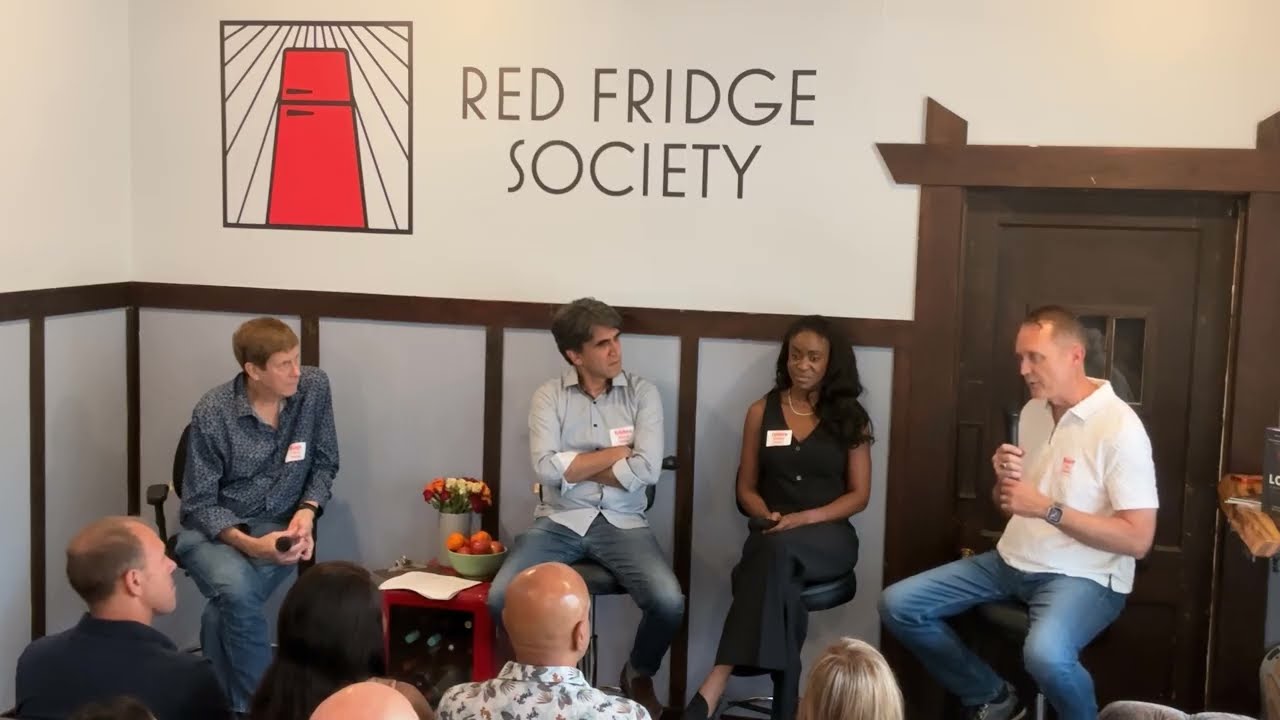
austin in 2030: a community braintrust conversation brought together members of the austin community to discuss the future of our city, the issues shaping our community, economic opportunity, innovation, ideas worth exploring, and what austin will need as it moves toward 2030.
the conversation was convened as part of tedxsouthcongress community engagement ahead of tedxsouthcongress 2026 event. the braintrust creates an opportunity to listen to the community, surface important perspectives, and better understand the ideas, challenges, and opportunities shaping austin's future.
tedxsouthcongress is an independently organized tedx event. this recording documents a community conversation and is not a tedxtalk
recorded, recorded live at the Red Fridge Society, a private founder community in downtown austin on august 27, 2026.
transcript
from YouTube's automatic captions, so expect the odd misheard name. tap a time to play from that point.
0:00 all right, everybody. welcome. uh my name is chris. those of you who don't know me, uh this is my concept. uh the the two second story of this because we're not here about me, but let's take a second to talk about me. uh so i uh the story of this place is i ran a tech startup out of here uh for 15 years. so i bought this house i started my company 06. i bought this house in09. enterprise software, automotive, really boring, nobody cares. but what everybody knew about square root was we had a really cool culture. so as i grew, i started renting other houses in the neighborhood. and when i by the time i sold, i actually had six in a row. i had these three on sixth street and i had the two on this side as well. so we got rid of fortune magazine as our, you know, second best place to work in america and the coolest office space in america. and i really enjoyed the culture side. uh, and had no desire to do the business side again. so uh, my mission is to help austin entrepreneurs thrive. so this is basically a founders club. so it's a membership model. i do three to five events a week for founders all around austin to bring everybody together like this. not always this big, usually a little smaller. and uh and then some folks co-work out of here and social club out of here and hang out. so if anybody wants to, you know, get the penny tour after this, it's a 2,000 square foot spot. so easy to do. so but uh so excited to host a uh the first brain trust of tedx south congress,
1:16 which is going to be tedx austin soon uh when with the new thing. but i want to introduce uh roni who is the what was the organizer of TED in austin and is also in charge of the uh bigger event that's coming up next month and i'll let her tell you about that. >> thank you everyone for being here and thank you chris for chairing this event. chris has been the leadership and the person that has held this event together. so, he is the chair. i'm the co-host. so, see him if you have questions. [laughter] and thank you, hugh, and the rest of the panel for being here. and we have our board member, joe edgar, here. uh, thank you, joe, for joining us. so, a little bit about tedex austin. i moved to austin a few years ago, and when i showed up, i was surprised there was no tedex. and when i talk about tedex, i mean a community focused tedex, not a tedex that is an educational tedex like UT austin, but more a tedex that brings the community together in a way that allows our ecosystem to move forward where we can network, we can share ideas, and we can come together on
2:32 a state level, on a national level, and a global level. so, um i've been part of uh TED um attending TED and i reached out to them. they were gracious enough to partner with us and give us a tedex license and we started tedex austin after doing survey. so tedex austin is really a community tedex event. we focus on understanding austin. we focus on the uh austin ecosystem. we want to help move austin forward on a state level and global level. and uh we hosted our first event last year with the mayor attending and we had 20 speakers. we had uh some arts. we we had a country singer. we had a hip-hop singer and a comedian. and then 16 people spoke. and then this year we have 12 speakers. and we're planning to have another country singer for those who love country music like me. and then another hip-hop singer and a dance group. and the goal is really to feature austin this time as a tech hub. right. this is the silicon hills. we need to reflect that. and we plan to do that through our global talk. and before we have that talk, uh we wanted to have a brain trust. so this this brain trust is
3:48 really, you know, curated by hugh and and chris to help us understand our austin economy, our austin community. what is austin and where is austin going? so we can ensure that as people get on the tedex stage, they reflect austin, right? tedex is not for individuals. it is really about sharing ideas to move our community forward and that's what we're all about. so, thank you everyone for being here today. we appreciate you. and we have one of our future speakers in the audience, josh. wave to everyone. >> thank you. [applause] and i'm going to hand it over to hugh. hugh is going to be moderating the event. thank you. >> good afternoon. my name is hugh forest. um, i was at south by southwest for 35 years or so and met a lot of people in the room via that experience, via that job. i now uh have a company called gather and grow experiences, which is built on the thesis that people still like to get together face to face. and the fact that 60 of you guys did this when it's 150 degrees outside uh means that maybe that
5:05 thesis is correct. so there you go. it is a great honor to be leading uh or moderating this discussion today. a great honor because so many amazing people uh have come out to watch and listen and participate. a great honor uh to have these uh three amazing folks from austin uh talking about their perceptions of of the city. uh so i hope that my moderating skills uh or lack thereof can live up to those those high standards. for today we are going to talk about a little bit about the future of austin and particularly in the startup and tech ecosystem. this is a great topic to focus on because there are lots of changes of foot. this is a great topic to focus on because as many changes as there are in austin 2026, austin has always been really really good at changing. um and so that has been a relative constant. uh i have a friend who frequently reminds me that austin reinvents itself every seven years and use that line often. um, but we are actually going to make it a little easier today. we're not going to talk about a seven-year cycle. we're
6:20 going to talk about a four, if not three-year cycle with the focus being on what austin, what we think austin will look like in 2030. uh, and given that we're in the dog days of august and baseball season, i will remind you of my favorite yogi bear quote, which is, "it's tough to make predictions, particularly about the future." um, [laughter] so there you go. i have some very specific questions for the speakers. i hope the speakers can provide specific answers, but use those specific questions to kind of build off on some of their thoughts, some of their experiences. and um, uh, i also hope the speakers will bring in very very different perspectives. as someone who's helped organize sessions for many years, i will say that few things are more boring than a panel where everyone agrees. so, respectful disagreement is a good thing. um, let's talk with uh let me start with short intros of the speakers. we'll start with brett on the far end. um, he is the author is a serial entrepreneur. he is the author of a book which happens to be sitting next to him. love conquers fear humanity.
7:38 how did that how how did that happen brett? that's kind of magic. love conquers fear. humanity AI in the age of abundance for all. he has a podcast of the same name. love conquers fear. uh brett and i are both austin natives. we both went to austin high over there somewhere and we were both fortunate enough to be inducted into the austin tech hall of fame this year. brett, fill in all the gaps of what i didn't tell about you. >> oh gosh. i don't i don't i don't want to fill in the gaps. i'm a longtime entrepreneur, very lucky to be born here. um my mom believed in me unconditionally since age seven, learned how to program with me, and i i really i do feel like being born here was so fortunate because having that interest in 1979, there's very few cities that would have supported that and she was able to drop me off at like user group meetings and all of that stuff starting at age 10. and so that wouldn't have been a thing in most cities. and i can't believe that the city as an austin native has gone from 260,000 people to 2.6 million people in my lifetime. that
8:54 that blows my mind. um and then long time longtime entrepreneur because of the skill i have being at the right city at the right point in time with the right passion. >> awesome. thank you, brett. uh next to brett is j my friend janice omadeki. i think janice is the youngest on the group uh amongst all the old guys here. >> um she is also a fairly recent transplant to austin. um in the grand scheme of things moving here from washington DC uh she had a startup called the mentor method which um was really really unique and from that she wrote a book called mentorship unlocked the science and art of setting yourself up for success. she is one of my favorite people in austin because of her energy and her enthusiasm and her aura. janice tell us more about yourself. >> well with that i have to go. um, no. thank you so much for spending this evening with me. it is such an honor. but first, hugh, i have a bit of a bone to pick with you. i have been here for eight years. uh, >> compared to the the townies that are on either end of this, >> i am so sorry for being a proud daughter of immigrants and being born in the DC
10:10 area. but [laughter] i do think that my last eight years in austin have been just an absolute dream. and it is every single one of you that has made this ecosystem such a welcoming and thriving environment. when i had the idea for my first business, the mentor method, it really was just a PDF in a dream. and i remember seeing austin via the real world several decades ago and thought, okay, this is a very interesting city. and i started doing research on like okay where can i build because DC in 2018 i mean i think it still is honestly govk fintech healthcare tech a talent management SAS platform built by a firsttime founder was not part of the thesis in the DC area and there was this beautiful noximma effervescent energy this ellis island potential of austin that was just so attractive and this this is just a full circle moment for me being on this panel. he was one of my first mentors. he had no choice. [laughter] um, and i it's been an honor to grow alongside you, hugh, and to be up here with literal titans brett and kush is
11:26 just i'm pinching myself. and i hope that my eight years of insights, regardless of how you feel about them, are um inspiring and we can have greater conversations after this. so, thank you. >> thanks, janice. uh and closest to me is uh chris who is with live oak ventures. uh he is a OG in the vernacular of the austin startupfunding scene having previously been with austin ventures. >> o does not stand for >> of course not. um we we are also going to if we get to all my questions we're going to talk a little bit about the next generation in austin. and i will say that chris may single-handedly be uh be ushering that in with uh what his daughter is doing and i she i believe she is speaking at uh the tedex event. yes. um i've worked with her on south by southwest stuff. so uh chris is doing some amazing work there. tell us more about uh your your space in austin, christian. >> yeah. so i um run a venture firm in town called live ventures. he has been doing investing exclusively in texas now for 26 years. um so seen the cycles from u 2000 to 2010 or so at austin ventures and then we founded uh live oak in 2012 and uh
12:43 now 83 84 companies later uh every one of them is based in texas i would say 70 of those are based in austin uh where we look to lead the first institutional rounds of those companies. so explicit uh the the we exclude you know we focus um you know we are at dark food we keep telling our founders to focus and so that's what we do too so all in on texas uh founders and community is the explicit um the ethos of the firm and uh what i'd like to pick up from and what makes austin magical also is the third of those three pillars the community part um we're very proud proud to have a lot of amazing civic uh engagements in in this town. i'm proud to have been um chairman of the board of miracle foundations founded by caroline uh budro there supporting orphanages and foster care people here and now i'm the current board chair of u austin PBS and then we have this live gives program which has been doing i'm very proud of the program we've given out monies and put amazing um nonprofits and pedestals to showcase along the way i've seen how people come together for civic-minded community
14:00 efforts i think austin compared to many many other cities that we compare notes with people is very distinctive in the community coming together to drive these kinds of initiatives uh for just a variety of causes children elderly to women to um how should our parks look like to and so on. so that's a community spirit. uh and then there are amazing draws people to come and do tedex events and so on and and south by was the ultimate community event in town, right? so there's so much of community orientedness which makes us all extremely proud to be here and call this our home forever. u just excited to be part of this and this is one more such um activity here in the in the same tone. >> awesome. thank you. okay, question number one, and i'll remind our celebrity panelists. um, please disagree with each other in respectful ways. uh, this actually builds off something that brett said when when he was giving his in intro. uh, current population of austin is around 1 million 2.3. yes, if you talk about the whole metro area. um, and in 2025, the rate of population growth was 1.72%.
15:16 that rate has actually slowed down. um we know that from 20 roughly 2010 to 2022 austin was the fastest growing uh metro area in the the US. um my question here is will the will the rate of growth for the city of austin increase or decrease by 2030 and more importantly does that rate of growth matter for the city's tech innovation startup ecosystem? another way to think about that or uh this question is did the overall growth of austin push the growth of the austin tech scene or was it the austin tech scene that pushed the overall growth of austin? >> don't don't be don't be shy now. >> am i going first? okay, fine. um, you know, it's definitely tech and the broad people love austin. both austin for austin sake and austin austin's tech both are drivers of the growth. there's a lot of tourists who came in and checked this place out. i think we have sent them all away. the ones who just came in to be tourists, which which is wonderful. >> if they didn't leave in august, they're going to stay. okay. >> exactly. if they didn't leave the last
16:31 two or three years, they definitely have gone by now. then then they're the permanent people like to keep them. so i'm optim i i believe austin's population will continue to rise. um it's austin is not a onetrick pony in you know in terms of it's a very important sentiment very strongly believe in austin's growth is driven by just a lot of factors and one trick pony not just from an industry perspective. it's not like people just migrating here and so on. it's not what drives growth. there are structural things here, secular growth happening because a um you have large companies now attracting more and more people to come and relocate here to set up offices. we've got the maturation of the local companies getting bigger people coming out of bazar wise starting companies and therefore that's creating more people to join uh with the maturation of the industries and more companies getting formed here attracts more people to come here um and so you got many factors and of course we can i'm sure we'll talk a lot about defense tech and robotics and many many industries and and and and broadly i think you know texas and austin have so many traditional industries that all lend themselves to tech enabled blank businesses in those
17:46 industries. so i think all of this i'm incredibly bullish about the continued grow growth of this with uh tech and broader structural reasons that drive migration trends into this town. >> i i think that it's we we've got to think about austin and then what's going to happen around austin. so, if you one one thing that a lot of people are surprised to know is that the largest private employer um in austin for a long time was dell. that's not a surprise, but they're surprised to know that when tesla finished the giga texas factory at the end of 2021, the last count a couple of years ago, i haven't even looked it up recently, was 23,000 employees. so, it's already the largest private employer by an order of magnitude. and what's going to happen with spacex now going public and raising $75 billion, which is three times the amount that saudi aramco raised, which was the largest IPO in history. it was a state-owned company and almost four times what alibaba raised. um which was the second largest um now the third um
19:02 is unprecedented and that money is going to come back into austin in the form of all types of new deep tech funds. we're going to have a huge deep tech boom. i think it'll be completely obvious by 2030 what type of impact that's going to have and how much employment that's going to mean. and that's that to me is the most exciting thing happening in austin. and i want to make sure i give credit upfront that i really think that's happening because of josh bear. i think it's josh that saw that that was possible that early on um made a bet in electronic and icon and i think that's what um attracted and you know paradronomics i think that's what attracted elon musk and kind of that whole um group you know joe linale etc to set up shop here and around austin you have prototown which i guarantee you if i was that age, i would be there for sure. like that's i would be there like 100%. i would spend almost all my time there, but i would still be kind of coming into austin. um, and you know, if
20:17 you don't know what prototown is, then get educated on that because it's because it's incredible. it's incredible what's happening around here. i mean just uh just at UT austin in the um rockets program that they have there you know spacex is coming in firefly is coming in all these companies are coming in to mentor the students that's happening you know our son goes to westlake like the robotics program there you know that's where your kids went too like are coming in to mentor these students and all of this is going to lead to a tremendous amount of new employment but a lot of new wealth um the the last count on the spacex IPO is it's going to create at least um 16 billionaires in the austin area and over 130 people that are worth over hund00 million just on that IPO alone and they're going to do stuff here and that's how it happened in silicon valley. like it was it was people that became very wealthy there and then had the desire to put that back into the community. and that's going to result in all types of housing opportunities, restaurant opportunities, new music
21:32 venue and entertainment opportunities. i mean, it's we're on the precipice of a a boom that we haven't seen, in my opinion, in in austin's history. now hopefully, you know, we're we're gonna have that boom in a way where it's not like the.com bust. um, and i think that it is different this time because we're talking about real revenue. like this isn't a fantasy about what type of revenue these companies have. it's it's it's incredible like that. we're getting to the point where we can take atoms and manipulate them like we've manipulated bits. and that's going to accelerate as we go through the cycle of AI, quantum computing, robotics, and and also brain computer interfaces. what i call the super effect in my book. it's it's a super exciting time. and austin's doing stuff in all four of those areas like really ambitiously. >> nice. janice, as one of those people who moved during the growth spurt to austin, tell us your perspective. >> of course, it's going to grow. i mean, just plus one to everything that has been said already. um, where my brain goes. that's so interesting that you say we haven't seen that before because i guess maybe i have
22:49 rosecolored glasses, but i think about trilogy and i think about the delionaires who came out of that rigorous training and framework and culture and network that both companies have built internally and have gone on to create the businesses that when i moved here in 2018, like i'm getting chills now, they were icons and still are in household names like the late josh bayer of course came out of trilogy. we have cindy lowe with red velvet. um we have the co-founders of zachdoc. we have cotter. i mean we have heather bruner. like there are so many leaders and entrepreneurs that if i built my own like austin mount rushmore would have 20 heads on it. but like they would definitely be staples of the ecosystem. so to me i think this is almost um version two of that. and if we're lucky and if we actually are taking this conversation seriously, those of you here and those of you watching later, i'm hopeful that we can focus our attention on our founder billionaire funnel as i'm calling it. i'm an eternal marketer. i cannot help it. but if you think about conversion funnel, right, you start at the top idea kind of thinking about it. but how are
24:04 we actually creating the ecosystem to take those people straight through to IPO? because as brett said, we've seen the benefits of that when these early leaders get that capital infusion. we've seen it. capital factory out of josh. we've saw div inc. out of preston dionaire. they're reintegrating into this ecosystem to pay it forward and ensure that the next great idea, that next community that sparks some form of innovation is fully present, accessible, and available. i think what i find really interesting on the topic of that funnel is that all four of us are a good example of that funnel in real life and kind of the best case scenario. i think i'm definitely oh, better get that. it's a new founder already. they're flying in. so if you look at the top of funnel that's where i am all day in spades mentoring at UT helping at that idea early stage kind of that messy arena format of it all and really serving like through family offices innovation studios making sure that these early stage founders like i felt when i moved here know that there are people who have their back and will be
25:20 in the trenches with them as much as humanly possible. hugh, i would say you're also kind of top of funnel because you're the convenor. if it wasn't for your work at southby. so, how i moved to austin, this is a bit of a tangent, but i swear to you, it's relevant. i was a part of the DC delegation for the w DC house in 2017 when i first started building the mentor method. so, i was supposed to be here to recruit other startups to move to DC and join the DC ecosystem. >> that [laughter] worked out well. well, thanks to southby and the community that i found here, i ended up moving the following year, getting into mass challenge, and eight years later, here we are. and so, as the master convener, everything that you put together, hugh, and like events like this, you have an opportunity as an idea stage founder to meet your mentors, investors, your co-founders, your teammates, all in like a twob block radius sometimes. and that is extraordinarily powerful when you factor in the culture of reinvention that this city has and that we all consistently discuss. so to me, i just think and then also going further down the funnel, i mean, we have the two titans here. they're going to get them to that finish line regardless. and so i
26:38 think we all are uniquely poised within those positions in the funnel, whether it's idea, facilitating introductions to mentors, investors, and getting these new businesses to IPO. if we really focus and process how to pass that baton over TLDDR, yes, we are going to continue growing. there's so much innovation coming out of this. i don't understand how we couldn't. >> thanks, janice. thank you for the nice words. um, my second question, and i swear brett and i didn't go over this too much, but he seems to be throwing softballs down the middle, which i'm going to take and try to crank out to the outfield. um, the austin based company aptronic, which emerged from the UT robotics lab and capital factory and had a south by had a role in that too, has emerged as one of the na one of the city's most dynamic startups in the last few years. uh is austin recognized as one of the nation's top hubs for robot robot related technology in the year 2030 with electronic with tesla uh with the new amazon project at dogs head and concurrent with that are and brett you talked about this before are you surprised that how how
27:54 big a thing hardware has become in austin. yeah, i i wouldn't say surprised. um i i kind of i kind of saw it happening. what what i'm what i'm surprised about is just uh is just the acceleration of it all. i am surprised to see companies like appronic, you know, their their series a was, i think, $930 million. i haven't seen that before. now, they did bootstrap for a long time. they bootstrap for around 10 years. um, but you know, they they have the they they have the contracts to back that up. i mean, this is a really really significant company. and, you know, icon, by the way, would say that they're the largest um robot company in terms of what they actually do. um, he said that's what jason ballard said on my podcast, so i'm repeating what he said, but i but i but i agree with that. i mean they're they're they're doing something really hard um in terms of 3d printing homes and you know shortly after that episode he didn't tell me because it's confidential you know they announced the fort bliss project and it's incredible what's
29:12 happening at that company and and you know if you if you really look at jeff cardina's background you look at jason ballard's background you can understand why they're actually the perfect people for that company and the thing that i love the most about jeff is he's very focused on appronic being the one which creates a robot with a heart and with great intentionality. and one of the things i love about austin, which not a lot of people realize about austin, but i've seen it since i've since i've been born here. you know, my first concert was willie nelson. i was four years old. it's the first time i smelled marijuana, too. um, [laughter] it was it smelled horrible and i asked my parents what that was. >> there was marijuana at a willie nelson concert. that that is news flash here, right? >> even in 1976. um, yeah, he is a genetic miracle. um, because he's he's been smoking it forever. but, you know, that there there's this great book. um, i'm a i'm a big student of all types of spirituality and and one of the one of the spiritual texts i love a lot is the the daqing and there's a book written by him and turk pipkin who founded the nobility project which built beautiful schools all over
30:30 kenya and other parts of africa that never had schools before. and he got willie and all these musicians together and we got involved in that too and it was it was it was amazing. the first time we went to africa was that way and he wrote a book with with uh with willie turk pipkin called the dow of willie and i think that spirit is actually very much alive and well and it was and the the best way i could describe the austin culture and i really think it's intact today is that we really care about lifting each other up and that doesn't mean we've done a perfect job of lifting everybody up there there's definitely a lot of work to do, but we we build with great intentionality and people really care about things like culture here and bringing out the best in people and it's not just an extractive mindset. and i love that about austin. and i i i'm i kind of marvel at how much wealth and and u everything has come here. and we're still doing it, you know, like like a lot of people will will dunk on some of the new people moving in, but they are building with great intentionality. like they really care
31:46 about both the city and they also care about creating companies that help the world. now, it may not be something you agree with, like you know, seronic was one of the companies that josh has been involved with since the beginning. it's in the defense sector, but we also need that too. um, at at this point in the world, hopefully we get to a point where john lennon gets his wish. i would i would love that and i think we can, but you know, we need defense tech, too. and and you know, again, i'll invoke josh, like it was amazing that he was able to recruit army futures command to base here. like that's so freaking awesome. um the first, you know, division of the army, new division of the army, man, over a hundred years. and the the big defense conference just happened at capital factory, i think, last week. so, so that's that's also another thing that's that's uh that's moving and moving with uh with with real intentionality as well. >> you ask a question or you want to >> tell us are you and are you guys investing much in hardware stuff? >> oh, you know, look, we've uh this well i'm i'm delighted to start to disagree here. let's have some uh fun. [laughter]
33:03 and actually, i'm agreeing more with janice in the sense that none of this is new guys. you know look [snorts] austin when i came to austin 2000 austin was the second biggest semiconductor town in this in in the country right in terms of startups second biggest producer of wafers in the country we went and had this incredible surge of amazing hardware companies come out of austin because dell was here compact's here is here IBM's computer uh uh was was headquartered here you remember that so this was a powerful powerful hardware town in 2001 2002 and then it became a another innings of hardware happened when solar tech and all the other different uh clean tech started to be very vibrant here in 2007 2008 2009 right the the world goes in cycles right so we we went through oh my goodness incredible hardware incredible clean techch hardware and so on but ultimately all of these things need to translate into are you shipping meaningful product? are you building sustainable businesses? are you going to be building real revenues that you know that that convert into what's getting deployed?
34:18 and can you ultim will the ultimately the markets reward for these things when you get to steady state what margins look like, what cash flows look like at this business. that's what we need to see. right? so we went through this incredible phase of enormous number of pre-product companies getting bought for $3 billion. at the peak in 2001 there was a company called cyros got bought by nal network of $3.25 $25 billion before a product was shipped because the world felt like we cannot have more optical networking in the world. right? and five years later, nortal had filed for bankruptcy after that. right? so we i just we just got to be mindful while there is incredible level of secular need for robotics because we don't have you can't train people enough to to go to real jobs and factories and so on. so there's tremendous secular need. there's more technology available to go make it happen today than ever before. um so there is there there absolutely will be a secular need for building robotics companies and so on. but what i want to again remind you all is if you go look at employment that is happening here of the skilled nature in this town. it is truly much more of a diversified nature. we see incredible businesses where texas has got 50 plus fortune 500 companies headquartered here. people
35:34 with deep domain knowledge in healthcare, deep domain knowledge in real estate, deep domain knowledge in retail, deep domain knowledge in financial services and so on. um they're all people building very interesting companies where you the cross product the crosspollination between these industries and massively disruptible with this little thing called AI um to disrupt what these companies ought to look like. so we see amazing growth of industries that are doing stuff today where we can disrupt massive industries um when and and that's why we see legal software business going from 0 million dollars in revenues and product usage happening in 18 months 24 months and so on. so we see structural dislocation of enormous number of industries happening because of tech. so we as much as we're bullish about what robotics can do and bullish about what uh you know what what what space defense tech can do so much of the investment needs to go to bending metal as opposed to actually building intellectual property. so that's something uh in terms of how much of the dollars will actually translate into population growth or hiring somebody into a into a place as opposed to building products or even shipping products at negative gross margins are
36:50 all things we saw in previous cycles. we saw that in the hardware boom of o we saw that in the hardware boom of 2008 2009 and so on. the innings is incredibly long. there is compounding of risks that happens here where you got to get feasibility of products and you got to get manufacturing feasibility then you got get sales and support. many many many things have to happen in hardware businesses as opposed to the elegance of software businesses where so much of it is done for you because of an AWS or GCS or azure and so on. it becomes easier. so there is plenty of easy scalability meeting domain leveraging AI that is permeates an incredible number of industries. so i am incredibly bullish of austin and what it has here for us because it is a melting pot of numerous industries meets tech. robotics happens to be one of them. uh but we don't know yet will robotics translate to actual shipment and actual dollars and revenues and and on a sustainable basis to build attractive business models is very unproven. but that's okay. i'm delighted if robotics gets to be one more vector here. that'll be enormously phenomenal. that'll be for for for for austin, for the world in general, but we end up being much more of a diversified investor. well, we spend a lot of time
38:05 on deep tech because of course i'm a mechanical engineer and have done my share of deep tech investing from my austin major days. but the portfolio bulk of it ends up being the cross-pollination of software and AI a lot of vertical AI which where it's about AI and software disrupting many many many many many trillions of dollars of existing industry is what we see here you know that's why if i just did a quick estimation before we came our businesses aggregate have gone off to maybe close to a billion dollars of revenue since we invested in them and uh and maybe about 5 to 10,000 employees in the texas area that's what we've seen because we are able to intersect where there is today's demand with today's approaches with today's domain knowledge. u is how these companies get built. so i just want you all to feel like this we are sitting on top of a very diversified town. that's what i mean by it's not a one trick pony and we can build many many interesting businesses here in this town. take CPG for example. wow that's come out of nowhere. we not see that center so far right. look at the incredible number of interesting businesses with real disruptive potential that's happened. well done, shi. right. and so look that we we don't give it enough credit for poppy and CF and and i might be missing
39:20 a few more. right. and so it is a diversified town that can do amazing things here. so that would be the sentiment i bring to the table here. >> yeah. and that and that that is different. um because when i moved back from silicon valley here in 2003, the.com bust had decimated everything here. it was almost free office space for a bizarre voice and and you know it everything had kind of popped. living.com had gone out of business. garden.com had gone out of business etc. and krishna is right. it's very very diversified here compared to any other point in its history which makes me even more bullish. um, so janice, your thoughts? >> i think the only thing i would say that was amazing by the way, plus one to everything that kish said. i am not crush but from my vantage point if history has a pattern of repeating itself and just some of the venture culture excluding present company of course there's a pattern of chasing the shiny new thesis and chasing the efforts of these teams phenomenal cmos that are making their topic top of mind for all
40:35 of us until that thesis bubble bursts. and then it becomes this like, oh my gosh, what are we going to do? who are we focusing on? who's next? what are we going to do in the next five years? and i feel like that's just not quite as sustainable as austin could be. i think it's a yes and scenario. so yes, love the innovation that's coming out of this thesis. phenomenal work coming from defense contracting myself and aerospace and defense. it's necessary and it cannot just be relegated to washington DC alone. however, i do think that a more streamlined approach to creating a more sustainable ecosystem like we're talking about is to actually use the greatest minds available to solve core problems that have a ripple effect not just in austin but nationally and potentially globally. a good example of this um is from the DC area actually. so in 2015, president obama um and his team launched the presidential innovation fellows program and it took everyone i mean private sector management consulting the greatest technologists were applying for this program and kind
41:50 of like if anybody has watched some of those like british talent shows where like how one direction was formed where they said okay you're a great vocalist here you have the hair you're great at this and put these teams together this innovation fellowship program did the exact same thing where it took these innovators strengths, skills and passions. put them in this flying v formation based on their interests, this cohesive harmony of innovators solving federal government and bureaucratic hurdles for us literally for us. government, IT, and infrastructure. who wants to do that full-time? i don't know. i would fall asleep personally, but the team that assembled to do that, they were energized, passionate, and had the experiential scar tissue to actually put in sustainable frameworks that they're still using today. same thing with education, healthc care. there was so much out of that program. i'm so glad that it's still operating today. i had a few friends who participated in the first two cohorts. i was so jealous. but it's amazing to see what has happened in their own careers and their thought process around how they integrated into that ecosystem since. they haven't left.
43:07 they weren't from the DC area originally. they moved either for the fellowship program or shortly before and they have made that home for over a decade now. so, i would love to see some kind of formation of that alongside these amazing businesses. like, can you imagine if we had i don't know what it would be. maybe something environmental on the topic of icon because they're one of they're on my mount rushmore as well. can you imagine if we had jason and the icon team? we pulled a few red Fridge founders off the bench that have been looking for their next big project, but not really ready to fully commit to something. maybe he was involved, of course, because he's everywhere. but you pull all of these innovators together and say, "okay, this component of environmental sustainability, we're going to solve that. what have you got? icon, how are you contributing? founder off the shelf. what are you doing? you're amazing at external communications. get in here and tell everybody what we're supposed to do." that would be an incredible ecosystem that would work and pair very well with the rest of it. oh, you disagree? oh my god. should i leave? >> no, no, no. i was going to give you a we are like this uh mutual admiration Society here. i'm going to give you a plus one and say some more. so keep going. i'm going to >> no, i'm done. please go for it.
44:24 >> so yeah, let me do a plus one again. reciprocating your uh nicity there. >> you know, i i i look, you know, i think austin makes boring cool. >> um let >> that's not a very good t-shirt, >> you know. um uh okay, keep austin, keep austin weirdly boring. boringly weird, right? um you know, so we we're consistently weird. austin will be consistently weird. boringly weird. let's say that. you know what what i mean by that is look, you know, if you are in in the valley actually have a son who just started a company last month and so i've got a real deep perspective and you say, "oh, i'm uh starting a company." then venture guy says what's your addressable market and if the word comes out of your mouth it's less than a trillion it's not even trillion zimbabwean dollars trillion US dollars right people are like what a small small market opportunity you're a failure right there is amazingness to be amazing companies to be built in all of these little boring nooks like janice just talked about right i we have a we have an amazing business which is exploding
45:39 in growth for solving AI enabled special education in schools. incredible need and started by one of the most heartfelt force of nature founder and that business has gone from zero to uh you know double digit millions in you know 3 years right it's an AI native enablement to figure out how compliance happens how lesson planning can happen and so on right again not just necessary a pattern here sticking to education we had you know a company called school links which was called going after college career course planning and how students ought to work on uh planning their uh their college their their career planning which needs to be towards not necessly going being collegebound. that's an exploded business now used in uh by 4 million kids in the country. so there are lots of boring businesses which does not have to be metal bending you know needs to be bringing a a vision language VLA visual language uh you know action model into building robotics to be you know interesting businesses being businesses that matter being businesses that that own and define categories it is not you
46:54 don't have to walk around it's like well you said that kind of a business there no such businesses don't get started broadly in the valley because you're considered a failure if you don't start a business that's got less than a trillion dollars of metrical market. so i'm just saying that's what makes austin interesting is it is this cross-pollination of magic that happens when seemingly boring industries connect with super smart technical people and out comes a very interesting company out of that. >> we should just start that. why don't we just get that started tomorrow? >> the door is open for anybody who wants to leverage their domain knowledge to start a tech business. please, we are here to support you. >> nice. um, we've talked about it a couple times, uh, and i mentioned it in my intro that austin is changing and certainly one of the the big unfortunate changes is we lost the tragic plane crash this summer, josh from capital factory and station a. and my question to the to the panelist, if we say that josh was very much the face of austin tech and austin startups for 10, 15 years simply because that was josh's personality to go out there, evangelize, evangelize, evangelize.
48:10 is there another relatively young person under 40 that emerges from the austin tech scene similar to josh and janice is shaking her head. do we need that? um what is that? what does the future look like when we don't have someone who is that powerful an evangelist as josh was? >> this question makes my blood boil for a few reasons. i just respectfully i still and i know him through my relationship with my first business. josh and his family hosted me the first thanksgiving after my mother passed away. if it wasn't for capital facto's six-f figureure investment in the mentor method, maybe five months after i moved, there's just a lot of gratitude there. and it feels a touch too soon, you know, like i just it's still like it hurts that he's not here and it feels weird and i miss him and i don't like that question because it still feels too soon. i also just sincerely do not trust anyone who says that they're going to be the next josh bear. i bleeping dare you. i really do. how are you going to do that? everything that man touched had his personality,
49:25 his DNA, his innate unique passion for just seeing that diamond in the rough, you know, and seeing that i'm getting very upset. but like josh was special and there is no one like him. there will never be anyone like him. at best, we can all take some leadership traits, remember him and honor him in our work daily as stewards of good work in our respective industries and communities. but anybody, i dare you. come tell me you're going to be the next josh bayer. i did pilates this morning. let's have a conversation. absolutely not. it's so disrespectful to even claim that. but i do think we also have a responsibility to consider how we honor his legacy in moving forward, how we mentor and invest in the future at a very early age. i love this AI special education company. i'd love to learn more. but we do have a responsibility from UT and even sooner to instill the values that make josh's loss so painful in the next generation. but i don't think any of us should ever try or even
50:41 claim that. if they do, i would love to buy them a ticket out of our city. anyway, and excuse my emotion. it's just it's still too soon to be as level-headed as i would have liked to have been with that question. it's just still too soon. and i miss him a lot. >> yeah. i mean, i agree. i mean, josh josh is irreplaceable, but he would want us to try to pick up the pieces. and there are people that have already jumped in to say they're the ones now that are going to lead longhorn startup at UT austin. um, there is leadership at capitol factory that he helped groom. um, and it's got, i think, unstoppable momentum. and so, but you know, in terms of someone being kind of the rain maker to do something that, you know, josh had this great saying, make exception for awesome. it was my favorite saying of his. and to have someone that that's a rain maker that literally gets the army to locate an entire new division here, that's pretty that's pretty unique. um, i don't know i don't know anybody that has that kind of that kind of ability, but josh, you know, was one of my best friends, a true brother to me, and he
51:58 would want us to try our best. he he absolutely loved austin with all his heart. one thing that we haven't talked about that i just want to make sure we talk a little bit about because there's a lot of people probably in here that are not educated on this. i certainly wasn't is i' i've gotten to to know a lot about the plans coming for the uh UT austin expansion for the dell medical school. and you probably saw the headlines that that uh michael and susan dell have donated a billion dollars towards that. and that's the largest donation that they've ever made to UT austin. and just to give you, you know, since we're in downtown around, you know, the biggest downtown building is around 900,000 square feet. and this new teaching hospital in partnership with MD anderson is going to be 2.5 million square feet. and the center, and it's supposed to be done in 2030. and the center of that is the size of an entire football field of grass and landscape and trees and everything else. so that is also going to um impact austin in a big way and kind of you know
53:15 i don't love this term uh weirdly boring but but but it's but you know healthc care is in the process of also being reinvented you know AI is is very much like uh electricity and a lot of things are going to be reinvented and robotics are just the physical manifestation of AI and we've you know one thing i i think we'd all agree on here is that we've never seen this type of exponential progress for any technology. i mean, not this fast. it's even faster than the model leaders themselves in their wildest estimates. i mean, enthropic right now is at a $65 billion revenue run rate. it was a billion dollar revenue run rate in december of 2024. that has never happened before in human history. and these and and they and openai are now both public benefit corporations, which is a very good thing because that's saying we're building with intentionality. so there's now the two fastest growing companies in in human history are setting the tone saying we need to build with great public benefit intentionality and that is cascading into austin as well. but what's going to happen with uh the dell
54:30 medical school is going to blow our minds and the plans like i'm i'm on the executive advisory board there and the plans for the what they're doing with the hospital rooms alone with the architecture firm. they are going after the top hospitals in the entire world that are ranked in the top three and studying their hospital rooms and they feel kind of sterile. and they're building something that makes you feel like even though you're in a hospital, nobody really wants to be in a hospital, makes you feel like you're at home. i mean, it's really beautiful intentionality. and it was just one of those moments where i saw it a few months ago when they showed the plans and i just thought that's austin. here we go again now building with great and great design, beautiful intentionality. and that's that's existed here since i was a kid. you know, there's this tension between kind of what i'll call like the the artist class, this is very broad generalization, and kind of the go fast capitalist class. and i used to being a young go capitalist guy, i used to think like this is really annoying. but i
55:47 really understand that it actually has led to us becoming such a beautiful city. like what downtown is like just the beauty of of walking the trail etc. th that all came through great intentionality and and it's and it's just amazing how big we've gotten but also how much more beautiful we've gotten. so we'll keep that. >> yeah, i'm super excited about healthcare. feels like our half our investments in the last 15 months 18 months has been in healthcare. it's like you know it's it's incredible and in fact in behavioral health we somehow it feels like um it's crazy amount of activity in uh in this country AI enabled behavioral health intersection and so on. so add that to the list of boring weird stuff you know is what i would say. um, you know, i just want to briefly talk about josh in in the one context as as an important takeaway for us. you know, austin, i'll give a little bit of a history lesson for you all. austin was number two market for venture when i joined the venture business in 2000. um, explo exploding at the time to by the time 2010 came in, austin was not
57:03 in the top not even a top 10 market. um it and you know that's a separate lesson on what happened why and so on but fundamentally there is no local institutional capital anymore by 2010 of any meaning meaningful scale to invest and to do you have to be a local investor to invest in earlier stage businesses at least that's the live oak story and i'm i'm going to stand by that um and at the time josh became a very important voice in the community um to start rallying people i think it was 9 8 n maybe when it became a good rallying cry for entrepreneurship and talent when there was not institutional money and so when we raised our first fund in 2013 $105 million fund was the largest fund raised in austin going back to the a's last fund of $900 million so that was the big value of no capital when we raised our money but along but josh the greatest trait that i believe in josh was the ability to play constantly pay it forward right? be an advocate of things, you know, do good things and maybe something might good come out of it, but just pay it forward. pay it forward on entrepreneurship. pay it forward on the defense stuff. pay it forward on
58:20 supporting helping entrepreneurs, right? regardless often of any explicit commercial intent in those things, right? so, so that is the most admirable one one of the many admirable traits one i saw repeatedly and that's why if i go look at live oaks tally charts um he's had many many many fingers in many many companies and capital factory is the number one co-investor we have done more deals which where capital factory is in the cap table than anybody else you know i think like 15 or plus companies that we have invested in which had capital factory in it um and so the the the paid forward sentiment regardless of any immediate mercantile value, right? and is what i think of as incredibly ludable trade. so maybe rather than say who's going to be the face, face is much more of a, you know, it's it's a very crass concept. it's about as if you're doing this for the sake of the glory of it to be in the face of a magazine and so on. it's much more about saying who can um ascribe to those value systems. are there people who want to step up maybe here maybe outside who want to pay it forward who think of what can i do today regardless of what outcome it's going to be for me and how do i do that for the
59:36 broader community will benefit the rising tide will raise all boats um is a sentiment here so i just want to call out that trait and think of that being what people ought to take away and we could have four 5 10 15 20 faces like that come out if they all have that sort of a sentiment, we'll just all be in a supremely better place as a town, as a community, um as a city, and so on. >> just make sure you're doing the work. i think that's really the big thing that you're saying. make sure you're doing the work >> regardless of the natural immediate benefits of it. and and i've talked about this, it's also one of the value systems for us. we talk about the doctrine of continuous dealing, you know, which means you work with people at a certain time and uh you don't have you don't you don't care about the transactional benefits that come today. it might come a year, it might come 10 years, it might never come, right? but but let's just be more authentic as human beings on for a long-term arc of humanity and just good things will come out of it. >> all right, i think that is a good place to stop for the evening. um chris, thanks again for hosting us and uh if you take nothing from this evening, um
1:00:51 take those last words from chris about let's let's uh pay it forward and uh be good for humanity. thanks so much for braving the heat. chris, back to you for a second. [applause] all right, you krishna, janice, brett, thank you so much for your time, wisdom. uh amazing. couple quick announcements. go first. yes, thank you everyone for being here. um, if you would like to attend the tedex south congress event, it's on september 27th. the conversation will continue. um, you can get tickets on luma. it's on a sunday from 100 p.m. until 6:00 p.m. we have an innovation lab that starts before the event where we are going to have um austin startups have a showcase of their technology. you can meet the founders. you can see their showcase and network with them. and then after that, we would move into the event event room at the KFMA 89.5 radio station studio. we will have the events there and you can hear more founders speak about the austin ecosystem. so, we would love to see you there. we have limited tickets. if you see me, come grab me. if you see joe, come grab joe. and you would see a lot of the people who are here today also
1:02:08 there. so, don't miss out. thank you.
pull up a chair
Fridgeside chats are free for founders. membership is curated to current and exited founders.