
lunch Society: optimize your website for AI search
optimize your website for AI search. an AEO/GEO workshop.
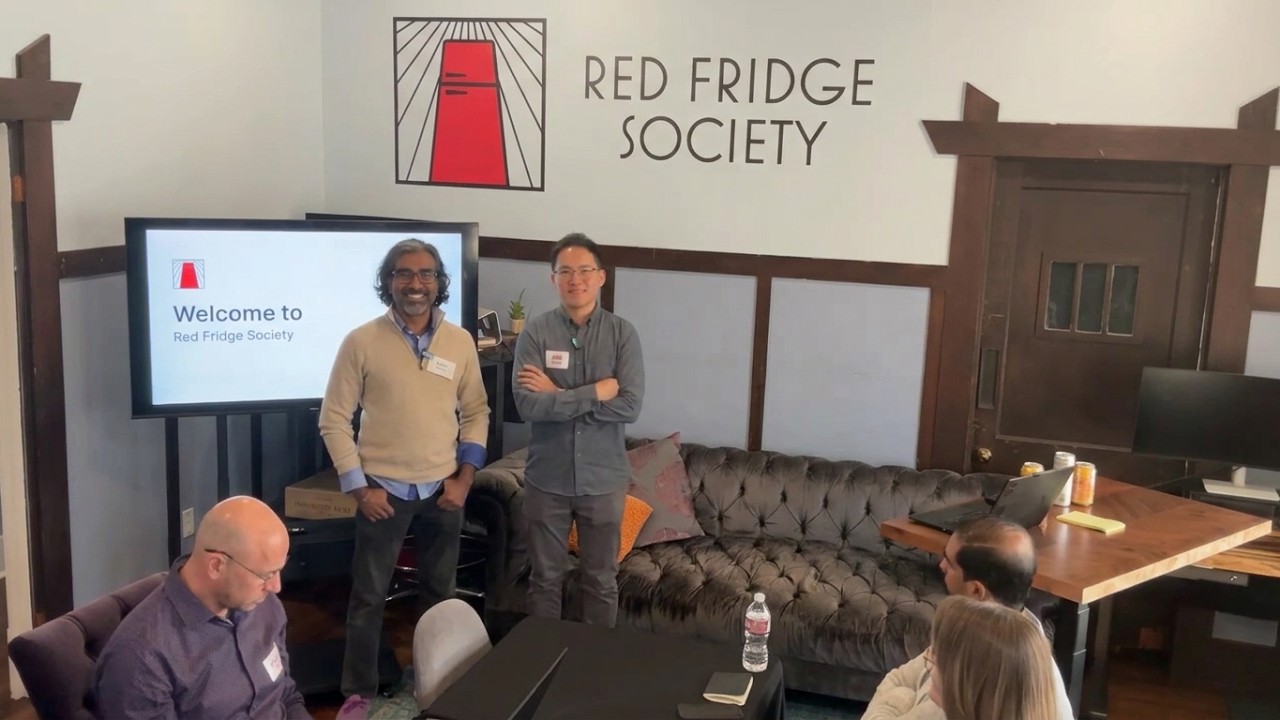
in this workshop at austin founder's club, the Red Fridge Society (fridgeatx.com) on answer engine optimization (AEO) and generative engine optimization (GEO), stan chang (head of product at gumshoe AI) and raja sampathi (founder of meandering sapien) explain how to measure, audit, and improve brand visibility across chatgpt, google AI overviews, perplexity, claude, and gemini.
AI search has shifted discovery away from static SEO keywords toward contextual, persona-driven answers. in part 1, stan chang demonstrates how AI models personalize recommendations by buyer persona and how to audit citations and content gaps. in part 2, raja sampathi outlines a 4-step technical checklist to make websites and google business profiles machine-readable for llms.
materials: run an audit on your site: https://app.gumshoe.ai/go raja's slides: https://gamma.app/docs/AI-search-swipes-right-r27u3qaihdb9tyv DIY guide for AEO/GEO: https://tinyurl.com/beaischoice
recorded, recorded live at the Red Fridge Society, a private founder community in downtown austin on november 19, 2026.
takeaways
- stan chang of gumshoe AI showed that how often a brand shows up in AI answers can swing from 10% to 84% depending on the buyer persona asking.
- gumshoe's citation audits treat the third-party sites AI cites as a PR target list, crawling each one to see which brands it mentions.
- raja sampathi's four-step checklist: visible faqs, clear headings and meta tags, AI crawlers allowed in robots.txt, and schema markup.
- keep faqs visible on the page, about four to six per page; faqs hidden in the back end no longer count toward AI visibility.
chapters
- 0:00 welcome to red Fridge & introductions (stan chang & raja sampathi)
- 2:07 why AI personalization changes brand mention rates (gumshoe AI)
- 4:24 live demo: buyer personas, topics & multi-model prompts
- 9:23 visibility audit scorecard: measuring brand mentions across models
- 11:07 citation audits: finding third-party PR opportunities
- 12:45 content gap analysis & automated content generation
- 14:58 AI recommendations, mcps, claude code & LLM resources
- 18:26 Q&A with stan chang: youtube transcripts & google AI overviews
- 22:17 part 2 (raja sampathi): moving from keyword SEO to AEO & GEO
- 29:27 the 3 pillars of AI findability: machine signal, authority & content
- 31:23 step 1: writing visible, specific faqs
- 37:34 step 2: optimizing h1, h2 & meta structure (clarity over cleverness)
- 41:32 step 3: checking robots.txt & unblocking AI crawlers
- 43:25 step 4: schema markup ("the nutrition label") & AI workflows
- 51:05 local AEO: google business profile Q&A, reviews & chatgpt listings
- 59:16 joint Q&A: linkedin distribution & content recency bias
- 1:01:09 live demo: gumshoe AI technical audit & sentiment tracking
transcript
tap a time to play from that point.
0:00 welcome to red Fridge & introductions (stan chang & raja sampathi)
today we've got two wonderful presenters for you that are friends of the Fridge. so we have stan chang and raja sampathi who are both in the—what are we calling this space these days? AEO, GEO, AI search? yeah. so it was very motivating to me. i finally went and actually built a decent red Fridge website on monday once my lovable credits expired. and which by the way, even from six months ago, it's insane how much better it was, like building that experience. you should check out our new website. so now i have a website i actually want to drive people towards. so i'm excited about this presentation myself. so we're going to start off with stan and then go to raja and you guys want to do quick introductions of yourself together and then we'll get to the presentation. okay. i'm stan chang. i am head of product at gumshoe AI. this is the second company. i was a co-founder of safebase, which is a cybersecurity and sales enablement platform that was acquired in 2025. and then i joined as a first employee at gumshoe. we're based out of seattle, but i'm here in austin. so really excited to talk to everyone. yeah. i'm raja sampathi. i run an agency called meandering sapien and my tagline is "i get chatgpt
1:20 to swipe right on your business." i gave this intro real-time to a gentleman in dallas. he looked at me straight in the eye and he said, "raja, what is swipe right? i've been married for 30 years." so i said, "god bless you. there is hell and there's online dating." right? so we've all seen that. so we focus heavily on service-based companies, law firms, wealth advisors, M&A advisors. what we're going to be talking about today is going to be—i know we have some local businesses, so it's going to be extremely relevant to you, and also touch upon google my business as we spoke before. great. let's do it. so we'll turn it over to stan and we'll also have some Q&A. i would say just remember to repeat the question for the mics because mics are around. so, awesome. all right. awesome. okay. so we'll start off with this question and if i could see
2:07 why AI personalization changes brand mention rates (gumshoe AI)
like a hand raised from people. how many of you have asked chatgpt about your company? okay. okay, a good amount. so the thing that we're trying to solve is you saw what AI tells you specifically, but what we have found is that each of your buyers gets a different answer and that should be pretty direct to comprehend because what AI models are really good at doing is intense personalization. so whatever you've asked it, if you've connected it to your email, it's read all of your inbox. right? so it knows a lot about you as a person and what they're trained to do is give you the best answer that would help you the most. so it's part of their system prompts. and so that results in behavior that we have found in our platform where who is asking changes the answer, right? so in an example report that we've run for lululemon, we had eight specific buyer personas that were different from each other. and we asked the same prompts to the models from these personas and the mention rate of lululemon ranged from 10% of the time being mentioned to 84% of the time for a specific persona. so that
3:25 shows you the spread across just one example of what models are doing. so it gives you a sense of what's happening to our world as AI models proliferate and users are talking more to them. and then there are some other stats here. i won't go into them, but this is to kind of preface as i go into my demo and show you guys personas, why personas are our specific angle on tackling this problem of kind of shrinking the world a little bit. because if you try to boil the ocean, it's getting very hard to boil the ocean now because AI is so good at personalization. back in the day with google, you know SEO, you can do keywords. and those still exist more so in this SEO world, but when it comes to AI search, the keywords matter a lot less because the AI models aren't really looking at keyword rankings. they're looking at: is this the best answer for this particular person? more math. i'm going to jump directly into
4:24 live demo: buyer personas, topics & multi-model prompts
the demo. we have a lot of research on gumshoe.ai on our blog. we have a phd researcher from the university of washington that—his role with us is to take all of the academic research that's hot off the press around influencing llms and how llms work and turn it into product decisions and designs that we put into the product. and so gumshoe itself is a measurement platform. see if i can get—this is a measurement platform. so we started about two years ago based out of seattle and we have evolved greatly since then. and what our product helps businesses and brands do is figure out what is your mention rate right now across a set of models that you care about. and it goes deeper into: okay, well if we know visibility, can we do things to improve it? that's kind of the ultimate question that most people have. and so the process that we go through is we start by creating personas. so for example, this report as you can see is for paramount+ streaming subscriptions. and our system starts by going backwards and saying who are the personas
5:41 that are likely to be having conversations with the models such that paramount+ has a chance of showing up. and the reason why we don't directly say ask about paramount+ is we're trying to keep it as unbiased as possible and try to imitate what models would be doing if given a particular persona's details and then given a prompt. so this is a synthetic process. the personas come out of the box within our system. we use llms to generate them as well. so they're very detailed and specific, as you can see here. i'm sorry, did not mean to do that. one sec. okay. i have not used a PC in a while. so this is new to me, and i used to work at microsoft. so anyway, so yeah, these are personas. and the way our system works is you can add your own if the models are coming up with stuff that don't naturally match yours. or you can edit and or delete personas that you don't care as much about. and the goal here is to provide you with the default set that models think are your personas. and so there's a mismatch there. if the models are thinking that these are your personas and you don't think that these are your personas,
6:58 that's an opportunity also to correct what's out there, right? so we start with the personas and then we're able to also—give me one second. i don't know where the mouse is. we come up with topics. so the topics are what the personas are going to have conversations about. so now we're just setting up the measurement process. things like content library depth, offline viewing, streaming quality. again, this report is about paramount+ and streaming subscriptions. and we overlay another data set which is the AI search volume, which is we're able to pull in real-time search volume data and look at: are these topics highly discussed? or, you know, sometimes you still care about ad experience, which is at the bottom, not a lot of search volume, but you still want to kind of figure out your place in it. and what happens with personas and topics is now we're able to get down to the prompts, right? so a lot of our competing platforms have simpler prompts of just very direct like three or four words. and what we do is we create very detailed personalized prompts that tease out what the models are going to be responding as their answers. they're linked to topics. so if i were to click on subscription flexibility, you can see how we spread
8:18 the topics across the different prompts and then we have all of the prompts for this report kind of listed out here. again, fully flexible. you can delete, you can edit, you can upload your own set of prompts if you want to track those. the goal is to get a measurement window on the world for this particular focus and set of details that you care about so that when the answers come back, you have a way to navigate through kind of this black box that is AI search. so we talked about personas and prompts. we're now going to look at the models. so this particular report that i ran was for a couple of these models selected. so we're doing claude sonnet with web search, gemini flash, google search AI overviews, GPT, perplexity sonar, and grok. you can select up to six as part of our default project and more if you want. so what our system did with those prompts is we sent them out via direct calls to those apis from the model companies and we started getting back answers. and so what that
9:23 visibility audit scorecard: measuring brand mentions across models
9:24 looks like if i click on the visibility audit here is the results. and so the personas are listed up here, you can see that it ranges from 92% visible, which is the brand mention rate, down to 33% for one of the personas. so there you can see the differences in how the models are answering these questions. and then you can also see for topic it goes from 82% visibility on the top end down to 38%. so this immediately gives you a scorecard that you can track week over week or month over month and shows you how your brand is showing up to the models that were selected. this view gives you a complete list of all the brand mentions that came back. all of the prompts come back with brand mentions. and so in this particular case, netflix ranks very high. they've got 325 mentions out of the 480 that we sent out. you can see head-to-heads against paramount+ here broken down by persona, by topic, as well as by model. so you can see models are also liking or responding with different brand mentions across the board. each of these you can click into and look at what the prompts were
10:41 that were sent out and then the answers. so for example, if i wanted to look at GPT, how it responded to that particular question, these are the actual answers that came back from the models. and so we're systematically sending out these prompts, getting information back, tracking it over time, and then being able to tag it to personas and to topics, giving you a way to analyze all of this information and kind of come up with actions downstream.
11:07 citation audits: finding third-party PR opportunities
11:08 one of the things that we do on top of that is citations. so the citations are what the models come back with when they provide an answer and they're used to justify the answer— how it learned it or what it's using as justification. you've probably seen it: they're little bubbles next to the answer text. and what we've done here is that you can see all of the citations together. so this is the citations for this report. pcmag is number one cited domain here. we've got youtube, we've got CNET, so on and so forth. so what we advise our customers to do is: this is your PR list, right? so if i look at top opportunities, i immediately select the filters that are saying third parties so it doesn't have competitors, right? you can also look at competitors and then also doesn't mention you because what we're doing is not only listing the citations, but we're crawling every single one of these urls to learn about what was said about you or in that article. we're looking at what is— what brands are mentioned in that specific article to give you an idea of like, oh is it on that page, like if directv is mentioned, and then we can show you if it was mentioned in the
12:23 answers and then what were both. and so you're starting to see if they're mentioned on the page and in the answers and if mentioned on both, and kind of start building strategies off of those. and this is the set of prompts that those citations were used for. so that's citations. we've got sentiment. the one thing that i like showing people is our content audit.
12:45 content gap analysis & automated content generation
give me one second. content audit. so what we've done is we've crawled paramount+'s domain, paramountplus.com. and because we have all of the information on their website, we can now overlay the information from that visibility audit that we've run to show you where your gaps are. and the reason why the gaps are important is basically the models are trying to answer very specific prompts and questions that people are asking. and if your website, your first-party domain, stuff that you own doesn't have the answer, it's likely not going to figure it out on its own, or worse, it could be hallucinating and try to come up with its own answer. and so what this content audit does is based on topics you can see that we're giving recommendations directly, which is stuff like creating a new page or improve an existing page. improving an existing page basically tells you that hey, this page is already cited and you can use that opportunity to improve your visibility because that page is getting cited by models. and for each one of these you can come up with a content plan that we've put together. generation is also included in the platform. so the content plan actually,
14:02 because we've done the deep research already and overlaid the visibility data, you can directly generate content that you put on your website or whatever you want to publish with and start filling these gaps. and so the agencies that we work with, they go through this once a month. they get a set of recommendations and then they can start to make updates to their website and to their publishing arms so that they're putting the right information out there to answer the questions that these models are asking or users are asking these models. and so i have probably a lot more to show you, but i'm going to take a pause here because i'm just cognizant of time and we can do questions now, we can do questions later, but this is kind of the platform we've built to help people navigate through this process as AI is starting to mention these brands and people are starting to have conversations.
14:58 AI recommendations, mcps, claude code & LLM resources
our most recent feature that we launched is the ability to ask our reports directly. so you can—it understands the context on the left right here, and now the question i ask is which recommendations should we do first? because one of our customers sometimes are like, "oh well there's too many recommendations. what do i even do to start?" and so this is a way for their teams to start coming in here every day and be like, "what am i focusing on today?" and it kind of goes deep into that and gives you reasons for why certain things should be done. so we're feeding all of that context into our dedicated model here, giving you direct recommendations. we also have an MCP, so you can pull all of the raw data and build applications on top of it. so i've got one that takes the content audit once—when it runs once a month, it looks at all the recommendations and then it starts putting together my content calendar, where to post it, where on our website to add certain things. and then i go and approve each one. and because our website is fully claude code made, i can go and update everything here directly using claude. so we're serving it on cloudflare, but everything you see here is me passing context into
16:18 claude and saying like, "hey, we've heard some feedback about—sorry, that's okay. yeah, we've heard feedback about us not mentioning this enough or we're changing the angle of our messaging for our customers. how do we do that?" and then we go in here and do updates. we also have some information here that i'll show around LLM resources where we document all of that information in plain text so that llms when they're crawling our site can get a quick look at all the information that we are trying to help them understand because they can crawl our site. they can also look at these markdown files and these are essentially quick faqs and helpful things that help the LLM figure out what our business is about and how it should position us as it makes decisions about our business. so i will kind of stop there. there's a lot more to show you, but the number one thing you should kind of do is—let's see if i can—yeah, you can go to gumshoe.ai or you can scan this QR code and get a free audit of either your brand
17:35 or your customer's brand. and it'll show you kind of what i showed you just now. and you know, feel free—i think i'll share my contact info with chris and he can send it to you guys. and happy to chat more about the platform if you have any questions. our target ICP are marketing agencies. we have direct brands that use our platform as well. and we range from boutique agencies all the way up to multinational agencies that are starting to use this platform. and so we've built it in a way that is very much self-serve with great on-call support if you need it. so it is meant to be a tool that helps you get work done with clients. so yeah, what's the number one thing else?
18:26 Q&A with stan chang: youtube transcripts & google AI overviews
18:27 so for us we've been publishing research papers. we've been doing podcasts. youtube as well has been a really strong—as i showed, that one ranked near the top because it's using transcript text. that's been a really strong play for us. so we go and record podcasts once a week, turn that into youtube, linkedin content, and get those published and we see citations showing up in two to three days. so it's a very quick turnaround time. yeah. question. yeah, i think it's—sorry to cut you off. did you have more? yeah. okay. yeah. yes. yeah. yeah. i think it gets very specific. the types of questions that are asked can be way more than like "best t-shirt for me" or whatever, right? so it can be a combination of things or a combination of factors about that particular business that that user is trying to think through where the model makes that connection on its own and looks for a very specific set of answers that
19:45 may not be what SEO keywords are trying to answer. right? so i would say it's the diversity of options that are now that you want to answer. so we think of it as like you're trying to rank for the answers for a particular persona. that's why the persona angle matters so much because google—if you and i search the same keywords, we're likely to get the same top 10 answers. but if you and i ask the same question in chatgpt, we could get dramatically different responses because now there's an intermediary layer which is chatgpt or openai's models making those decisions for us. they're doing fan-out queries. exactly. they have the context and they have location. they have so much more and they act on it like google, you know. google is still the 800-pound gorilla, but they're showing AI overviews for 60%, 70% of their answers now. and so people—you'll see the click rates are dropping tremendously because people just don't even click on the links anymore. they just get the answer. so if you're thinking SEO as well, that's also a challenge because people are just looking at the AI overviews which are powered by gemini, right? so now there is an AI model there as well. yeah. okay.
21:00 yeah. so we back into it, right? like if you run it there, you can through our process— once you select your brand and the focus, we back into it with an LLM and say like for this brand and focus, what are the most likely personas to be asking about these topics? exactly, and that's what comes out of that. yeah. and so that's why i use it as an opportunity that if the personas aren't really what's matching in your mind of who you care about, you kind of have—well, you can define it, but you also kind of have a mismatch problem there, which is now the AI models are thinking those are your personas, right? and so you have to kind of do your work on the content side to adjust it a little bit. yeah. so you're welcome. i think i'm going to let raja speak, but i'm around and i can also take questions afterwards. okay. thank you. [applause]
22:17 part 2 (raja sampathi): moving from keyword SEO to AEO & GEO
22:18 stan, thank you so much. i'm going to steal the idea of the LLM resources that i'm going to give my clients. brilliant. all right. all right, thank you everybody. i was going to start off with a quick audit. okay, so by show of hands, who—i know i met jeff, i know i met john. who all are here? local business owners who are—okay, i mean when you say local business, i mean your business needs a brick-and-mortar place to operate. i know you own a tech company, katie, so you don't need it, right? so who all have here who need like a brick-and-mortar address to operate? jeff, john. okay, a few others. yes, chris. anybody? everybody else's business is more online. i mean you could be working from anywhere, right? you could be sipping a mai tai on maui for all i care. so thank you for being here. absolutely. i'm sure chris can make you one later, right? okay. so what we're going to talk about today, the first part of it is going to apply to all businesses. then i want to double-click on local SEO. i think which is very important. i want to make this very interactive. you are not going to make yourself visible in the next 45 minutes. i assure
23:35 you. okay? so do not have that expectation. there is a guide that goes along with this presentation. please make sure you know it's in the deck. you can download it and then you can go ahead and this is like a weekend project that i'm giving you. okay. so as i said, i get chatgpt to swipe right. we will skip this exercise. most of you might have done this or if you're vain like me, you go every week and say "is raja sampathi a good AI consultant?" you know, you put it on your incognito mode and you see what comes up. what is important today is we only see, from the b2b perspective that i work with, only 3% of websites are readable, and that is what we want to change today. so you can keep this as an audit, and stan actually gave a better option today. i mean this is a very simple audit that you can do across on incognito mode—and incognito mode is very important—or you can use stan's free audit tool to do that. okay. all right. so this is a slide—i know somebody asked about SEO earlier. i just do this to irk these age-old SEO people. most of the agencies that we come across, stan, i'm sure you have seen them, are like putting lipstick on a donkey, right? they're all SEO agencies with the word AI in front of it because people need it. what has happened essentially is search has changed in context. chris and i were talking about here: what is it?
24:55 is it AEO? is it GEO? is it AISO? is it LLMO? right? there's so many word soups that are going on. what i think—and some of the people in search, and don't quote me on this—is in six months to a year everything is going to be search. and what we also don't know is how these personal agents like news and duet and dot are going to start affecting search, and it's going to be pretty massive. what we know is search has become contextualized and intent-based, right? it's no longer keywords. john, this might be helpful for you. i'm no longer searching for "a gym near me." jeff, same thing, you know, i'm looking at, "hey, which yoga might be the best for me to lose fat?" and then this person who's searching based on the context has their ID tracked, right? so i'm looking at the fact that google knows, google AI knows, chatgpt knows: hey, south asian male, good hair, downtown—not humble—living in downtown. and now they're going to search for me when i say "i'm looking for a gym to lose fat, build muscle." i'm getting these five curated answers based on my context, my intent. now the fact is that those five answers are from, say, one is from john. he's actually talking about: hey, you're not serving
26:13 20-year-olds, right? you're like, "i'm focused on men in their 40s." you don't have a crazy topless picture on your website—sorry, sorry to pick on john. but you are actually talking about, "hey, dude, be careful, don't jump on your knees like in your 20s, right? you're going to knock them out and get a replacement, and you need to start eating more protein. you're going to lose testosterone as you're in your 40s." and these are answers that i want to hear. so that's where search becomes very important. AI search is like—in a way somebody asked, SEO and AEO form the same base. it's like the same food. we're sticking with the workout workflow: energy, proteins, carbs, fats—but the way it gets consumed is different. one, you're serving answers. the other, you're serving keywords. and for us, and for most of us who are small business owners, founders, AEO is critically important because there is no way, you know, this soda company, poppi, got sold—there's no way they're going to compete against pepsi. there's no way they're going to compete against coke, right? it's like pouring a bucket of water next to a waterfall. you can expand that analogy. but this is where it starts getting very important and your website becomes your primary asset that gets discoverable. the reason is that you want your
27:28 website to be the most readable as possible, and you might have great content. we've seen that in audit after audit we've done. you might have great content, but as i said, chatgpt swipes left. okay, so these are the latest numbers from february, which i got—these numbers keep changing all the time, but i want you to focus on this last thing: "someone with half your talent is making more money than you because of search engine optimization." we did an audit of local family lawyer companies. and there's, you know, one person who comes up on top. and we gave it to our clients. we're working with a couple of different family offices, and they're like, "that person's shitty. that person's not good, not ethically sound." but here's the deal: they're getting leads. and we know that. i looked at their website, and it's very clean, very well structured, answers the questions that the clients want, and they are getting leads. that's what it is at the end of the day, right? so is AI search the future? i would argue no. it's not the future. it's already here. we are catching up. okay. so this is what i want you to take away from today and over this weekend. right. this is one of my workshop attendees some time ago. we're not going
28:45 to be doing a lot of real-time things. like i said, please stop me anytime, ask questions. this is for you. you can access it anytime. i'll give you the guide. you can run this—you're all extremely well-versed in AI—run this through a harness of chatgpt, codex, or claude code and it'll do everything that's on this guide today. use me as a resource to ask questions that you were not able to—that's what i would like you to do today. so and then i think we can also get together later. okay, cool. so there's three things we use to make you findable on AI. so remember this: machine, authority,
29:27 the 3 pillars of AI findability: machine signal, authority & content
29:28 content. stan spoke about content. there's machine signal, which is: if a machine cannot read you, you don't exist. authority is one of those classical SEO things, right? if you get a blessing from oprah—a book club gets a blessing from oprah— what do you think is going to happen? that's the same thing that we mimic outside also, is that we are trying to get other high-authority sites to recommend you. we're going to be talking about that. content is key for what we do, what we are, even for your local businesses, right? especially more so for service-based businesses. for your local businesses, reviews matter a lot. we'll come to that in google my business settings here in a bit. most of our clients, i mean, they have these incredible case studies of a high-net-worth divorce that was solved, how you are solving patent problems. international people are coming in—EB-5, there's so many rich investors from india and china, you know, because of the trump gold card visa. they're coming in, they're searching for lawyers online, and the content doesn't exist out there or is not findable. so those are the things we focus on, but every time we pick up a project, the machine signal is the first thing we optimize. first month or two, it's all about the machine. so
30:44 and like i said, content—it's not meant to be coy. i like to use this word "tom-tomming." i did not know that it's a word in this part of the world, and you clearly get the reference, right? you're beating your own drum and saying "i am good, i am good." and you got to do the other two things, otherwise the machines won't trust you. am i going too fast? slow? good? okay. john oliver on an indian accent on coke. no. okay. all right. machine—i don't know what got you excited all over. excuse me. so today we're going to focus on the machine signal. there are four things we're
31:23 step 1: writing visible, specific faqs
31:24 going to spot: how to set up faqs on your pages, what is your page structure, robots.txt, and then what is the schema—the final thing. it's like a nutrition label. so we're going to go through this one by one. the first thing is the faqs. like whatever you're doing, right, your knowledge of your clients is very, very important. we actually sometimes don't work with people who are getting into like, "oh, i'm launching an absolutely new product." no, we don't work with you. say if it's a family lawyer who's broken off and is going to create a new family law practice—yes, they know what the hell they're doing. but somebody is coming in and is like, "i am building this amazing product which will have investors pouring all the money." i'm like, "good, please go get 10 clients and come back to talk." so what we want you to do is on every page—starting with your homepage, starting with your service page, starting with even on the blogs—understand what are the questions that your clients are asking and then answer those questions. specificity matters a lot. ashtanga yoga in austin, texas—even west austin, right? maybe there's a strong studio might be competing with
32:40 you—quite possible. specificity matters a lot. this is something which is important that i'm going to talk about both for faqs and the next section. right? i do a little bit of stand-up. you can see my propensity to go clever. clarity works in this case. right? so you got to—and this is also on my page. it says we do give an FAQ in my FAQ section. my team did not quite enjoy that. i said no, keep it. right? so reflect your personality also. why should clients come to you? if somebody's coming to my page and gets put off by that, they're not my client. so this is just not about the machine; this is also about who you are as a brand and how you reflect it. specificity. any questions on faqs? you can—this is what google has done, right? so you could have faqs in the background. so google's been very smart about its updates. people have been gaming the system, right? so i'm going to talk about—this comes to the next slide also which i'm going to talk about—is that you could put a [ __ ] ton of slop on your page and google penalizes
34:01 what is called thin content. i mean if a page is not complete in terms of your business—it is not telling who you are, what you serve, what you do, etc. a length of the page is important, but the completeness of content is important. then google says, "okay, you're [ __ ], i'm not going to index you." right? but what has happened is people decided that "i can put a lot on the page, i can take the same page, copy it to a different page—so more pages means better, right?" google said, "no, screw you. i'm going to de-index both your pages." same thing with faqs. the ideal rule is about 10% of the page's content, which for us mostly is four to six faqs. now, if you're putting more and more—and then stan said google, google's still the pope, right? every page that is born, google has to bless it. otherwise, it doesn't go live. if it is live, if it's indexed on your google search console, that's a very good thing. i'm going to talk about it here in a bit. but if you're trying to game the system then you will get penalized and there is really no recourse, right? and once a page is de-indexed, it's like there's no resurrection. people were putting faqs in the back end too. you can put it in your schema, you
35:16 can put it in your XML, and that was also bad behavior, right? so you could actually have something like—i mean you can say, "who's the best gym?" would you—so imagine this: would you put "who's the best yoga studio in austin?" and then would you put the same answer in your homepage? you wouldn't. but you could do that at the back end a few months ago and it was cool. but now all the back-end faqs are gone, right? you can put it, but it doesn't count. yeah. so they have to be visible. yes. 100%. 100%. yeah. and then you can wrap it up in a schema later. anything else? anybody else? okay. let me go to this. okay. so this is what we call the page structure. who you are—what happened? wait, it updated on that screen but not on this screen. it's not on this screen. i don't know. chris, it's not syncing on this screen. take some questions as this is happening.
36:34 super quiet. yeah. mhm. the prompts—the personas are simulated and the prompts are sent out to actual models and that's all real. we run that process once a month. so if you're updating in between, the next month will catch all of the updates that you made on your website and it'll run the prompts against new data that comes back from the models. okay.
37:34 step 2: optimizing h1, h2 & meta structure (clarity over cleverness)
37:35 okay. so this is something that you want to do for your main page and your service pages. what is your headline 1? what is your headline 2? who you are, who you serve, who are your clients. mine is, for example, AEO, GEO consultant. again, this is based on the keywords that my clients are looking for. maybe it's just not AI search. and we also sometimes play with this. so if you have an agency, you can figure out—we work this for our clients. but for the most part, solopreneurs, founder businesses, this is not something you want to keep changing often until your client actually changes, right? very specific: "pricing strategy for b2b manufacturers" versus "pricing strategist." no one knows who your clients are, right? what are your h2s? so for me it's like, hey, i serve legal firms, M&A advisors, and wealth advisors, right? so these are the three people that we serve. it's very, very specific on where that goes, and then the rest of your website also cohesively ties all of this together. you can have other things, but consistency matters a lot. same thing: cleverness costs you citations—and now we know what a citation is—clarity gets you recommended. so this is very important. meta title and meta description
38:51 are the ones that go in the background. so every time you hit a search button, you say, you know, you're looking for say barbie metal, right? it comes in. so if it's your website, then it says what is after your website, what is your website description—both of them, and they have to be consistent with headline 1. so all four of these things affect recommendability quite a bit. say "recommendability" 10 times fast. quite a bit. questions on the page structure? go ahead, please. yeah. no, again, all the four things that i'm telling you, irrespective of whether you're a local business—doesn't matter. the scope keeps changing quite a bit. you're a website on one landing page, two service pages—far easier. something like what we work with, say we have a b2b electronics company, you have like 30, 40 pages, right? so it's something that we manage cohesively across different pages and how it connects to the landing pages and all that. same page, landing page. yeah, you can have faqs on every page. you can have faqs on your service
40:12 pages. we recommend it on every page. yes, sir, 100%. so if i have a landing page which talks about faqs on AI search, a landing page on wealth advisor AI search: "why AI matters for wealth advisors, what are we advising doing?" for example, in that industry, right? and alex, you're here, so wealth advisors—yeah, so how does it matter for advisors, very specific, you know what you're doing. call it out—100% you have to call it out as an FAQ. yeah, it makes sense. again, for machine readability, it's good to call it out as FAQ. usually people keep it—we keep it in an accordion because the users can click on it. those things are definitely done for machines, you know. it's good for the users to read it, but those faqs are the ones that feed google AI, chatgpt looking at the background. and you can keep it expanded or you can keep it as an accordion. robots.txt. anything else on faqs, once, twice? okay, so this is so important,
41:32 step 3: checking robots.txt & unblocking AI crawlers
41:33 right? this is something that happened recently. well, it's been happening. i mean, robots.txt tells you what are the pages that you allow crawlers to read, what are the pages that you don't allow. there was a big brouhaha because think about it: like when new york times opened everything and now everything became their data. for my example, this is—you can do this yourself. put `/robots.txt` after your website URL and it will tell you what is allowed, what is not allowed. you can go, you can tell your wordpress to change it. for mine, it's just a blanket statement like: allow everything. read everything that you have on my site, please, and read it twice. right? so you can do that. what happened with cloudflare? there was an update that happened last year that just took out every page. they just took out every page and said, "you know, we're not going to allow this." and they keep changing it. that's the thing. so they had a recent update, i think, in 2026. so i think i have it in my google guide. i keep it as a google guide because things change and i keep updating it. so you want to make sure that all your blogs, your service pages, your things are allowed. we have seen—i know this sounds crazy,
42:52 some of you are leading-edge entrepreneurs and you're very smart about your business, and good to see you again. you've taken this class before, right? yeah. thank you. thanks for coming back. so these are multi-million-dollar businesses and their service pages are hidden and they're like, "oh, AI wasn't recommending us." like, how are you doing business with the door closed? right? that's what we're going to change with this presentation.
43:25 step 4: schema markup ("the nutrition label") & AI workflows
43:26 okay, so this is like: you've done everything, you've done faqs, you've done your h1, h2s, you've done everything. now this is like the cherry on top that puts everything together: it's schema, right? it's like a nutrition label. the example that i like to give is imagine this: you have like a million books and they are in one row in this massive library, and there are like a million more rows like this. and now every time you launch a search, you launch like a mini agent. you're like, "hey, go find me something. i need the best M&A lawyer for the transactions space." so now this thing is going at whatever speed it's going and it's like— now, it's not obviously going to try and open up every book and say, "hey, do i have the information? do i have the information?" it's actually going to read the label. just going to read the label and read the outside and say, "okay, do you have enough for me to get in?" yes, it does. and then once it gets in, then it looks at FAQ, right? and then it parses the answer and then it gives it to you. and depending on the kind of query you have, it's either the direct answer or it will put together different sources because it's AI search, and then give it to you—much
44:45 more different than SEO search. so this is a very, very good hygienic practice to have. and we're going to talk about how to generate schema. i'm going to skip this. there are other schema generators that you can just google and get. i have that in my guide also on how to get a schema generator. but what you really want is consistency. make sure that your business is listed. if you're local, it's very important to have the geo tag, right? it's austin, texas or houston. and because the person searching for you, especially if you're a local business, they're searching for you from austin. or even if they're searching from dallas, they want to say "austin" specifically. and then your schema knows that you are of course servicing out of austin. what your business is, what your social profiles are. make sure that your social profile that you're putting in your schema is the exact same. so this social profile that you're putting in your schema matches the social profile on your website. go ahead. if you have an actual address on google my business,
46:02 you can only claim one business. so— so what you would do is you could expand your geography. so your geography could be like briarwood is in austin, right? so you can say, "hey, premier personal training in austin, texas for founders," for example. so that is your tagline, then it will come through on your schema. you're limited to what you can do. you can only put in one address. yeah. if you create a separate business page for it, yes, you can have it. it might cannibalize your existing one. it cannibalizes your existing one. but again, think about it: if most of your business is coming from briarwood, then that's where you want to be. i wouldn't—i mean, i would not want to go outside downtown austin, i don't think.
47:18 no, there's two different businesses. okay. yeah. you just—every page can have its own schema. so if you have pureyoga.com/austin, pureyoga.com/dallas, that can have its own schema. you can create a page. yes. yeah. you can use subdomains as well. subdomains as well. yes, you can create a schema. but subdomains, be careful. so this is very important. we get this all the time, right? so we have—you can't optimize a subdomain if you don't have access to the assets of the domain. if the back end that we're doing the h1, h2, faqs, all that, right? let me get back to you on schema on the subdomain once more because we have had that question. say we have these business advisors that belong to very big houses, like for example transworld is a pretty big business advisory group, and all these guys have subdomains. we can't do anything on the subdomain.
48:38 oh, so you own the domain then? oh, yeah. someone else. so this page will tell you how to do the whole schema. and most pages, if your business has been around for a while, most pages will auto-index themselves. but if not, you can submit your page to google for indexing. there's no penalty if you resubmit it. google indexes in its own sweet time. sometimes the way we say it for most of our clients is two weeks. that's what we see. sometimes it comes back in 24 hours like, "what did you do?" i'm like, "i have no idea, remember google support." yeah. and then you can check if your pages have all the schema via rich results test. you can check your health. yeah. so next i'm actually—oh yeah. so this is on the presentation. chris, i can send you the presentation again. you have it. okay. so you can share this with them. again, more than the presentation, this is like a weekend checklist,
49:56 right? sit down, knock these four things off on a weekend. you don't have to do anything by yourself because this is the guide that goes with it. so this is be AI's choice. and if you email me, i'll send you the guide. so this guide— take this guide. the presentation is good, but it's a summary of the guide. load the guide into codex or claude code or whatever. i speak for wordpress, but it could be any site that you want. say, "i want these four things done." it will not be immediate. you need to do a lot of back and forth. it will ask you questions. it'll ask you, "hey, what do you think? does this look right?" so go back and forth and you can get it done on a weekend, and then you'll also be like— and discoverability is so important. something updates on the page and two days later somebody is calling you about it.
51:05 local AEO: google business profile Q&A, reviews & chatgpt listings
this is my contact details here for a second, but the thing that i really want to talk about now—i have a little bit of time—is google my business. and this is the guide, guys, so you have the guide, you have this whole guide. this keeps fresh, i just don't know when—yeah, 100%. question. well, then see, that's the important thing. so this is something that we are also trying to figure out: what is weighing what, and i don't have the answer for you right now. so if you're saying yelp is on this thing, then go and contact your 200 customers and say, "hey, come for a visit— if you give a business review, 30 minutes is on us." do it. so something that we find is it's— excuse the french, [ __ ] weird. so we have a real estate agent, and the reviews on westlake
52:25 hills are heavily on zillow reviews for that agent, versus google reviews. we go to a different neighborhood, it's google reviews. don't ask me why. now that we know, we know that we're going to go to westlake hills and say, "hey, please start getting us zillow reviews for that neighborhood." no, i'm not going to fight the algorithm. right. so, yeah. okay. so google my business. okay. so i think most of you—even if you're not a local business and you are in services. so again, this is such a crazy thing, right? so we have content which we know pays heavily for service-based businesses, and even content coming from youtube. that transcription that you put on youtube on your videos— you think nobody reads it. please put it. please put the important quotes on every part of a youtube video because AI is reading it and recommending you all the time. right? so when was the last time you looked at the description of a youtube video? never.
53:40 AI, all the time. yes. exactly. right. so not full—just enough information. so imagine that the suggestion i give you is: imagine if you're going to—i do a lot of linkedin content, right? so if you're going to post the video on linkedin, imagine somebody was not going to watch the video, but still needed to get what was out of the video. put that, and an LLM will do that for you—take the transcript and give you what you need to post. yeah. so put that on the youtube video. this is something that we're finding more and more important, and this is something that is absolutely business-dependent, right? if reviews are important for your business, whether you're local or not, you need a google my business profile, right? so if your business is not old enough, make sure that— people ask you for a video, they ask you for a few things to do. this is the cool part on the google my business profile. these are all the steps, right? i mean, this is a full guide. maybe i should change this—it's not really local SEO, it's cutting across all of it that we see. get reviews. more than anything, the same faqs that you're putting on your website can go on google my business profile because
55:00 google my business profile has this thing where a user can ask you questions. so if somebody is in google maps looking for an ashtanga studio near me—and this geofence is so important, right— and google keeps it all in its ecosystem because you could be on maps and you can have a full AEO experience without going to chatgpt, you see what i'm saying? yeah. so the whole faqs that you're putting on your website, you can replicate it on google business profile because your users can ask you questions—you can put the same questions and then you can answer them. that's a part of the google business profile thing. so maybe that's something that you want to try. maybe that's something that's—you have your reviews also. this weight of the reviews matters, right? so one of the things that i have recommended for local businesses is: say you can have five templatized reviews talking about five things or 10 different things and give it to your users and say, "hey, any one of these that suits you, put it in." because if people are saying "good gym, great workout,"
56:16 right? content matters a lot, the depth of the reviews matters a lot. so give it to them—i'll come to you in a second—the depth of the reviews matters quite a bit. give it to them and then incentivize them if you're okay depending on industry, right? i mean, we talked to some of the health practitioners and you can't say, "hey, come back for a visit later." no, you can't do that, right? and they're bound by HIPAA compliance and all that. so make sure that you can do that. yeah. for a gym, you'll be able to get away with it. yeah. yeah. 100%. again, it's such a closed box. i mean, chatgpt is coming for google's lunch. so chatgpt has business profiles that you can claim. it is not a simple process. we have local-based businesses, so we have sent out emails to all our businesses saying that you've got to claim it. there's a verification, which makes sense, right? i mean, chris, you don't want some other entrepreneur
57:34 claiming Red Fridge Society online. so they're asking you to submit documents. they don't have reviews yet, but it'll come, it'll 100% come on without a doubt. this is the challenge—what we think will happen, right? so for us with AEO, trying to get back the traceability is hard. i mean, just like SEO—like, okay, hopefully you found us through your AI search, and we try to capture that on the intake forms. but what is going to happen with chatgpt is they might keep everything super local, so then they'll start pulling your website real-time, so people might not even visit your website, but still have all the website data coming in, right? so interesting. i'm actually—
58:50 maybe for linkedin posts. is there a question?
59:16 joint Q&A: linkedin distribution & content recency bias
59:17 you want to go first? i mean, i can talk a little briefly about linkedin. for us, what happens with linkedin is we produce these high-quality blogs and we recommend customers share the blog link along with a small write-up on linkedin. we don't recommend you put the whole blog because linkedin is a high-authority site and linkedin will start owning your content, and the fact that the user clicks it on linkedin— they might stay on linkedin. we don't want that. we want that conversion to happen on your website. even though it might be lower numbers flowing in, which is fine, you know, we don't care about it. we want that to happen. so i'm not super focused on linkedin. yeah. and then for us, for the projects, you get a monthly visibility audit that runs once a month, but we also have a daily one that's more of a subset of the prompts. and so you can see your daily prompts. it's a little bit noisier. that's why, you know, it's more of a just keep track of it, but we usually operate off of the month. yeah. and i do have a graph in one of my pages where it shows exponential to current date. so we looked at all the citation data and the publication date of those pages that are being cited, and it trends to current date exponentially. so it is very much that the models are caring about the
1:00:35 publication date being as close to current date as possible. yeah. i guess at this point it's any questions on local business, google my business profile collection. so go through this guide. we've just done four steps of this guide. there's more stuff on this that'll help you, and then you guys are all pretty advanced LLM users and you can start going down a rabbit hole on each particular topic. definitely finish the first four steps and wrap it up in schema. questions for stan.
1:01:09 live demo: gumshoe AI technical audit & sentiment tracking
i actually have a quick thing i can show you guys on our website or in the audits— it is, yeah. okay, so if you click on technical audit, you can put in any page you want, any URL that you want, and what we do—we have two versions of it right now, v1 and v2. and so you can click on v1, which is more LLM-based, so we can give you an optimization score. so they've done a great job—84% is really, really high. and it goes down the list of structured data assessment, page layout structure, schema markup, navigation, content balance. and what we're doing here is pulling the raw HTML from that particular URL and putting a lens of how our AI model is going to read and understand that particular page. so it gives you highlights, recommendations that you can make or that you can take and update the website. and then our v2 is more deterministic. so we're looking at very specific pass/fail checks that you either pass or you fail. and then we give reasons for why it's failing. and you can take
1:02:28 this and give it to claude and make updates. so i did this for our website since it's completely claude-coded. i just took all the recommendations, fed it to claude, ran it a couple of times, and we went from 33% to 85% within like two days. so as a quick check, you know, and then this you can rerun and rescan. so you can reanalyze and then once you've made checks, we can do those scans and audits over and over again until you get to a good score. does this connect all the way through? not specifically, but i have tooling that i'm publishing on gumshoe.ai/tools where you can pull google search console, you can pull GA4, you can pull cloudflare bot traffic so you can then see: are agents or bots crawling my site as an indicator, and then are chatgpt referrals coming in because they do a UTM marker? they have mcps. we have an MCP. so you can pull the two mcps together and see how that does, i guess.
1:03:51 it depends on your risk preference, i guess. it depends. i review it when claude does it, so it's not fully automated. so—but i still, because my entire site is claude-coded, i can just say, "i'm focusing on this today. here's the underlying data. here are the recommendations that this platform made. can you walk me through how this works?" and then we go and push and make changes. so we have worked with clients that, because they're bigger organizations, there's multiple teams and then it's a lot of bureaucracy and then it gets locked up. so it just depends on how you want to approach it. it becomes more of a people problem than a technology problem at that point. yeah. yeah, absolutely. we actually have a specific generator. so if i look at content generation, you can click on one of these, generate content for one cell. and if you click on competitor comparison, we have a specific format that pulls in the competitors.
1:05:08 and then you can select AI-optimized and then it generates a piece that does direct comparisons, biasing towards you. and the competitor comparisons are super useful because you're essentially teaching the models how to think about your business compared to others. right? so i would say write stuff that's factual. and so what it does is it does all the deep research and pulls together the facts. and then you can take that as a starting point, edit it, and then put it out there. so we have on our website—i believe we have it down at the bottom here where it says—maybe we removed it. i'll have to find it, but we have the direct competitor comparisons as well for our product. and then what i didn't get to show is the sentiment, because the sentiment then compares you with the competitors. so you can see overall sentiment compared across the different brands. and so it's basically we're analyzing NPS scores across your brand versus competitors and across topics. and you can see the kind of sentiment and visibility graphing here so that you can not only see visibility, but have an
1:06:27 understanding that "hey, this model really likes me," and then kind of work your way through changing the sentiment, because that ultimately leads to it picking you more if it likes your brand. yeah. so these prompts are very specific to—we actually mentioned brands in these prompts. so it's like "how does paramount+ compare with hulu and peacock?" and then the visibility audits—we don't mention brands to reduce bias. i think let's call it there. you guys can hang out for a little while. we're 247 social club, so you guys are welcome to hang out. we'll move some of the tables just to make some more room. i think there's a little bit more of the food outside as well. help yourself to anything that's in the Fridge if you'd like another beverage. and thanks for coming, everybody. it's great. thanks, stan. [applause]
pull up a chair
Fridgeside chats are free for founders. membership is curated to current and exited founders.